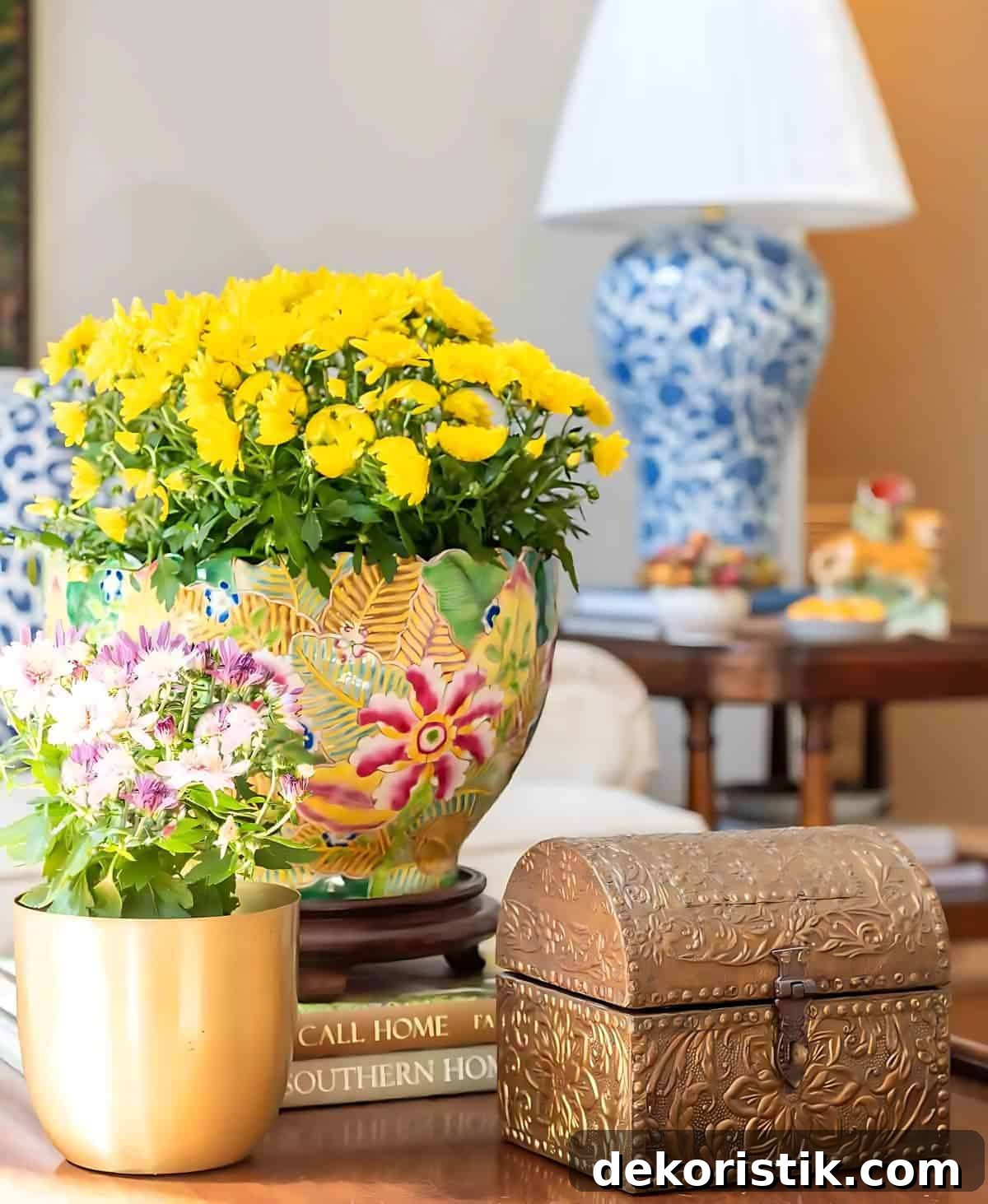
Thanks to their full, lush blooms, mums (chrysanthemums) are a favorite fall flower for decorating homes. With the right care, these cheerful plants can stay attractive indoors for six to eight weeks, bringing color and seasonal charm to living rooms, entryways, and tables.
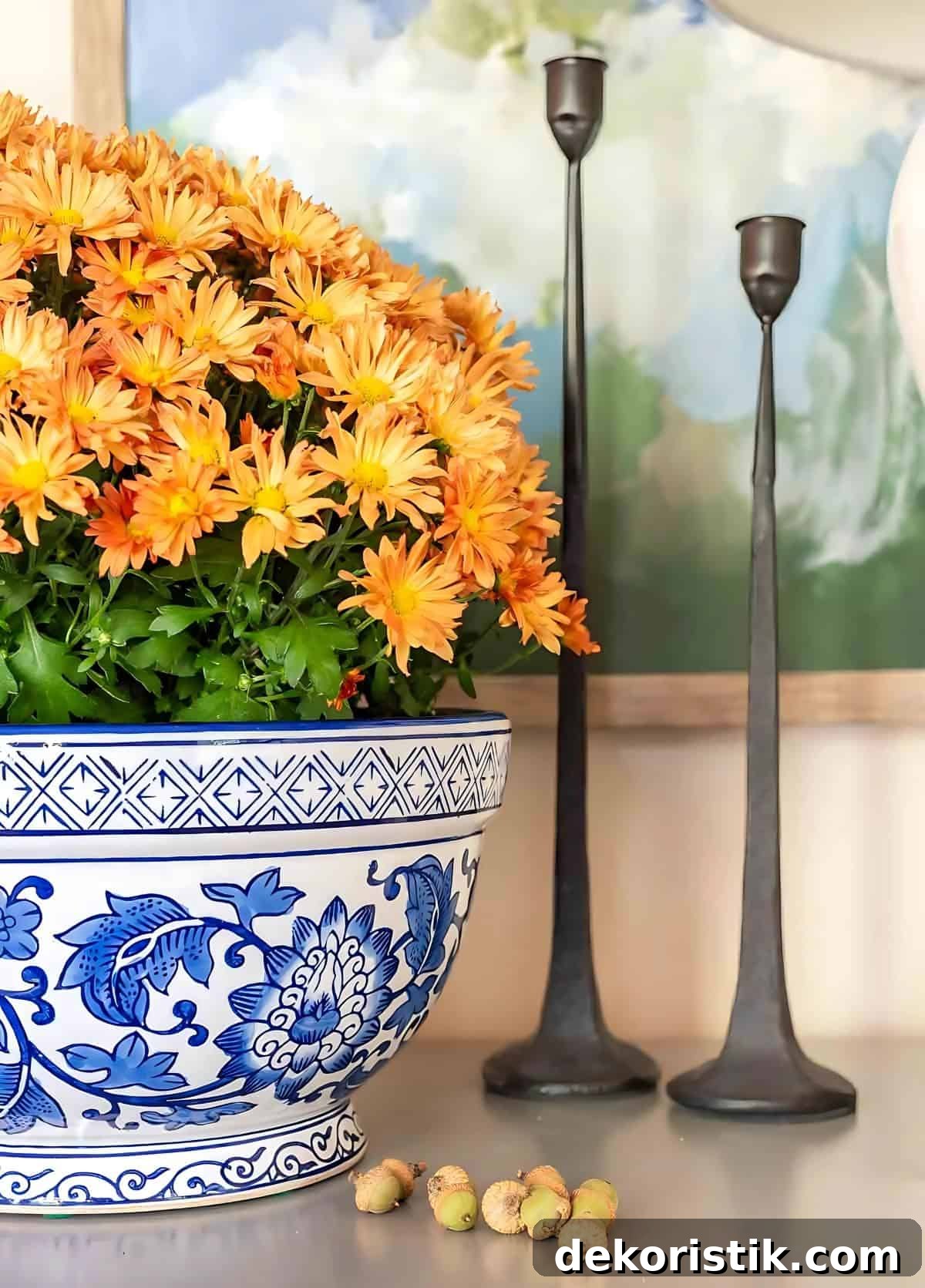
Throughout autumn I place mums around the house to add a pop of color and enhance a cozy fall atmosphere. You don’t need to remove them from their nursery pots—simply set the pot into a decorative container. This season I’ve mixed several colors to complement my fall decor and create layered vignettes.
Mums work beautifully outdoors in beds and borders, and they also look great paired with pumpkins on a porch. Many people prefer them indoors so the blooms can be enjoyed every day. When indoor blooms begin to fade, hardy varieties can often be transplanted into garden beds to reward you with flowers next year.
Choosing the best mums for indoors
Selecting a healthy plant at the start makes a big difference in how long your indoor mums will last. There are two main types: hardy garden mums and florist mums. If you plan to transplant them into outdoor beds after the season, choose hardy mums, as they are more likely to survive winter and rebloom the following year.
When shopping, look for these signs of a robust plant:
- Healthy, green foliage with no yellowing or wilting indicates the plant is well cared for and not stressed.
- Choose plants with many unopened or partially opened buds rather than those in full bloom; buds will open over time and extend the display.
- Inspect for pests and disease—check under leaves and around the base for insects, webbing, or unusual spots.
- Even growth and a balanced form suggest the plant received adequate light and care during production; avoid lopsided plants with bare patches.
What’s the best location for indoor mums?
Placement indoors strongly influences bloom longevity. Mums enjoy bright light but can suffer if exposed to harsh direct sun, which can bleach petals. Aim for a bright window with plenty of indirect light and avoid intense midday sun that can scorch blooms.
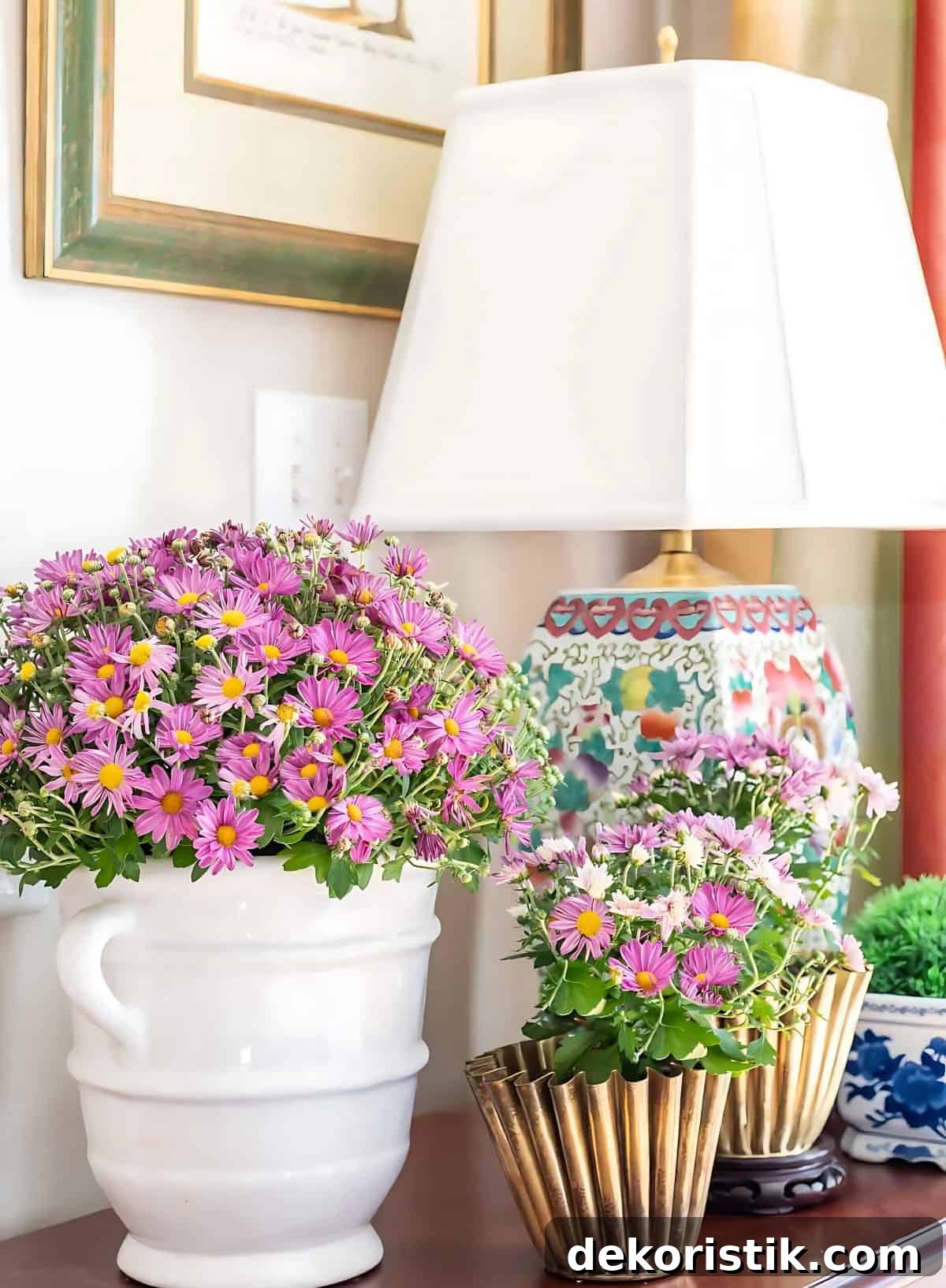
- Moderately cool rooms are best—mums prefer temperatures around 60–70°F. Cooler nights help preserve blooms, though typical living spaces may be warmer; simply avoid placing plants in overly hot rooms.
- Avoid heat sources such as vents, fireplaces, and radiators, which dry plants and accelerate decline.
- Low humidity won’t usually harm mums, but very dry indoor air shortens bloom time. If your home is extremely dry, consider placing a shallow tray of water nearby to increase local humidity.
- Good air circulation helps prevent mold and rot—don’t tuck mums into cramped, closed spaces.
- Keep mums away from ripening fruit like bananas and apples; these release ethylene gas that can make blooms age prematurely.
Watering tips for long-lasting plants
Consistent, careful watering is one of the most important habits for keeping indoor mums fresh for weeks.
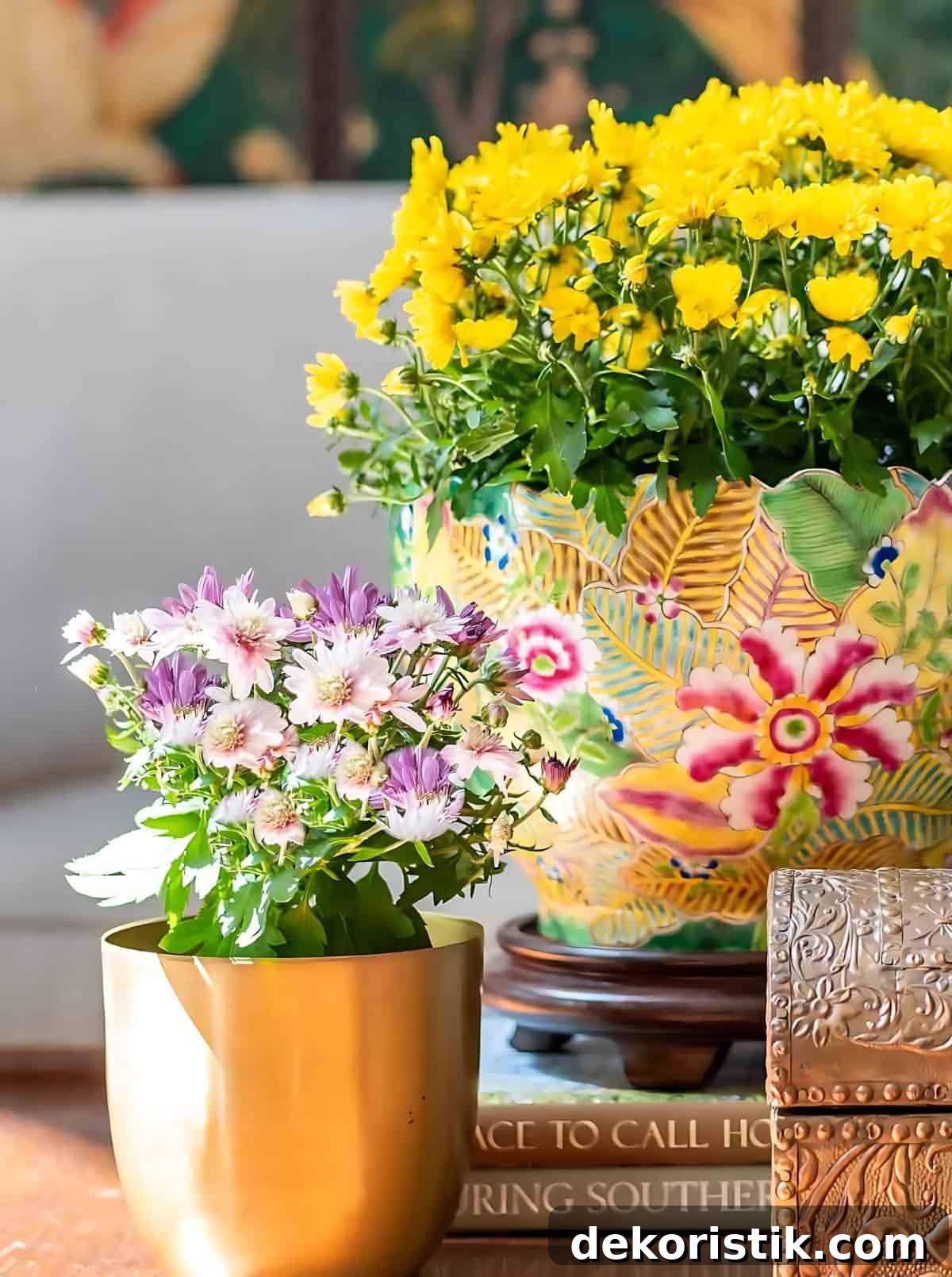
- Keep the soil evenly moist but never waterlogged. A good rule is to water when the top inch of soil feels dry to the touch.
- Water at the base of the plant rather than wetting leaves and blooms; damp foliage indoors increases the risk of disease and rot.
- Use room-temperature water. Water that is too cold can shock roots, while hot water can damage them.
- Ensure the pot drains well so excess water can escape and roots don’t sit in standing water. Use a saucer to catch overflow if needed, and discard collected water after a short time.
- Signs of overwatering include yellowing leaves, persistent wilting despite wet soil, and soft or mushy stems. Allow the soil to dry slightly before watering again.
- When indoor heating is on, plants may need water more often because the air is drier.
- If you want to extend bloom time beyond the season, feed mums with a balanced, water-soluble fertilizer every two weeks—but stop fertilizing once flower buds have fully opened.
- After bloom, reduce watering. If you plan to transplant the plant outdoors, maintain slight moisture so the roots remain healthy during the transition.
Be sure to deadhead those beauties
Regularly removing spent blooms keeps the plant looking tidy and encourages more buds to open. Deadheading prevents the plant from wasting energy on fading flowers and improves overall appearance.
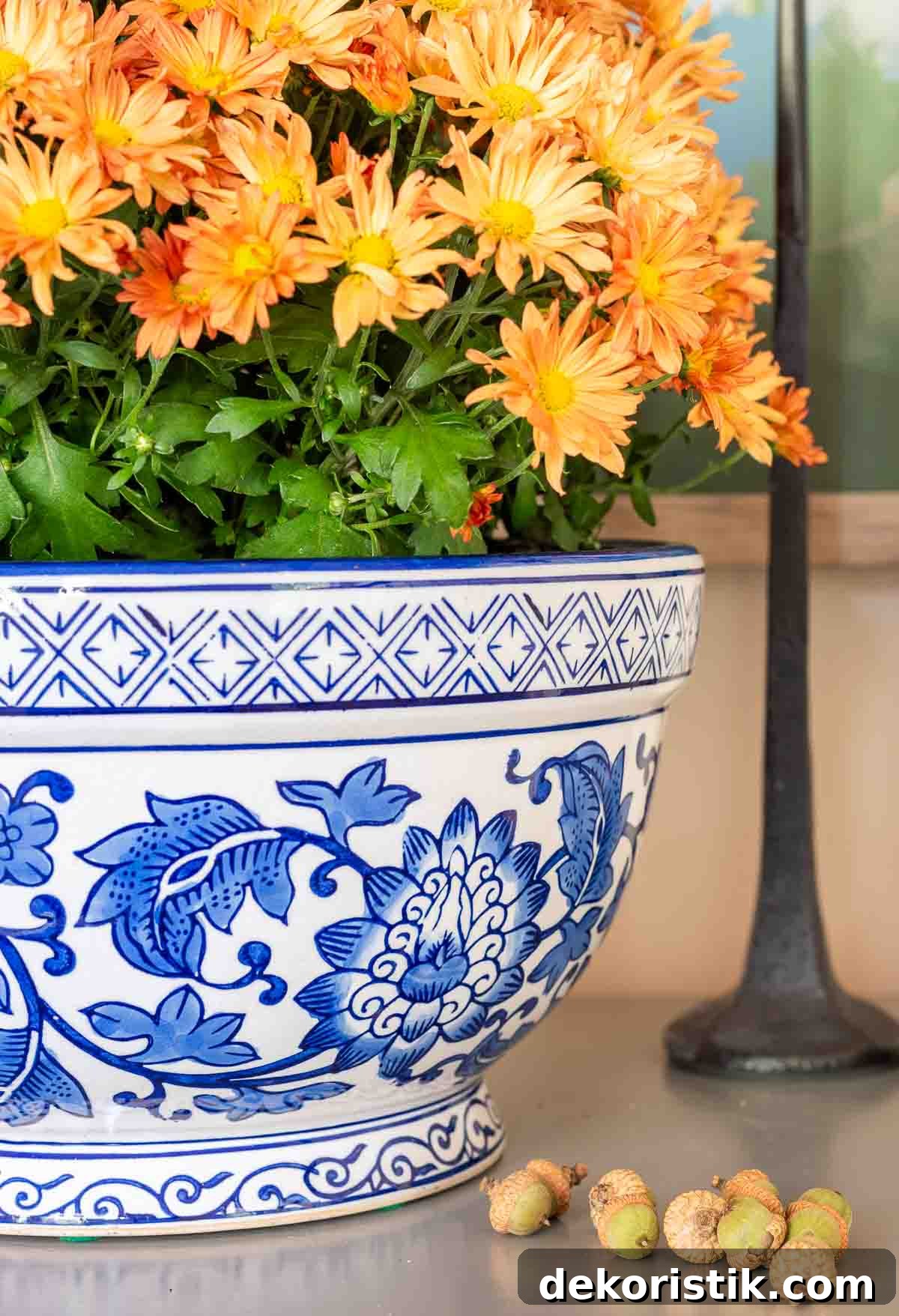
To deadhead, pinch or snip a spent bloom off at the base of its stem, just above a set of healthy leaves. Check the plant weekly and remove wilted flowers as needed—mums produce many blooms, so regular attention keeps them at their best.
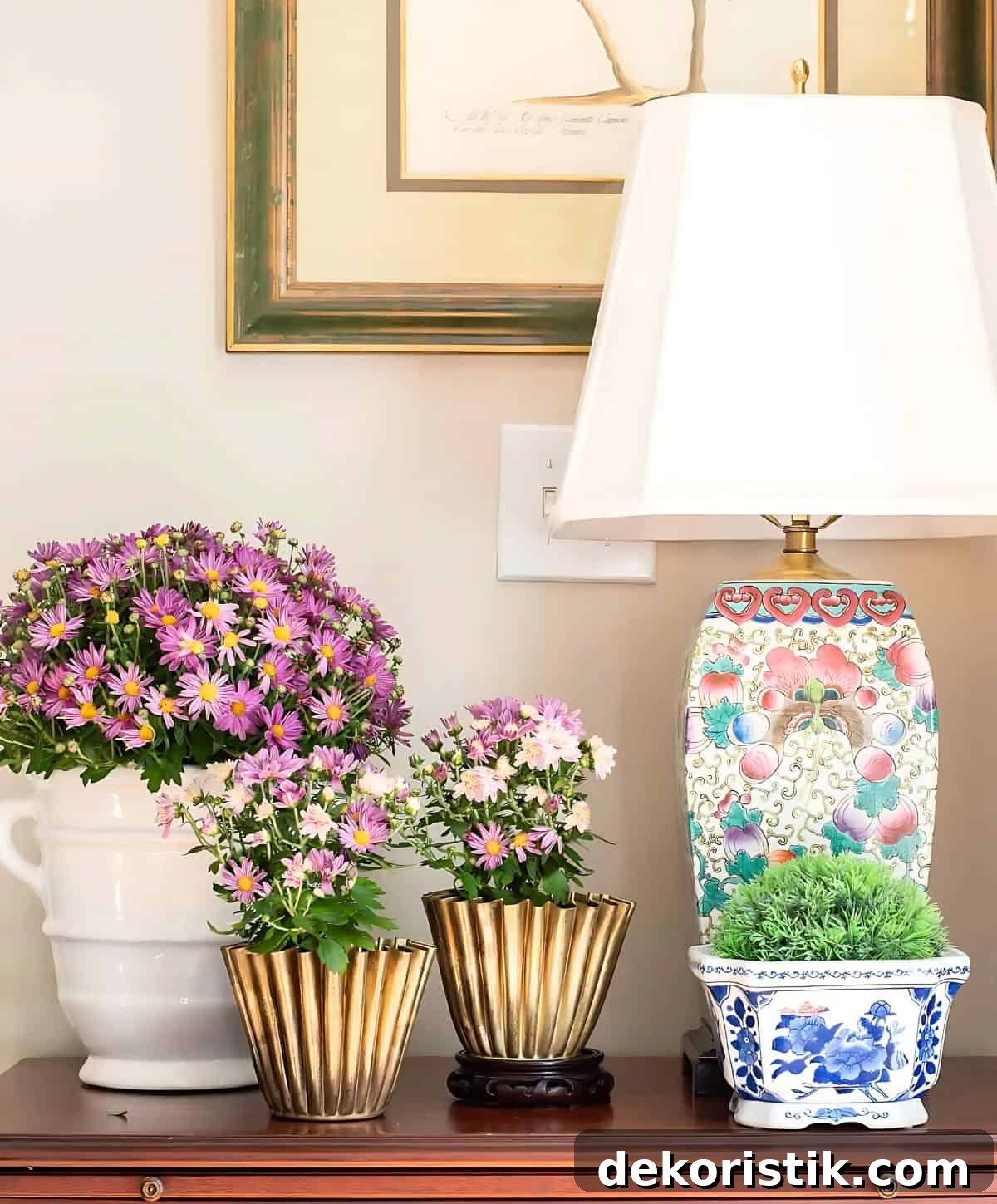
When indoor mums begin to fade, consider giving them a second life outdoors. If you purchased hardy varieties, you can transplant them into garden beds for potential return blooms next season. For best results, choose a well-draining spot with morning sun and afternoon shade, prepare the soil with organic matter, and protect young plants from early freezes.
If you’d like more detailed guidance on replanting and overwintering mums, consult reputable gardening resources that cover site selection, planting depth, and winter protection practices. With basic care—proper light, consistent watering, routine deadheading, and attention to temperature—indoor mums will brighten your home all autumn and can even become part of your perennial garden plan.