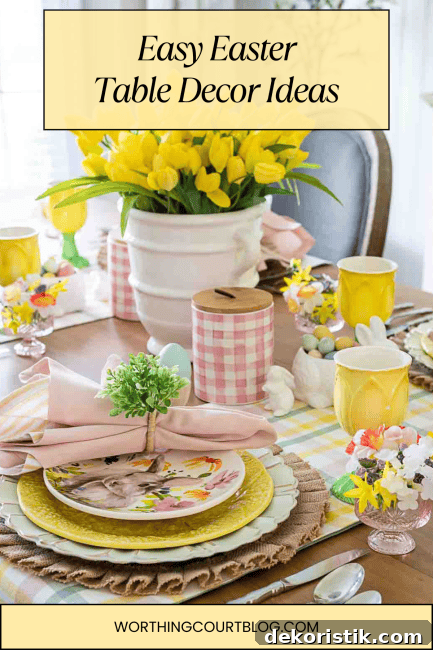
Simple and charming Easter table decorating ideas to help you create a festive and welcoming tablescape without the fuss. These practical tips will guide you from choosing a color palette to arranging a centerpiece so your Easter celebration looks thoughtfully styled and inviting.
Setting a pretty Easter table doesn’t need to be complicated. Whether you’re hosting a brunch, lunch, or dinner, a thoughtfully decorated table is one of those little touches that makes the day feel special. From linens to place settings and a simple centerpiece, each element helps build a cohesive Easter tablescape that guests of all ages will enjoy.
Choose a color scheme
There’s no single correct color palette for Easter table decorations, but soft pastels are classic for spring: think pink, yellow, green, and sky blue. Pick two or three main colors, and then coordinate tablecloths, napkins, plates, and small decorative accents to create balance and harmony. For this tablescape, vintage yellow cabbage-ware dishes provided the inspiration and set a warm, nostalgic tone.
Using heirloom or sentimental pieces—like the yellow cabbage-ware in this display—adds personality and a meaningful touch. If you don’t have a signature item, choose a unifying color or pattern to tie everything together.
Add the table linens
Start with your base layer: a tablecloth or table runners. Make sure the fabric lies flat and hangs evenly. Table runners are a versatile option because they introduce color and pattern without covering the whole table. For added interest, try laying runners crosswise and anchoring place settings with coordinated placemats on each side.
Add placemats and chargers
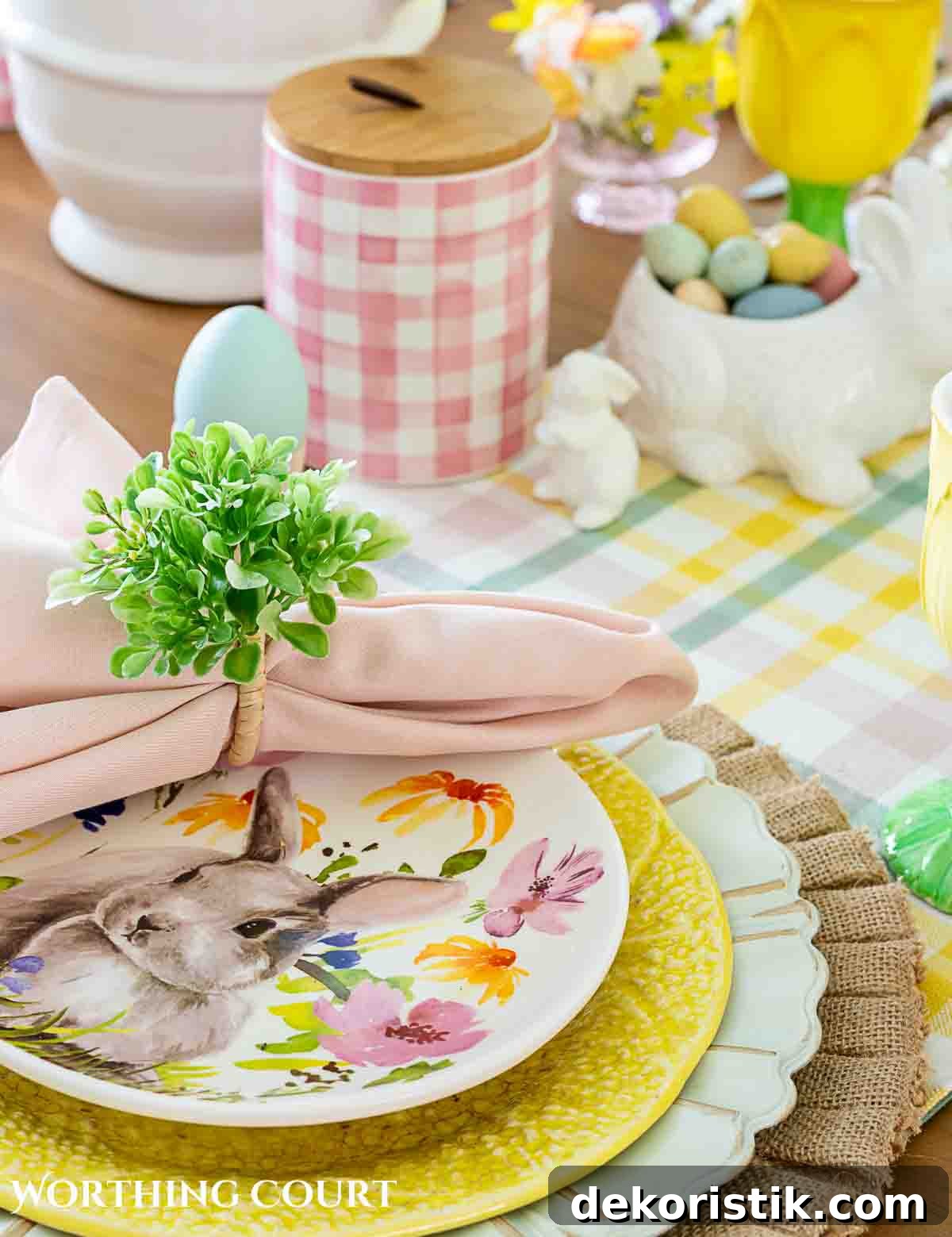
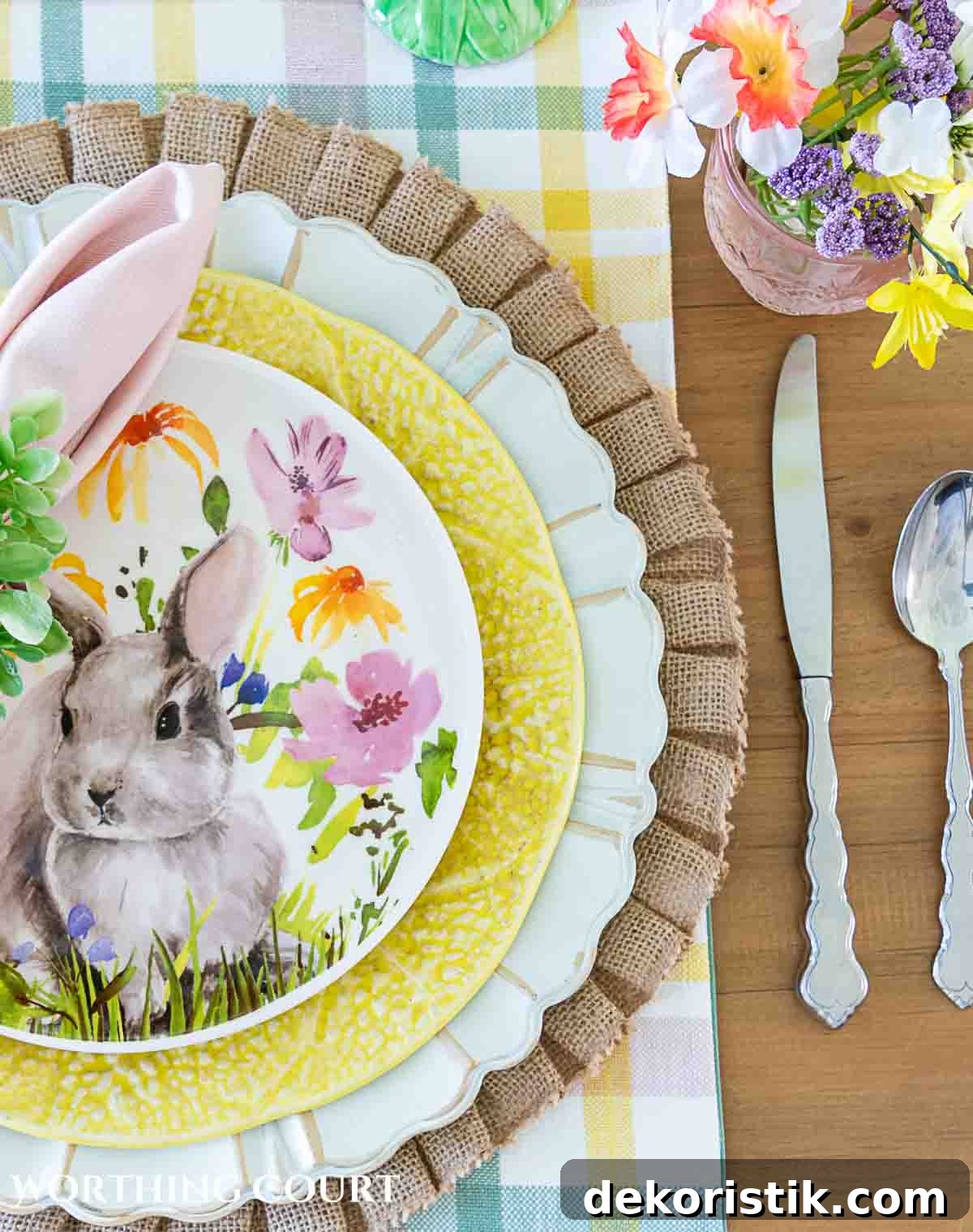
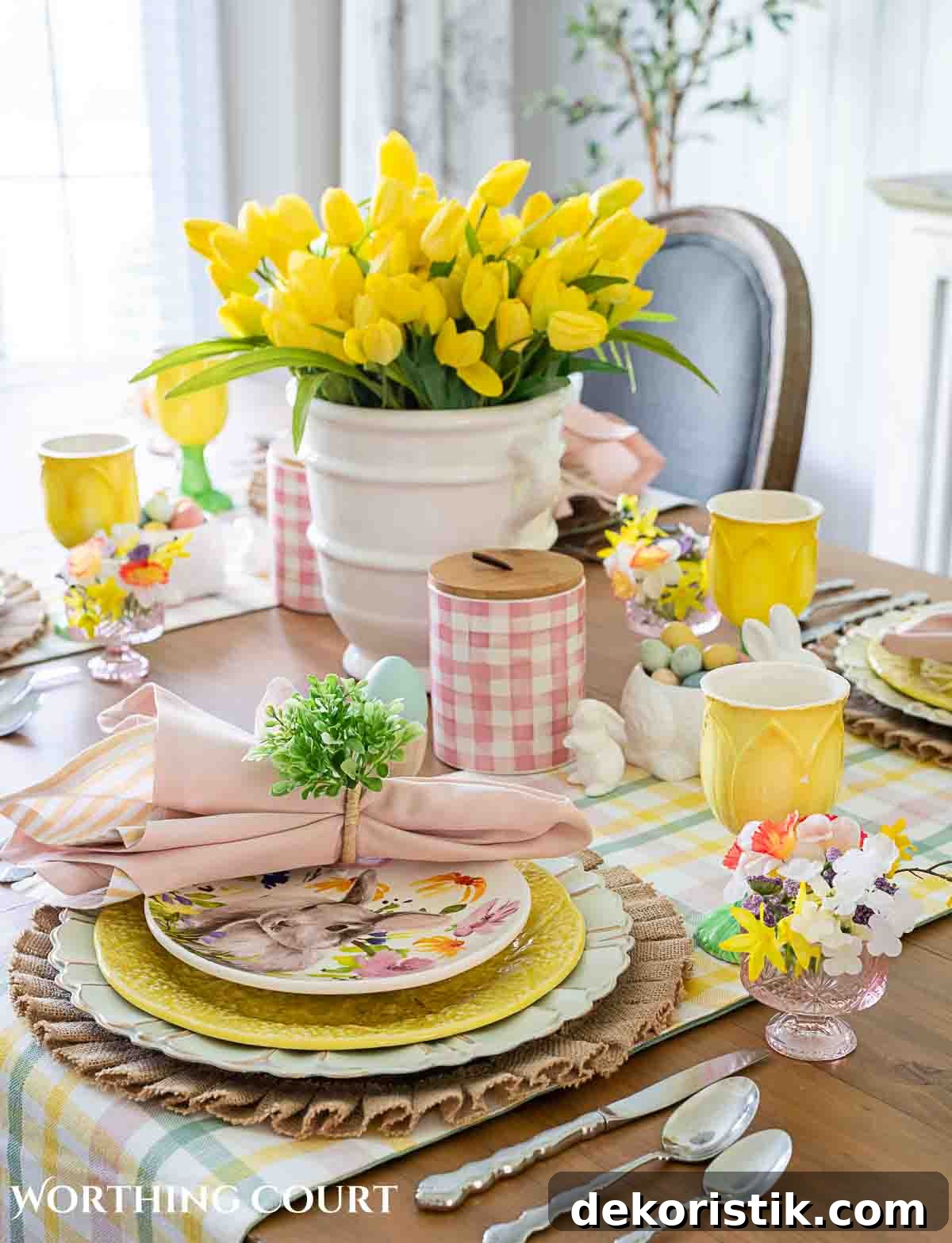
Layering placemats and chargers creates depth and elevates a simple table. Choose textures and edges that add visual interest—ruffled placemats or scalloped chargers bring a soft, feminine touch to an Easter setting. These subtle details help your table feel curated and complete.
Add the plates
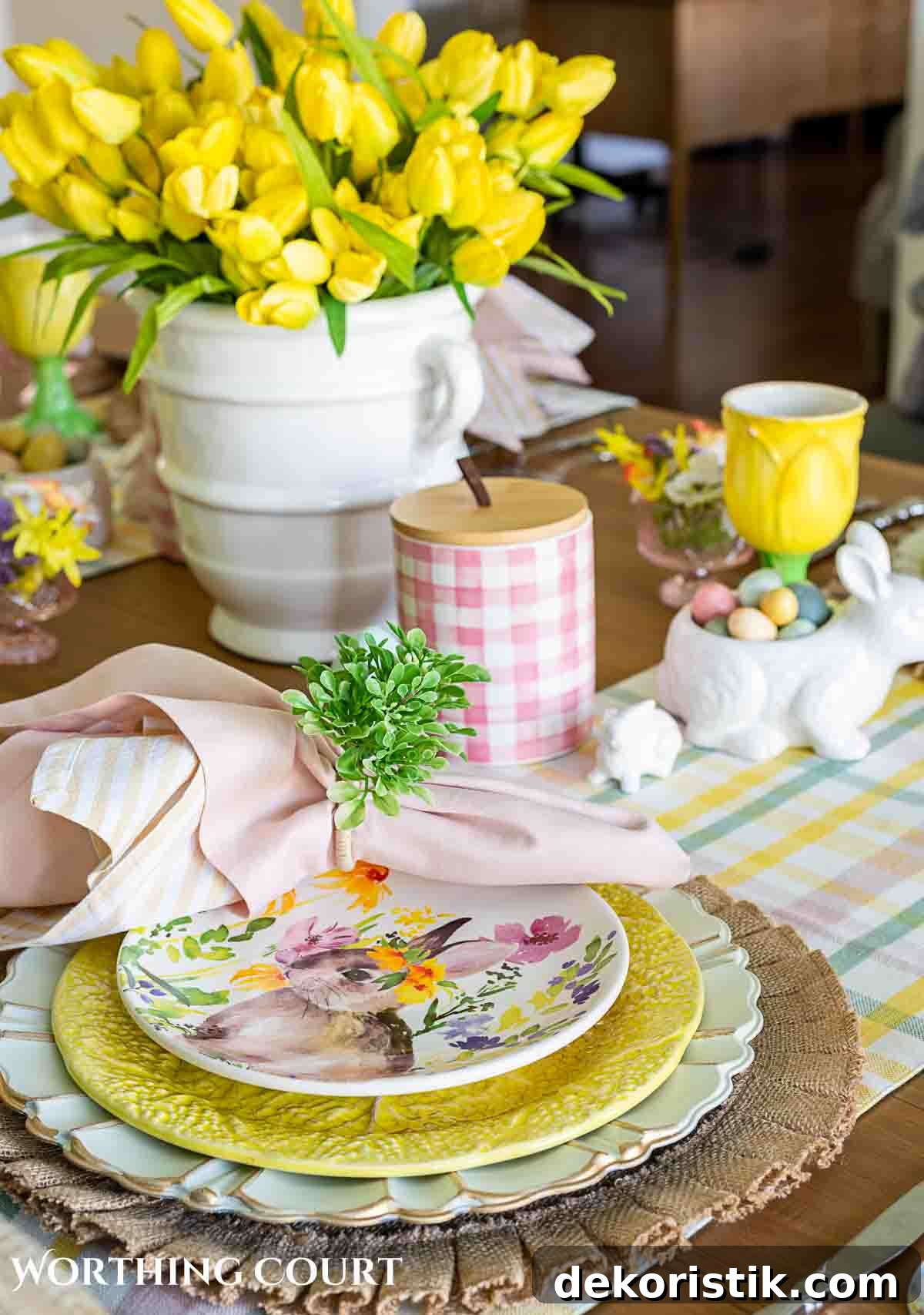
Mix and match plates to suit the number of guests and the style you want. If you have a special set of patterned plates but not enough for all, fill in with simple white dinner plates. White dinnerware pairs well with any color scheme and is a reliable fallback for larger gatherings.
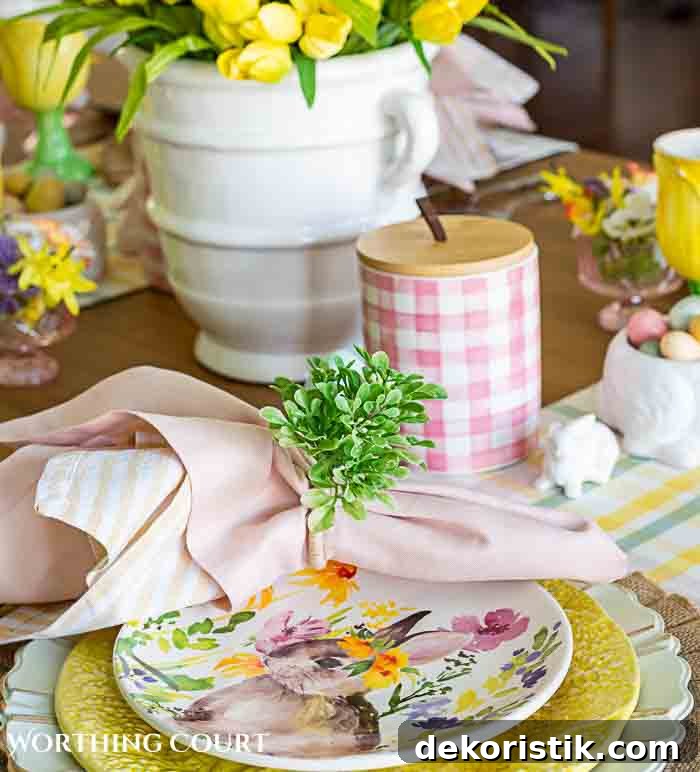
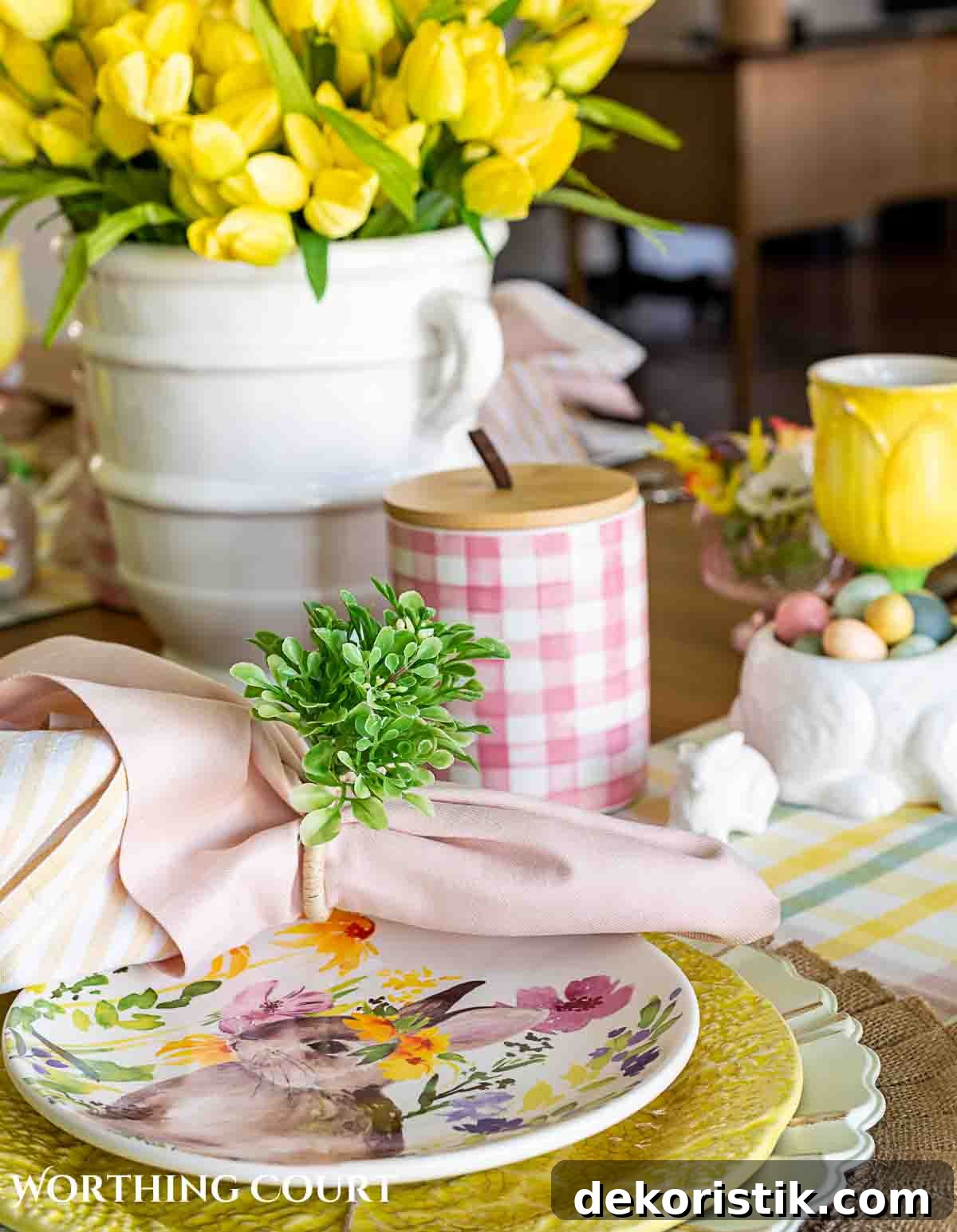
To make a playful accent, place decorative salad plates—such as bunny-themed plates—on top of the dinner plate. Guests can set them aside when the salad course is served. If you use a bread plate, place it above and to the left of the forks with a small butter spreader.
Add the silverware
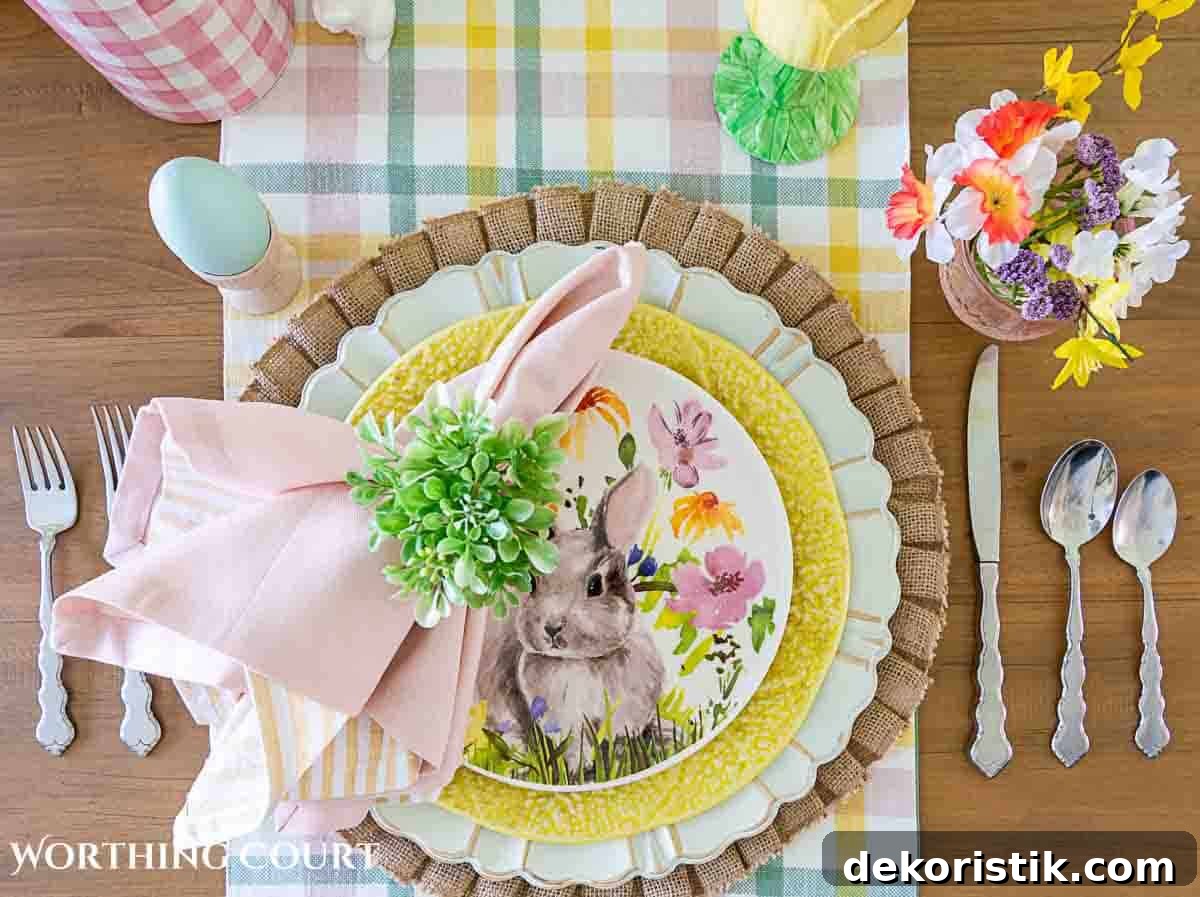
There’s a classic arrangement for flatware that’s both functional and aesthetically pleasing. Place the dinner fork to the left of the plate and the salad fork to the left of the dinner fork. The knife goes on the right with its blade facing the plate, and spoons sit to the right of the knife. Dessert utensils can go above the plate if you’d like to include them.
Add the glasses
Position a water glass above the knife. If you’re serving wine, set the wine glass to the right of the water glass. Choosing distinctive glassware—like tulip-shaped goblets—can reinforce the theme and bring a bit of vintage charm to the setting. Using family pieces or special goblets makes the meal feel more celebratory.
Add the napkins
Napkins can be folded simply to the left of the forks, but for a more creative touch try layering two different colored napkins, securing them with a napkin ring, and laying them on the plate stack at an angle. Natural elements—like a sprig of greenery tucked into the ring—add texture and a fresh, spring feel.
Layered napkins introduce color contrast and help the table look thoughtfully styled without adding much effort.
Add the table decorations and centerpiece
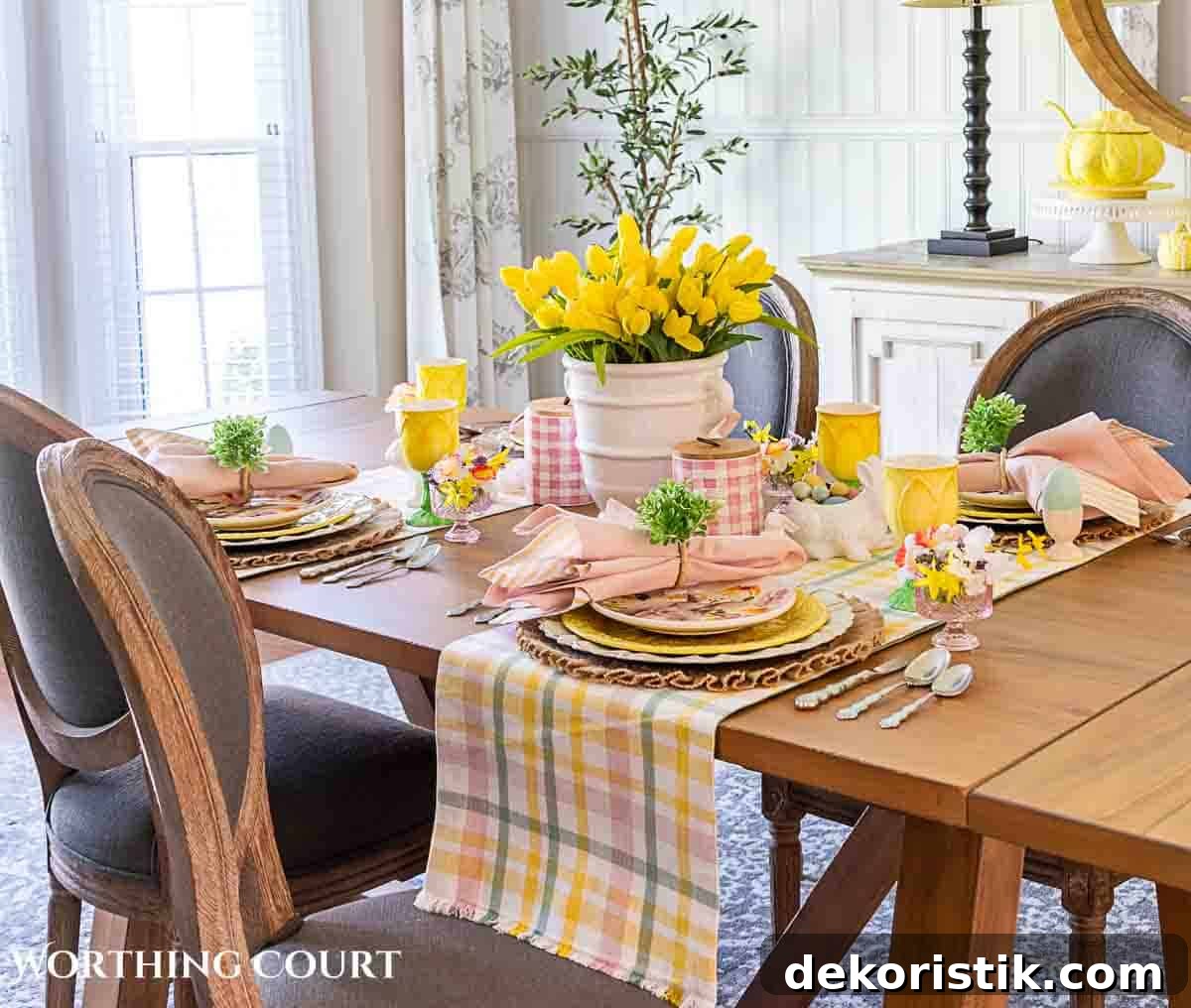
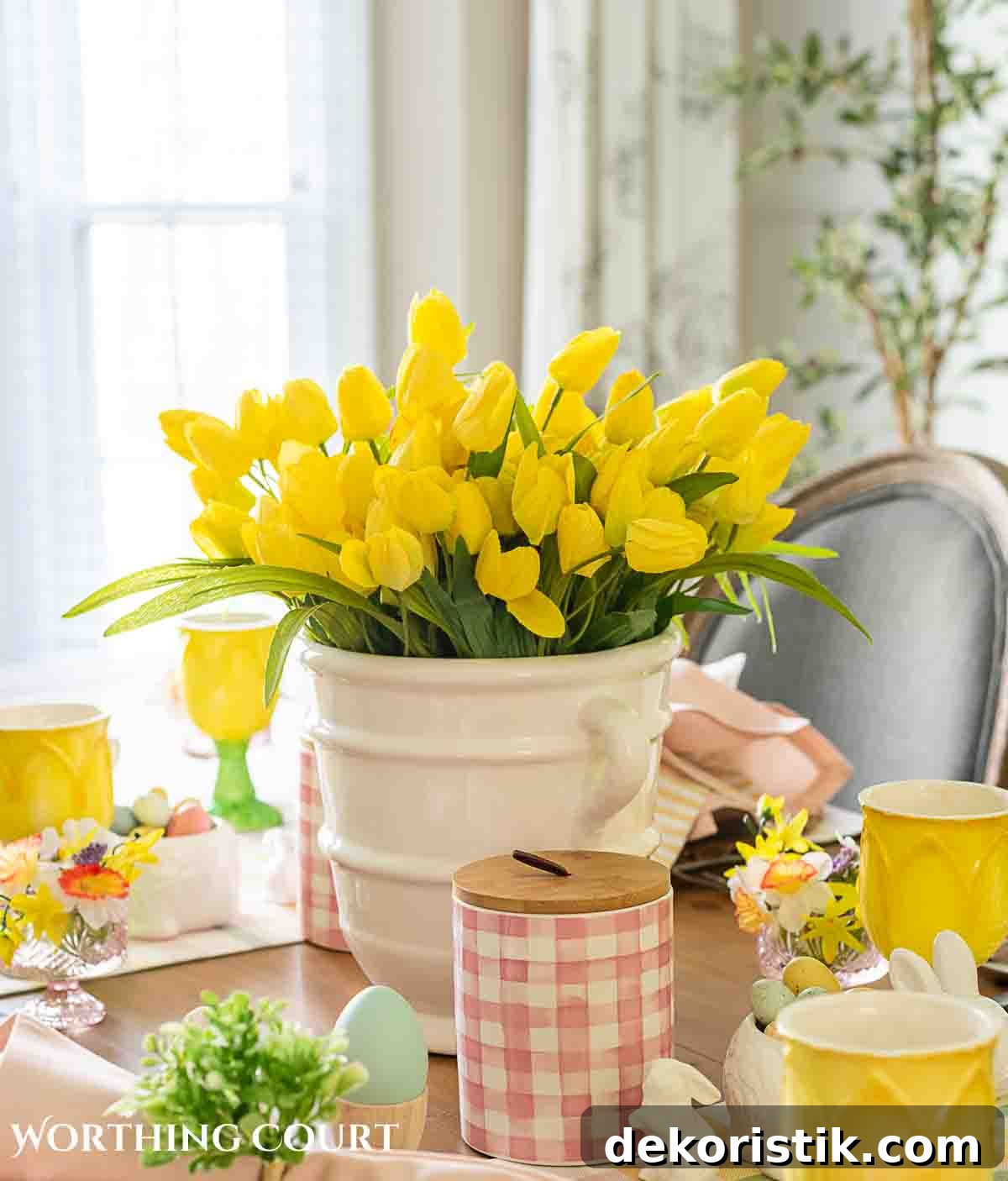
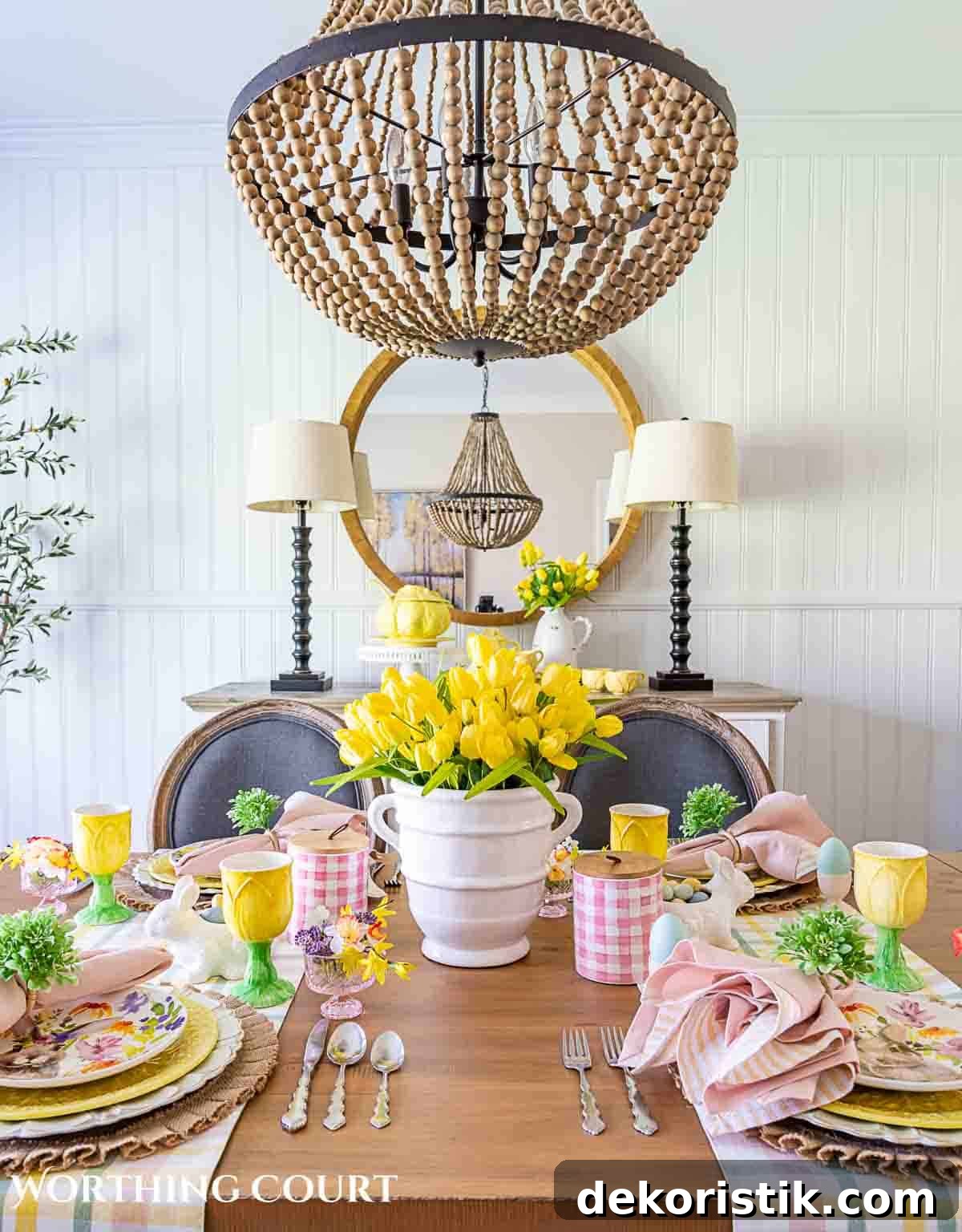
Place your centerpiece and any additional decor after the place settings are arranged. This shows you how much space remains and helps avoid overcrowding. A single statement piece—like a white vase overflowing with tulips—creates an eye-catching focal point and reflects spring’s fresh energy. Faux stems can work beautifully if you prefer long-lasting arrangements.
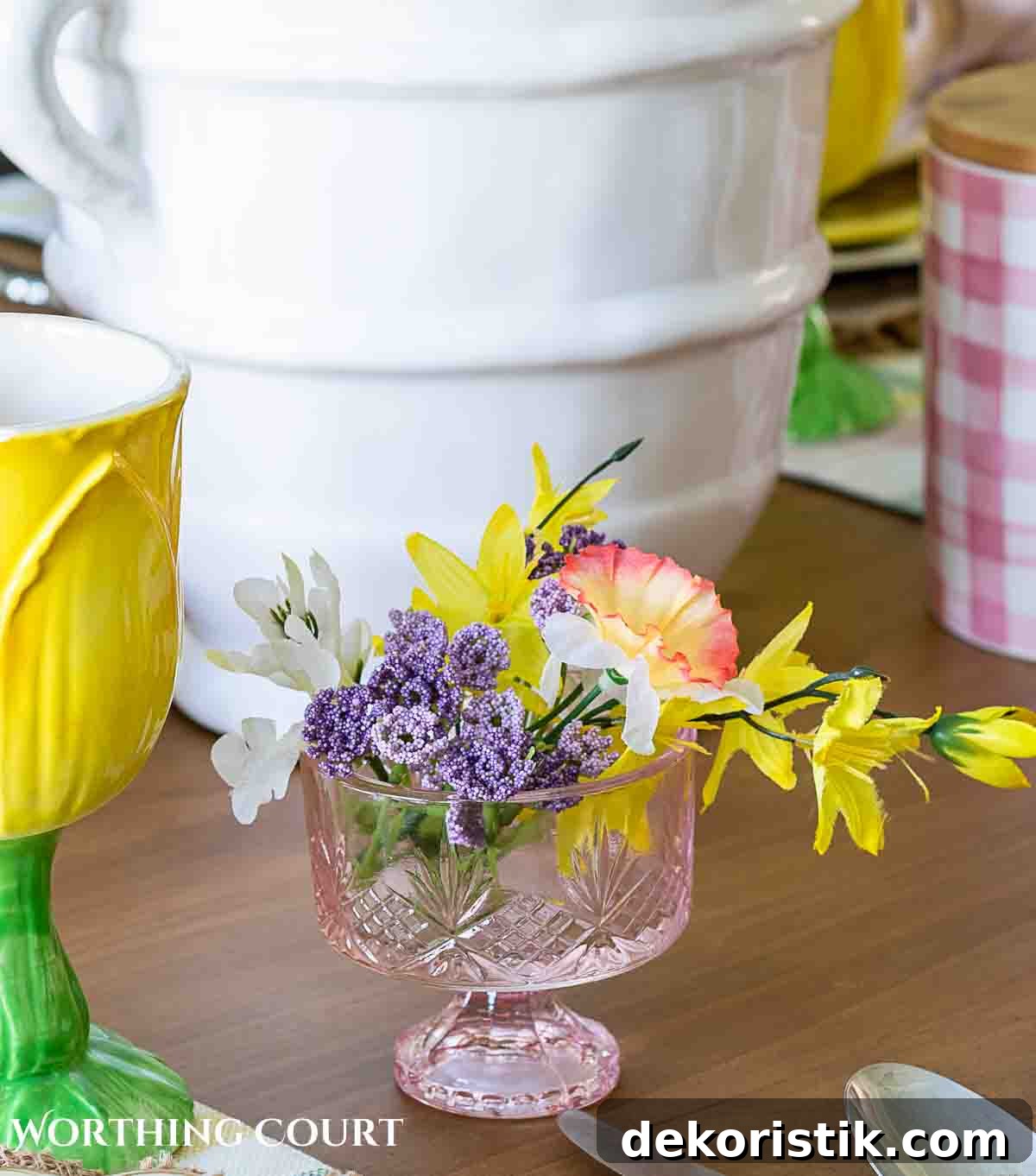
Round out the centerpiece with small accents: gingham canisters, bunny bowls, or glass pedestal bowls filled with faux florals add charming touches and fill empty spaces. A few other easy Easter table decorating ideas include:
- Mini pots filled with candy eggs nestled on a bed of moss
- Weaving a long ribbon through the tablescape to connect elements
- Small baskets holding mini nests and tiny eggs
- Mason jars arranged with daffodils or other spring blooms
- Candles set in a bed of sand at the bottom of a jar for gentle mood lighting
Display additional decorative pieces—like extra cabbage-ware—on a sideboard to extend the theme beyond the table. These items complement your tablescape and create a cohesive room look without crowding the dining surface.
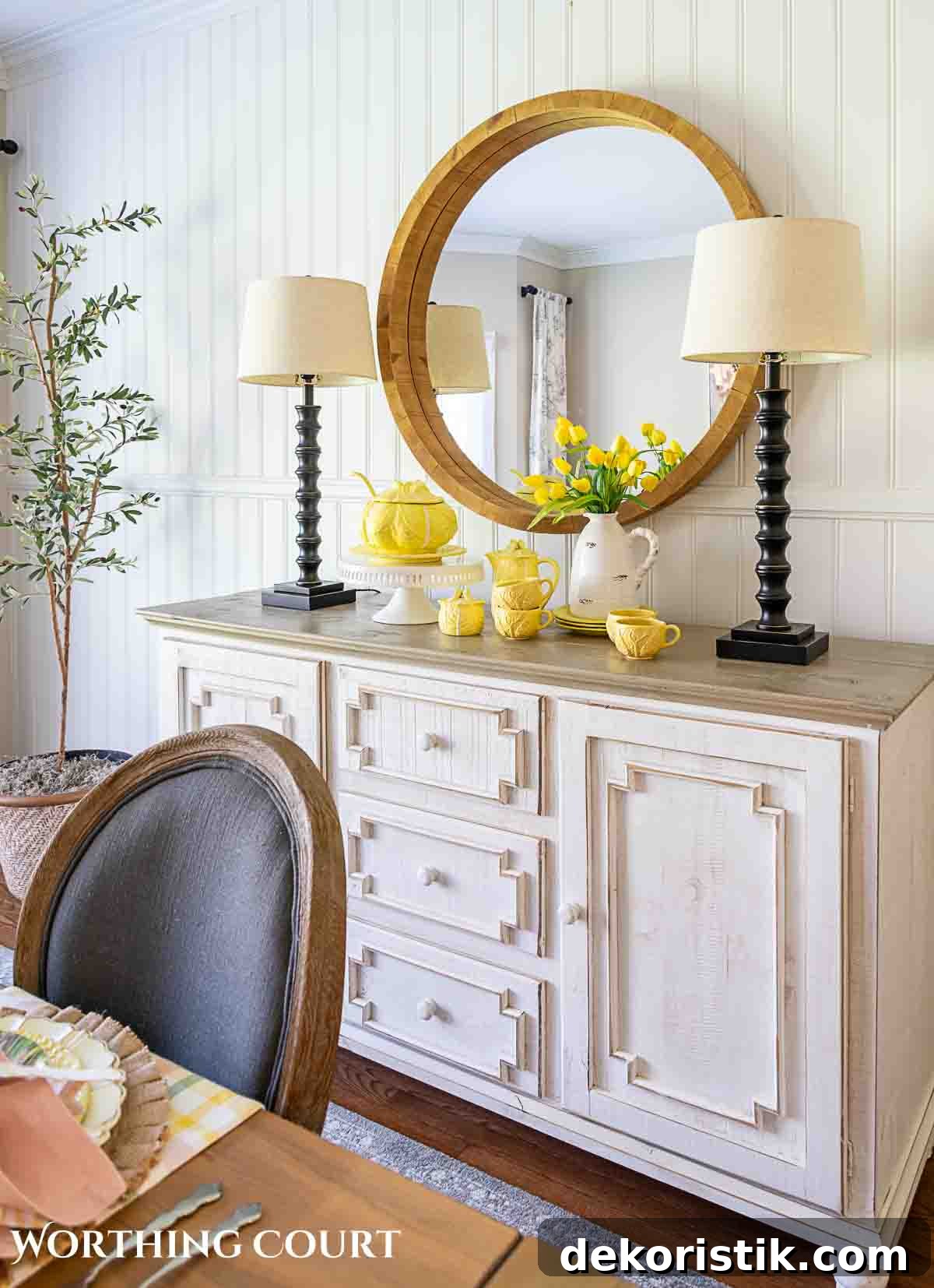
Whether you use family heirlooms or budget-friendly finds, small thoughtful choices make a big impact. Happy and blessed Easter to you and your guests—may your table be warm, colorful, and filled with good company.
For a traditional Easter meal, many families serve baked ham, potato salad (often chilled), deviled eggs, green beans, rolls, and a favorite dessert like banana pudding. Whatever you choose, pair a lovely table with your favorite recipes to create memorable holiday moments.