
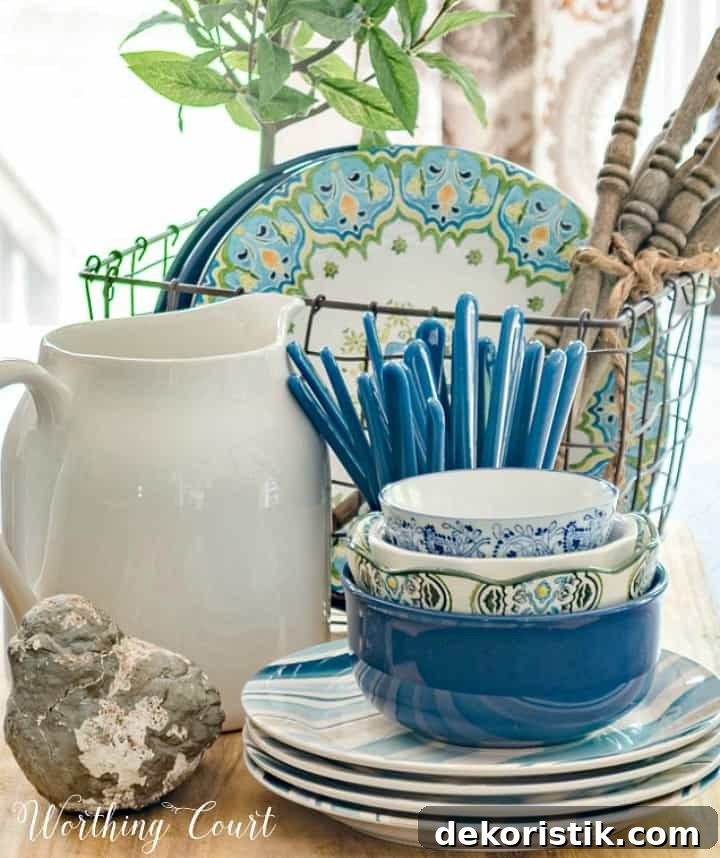
How to Create a Blue and Green Summer Centerpiece
Create a fresh blue-and-green summer centerpiece in minutes by combining vintage finds with modern accents for a warm, collected look. This simple arrangement uses familiar pieces—dishes, a breadboard or tray, a pitcher and a few decorative elements—to deliver a relaxed, coastal-meets-garden vibe that feels both personal and polished.
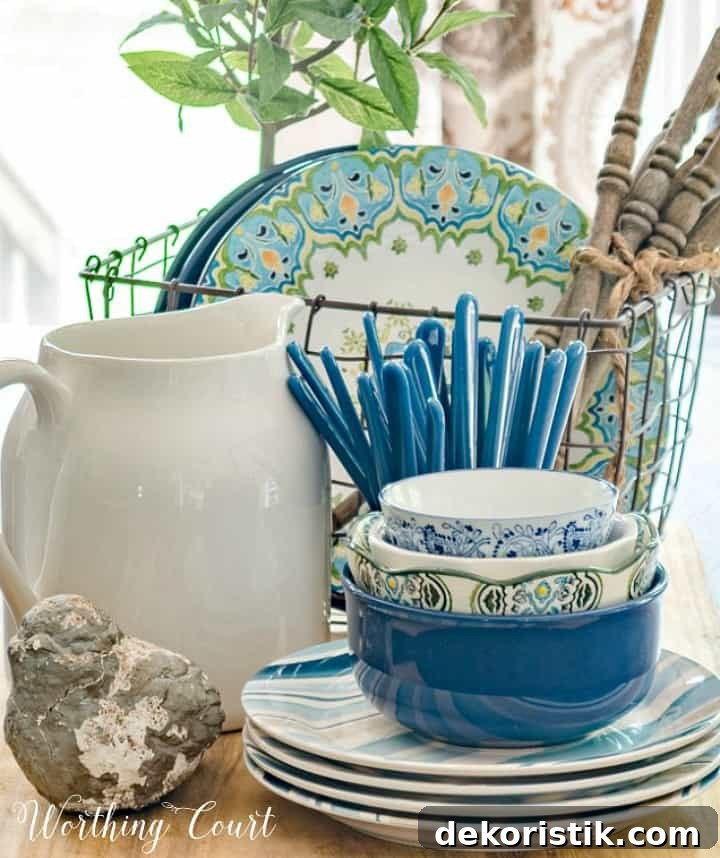
You don’t need to buy anything new to achieve this look. Start with what you already own: a wooden board or tray as the base, a group of plates and bowls in coordinating blues and whites, a pitcher or tall container for greenery, and one or two small vintage accents. Combining these elements creates depth and interest while keeping the centerpiece lightweight and easy to move.
Blue evokes a calm, coastal feel; green introduces fresh, garden-fresh energy. Together they make a timeless summer palette. In about five minutes, you can assemble a display that looks thoughtfully curated rather than staged—perfect for everyday dining or casual entertaining.
Let me show you how to turn these simple pieces into a striking focal point.
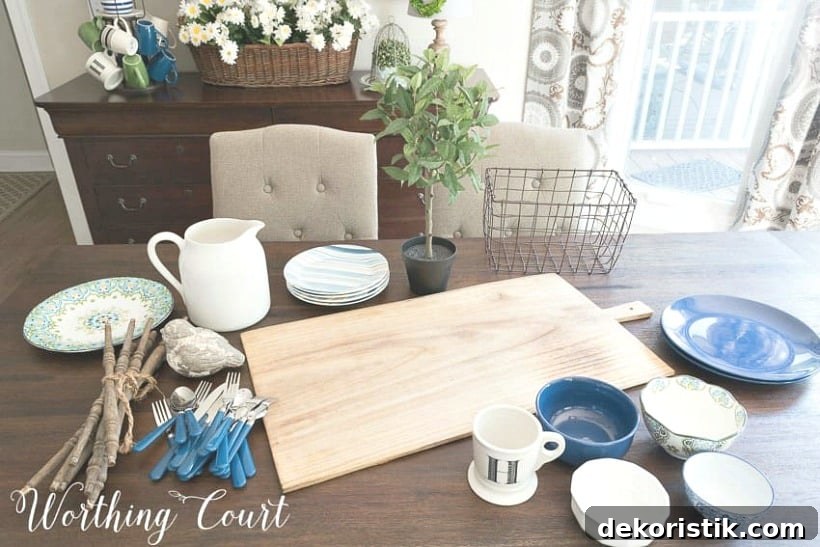
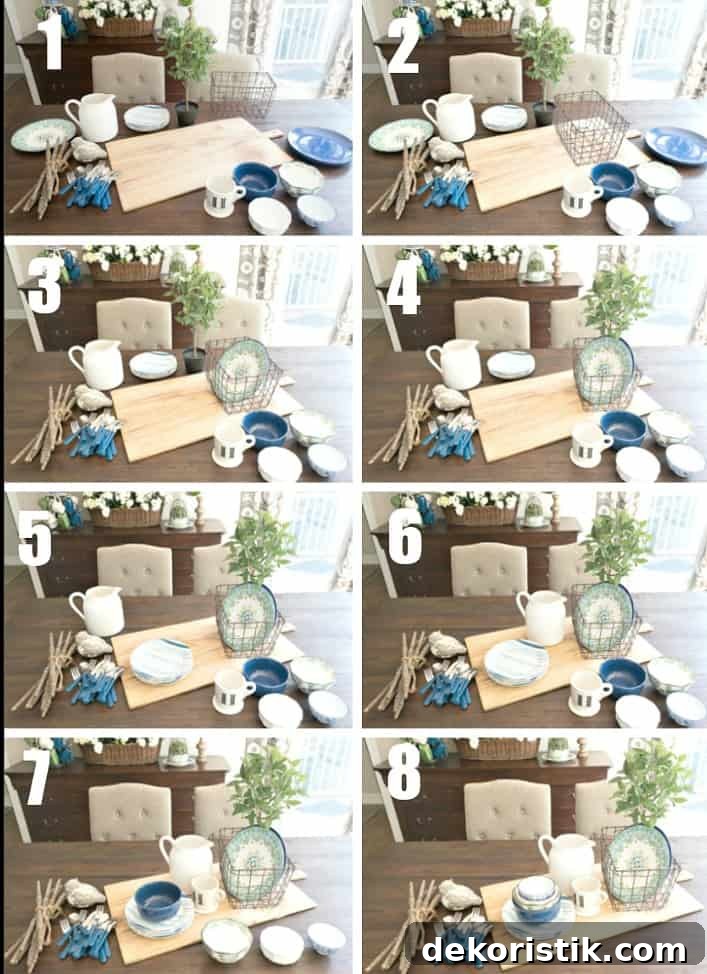
Start by laying out the pieces you plan to use. Group similar tones together so you can see how they balance visually. Work from the largest pieces to the smallest: the base board or tray first, then taller elements like a pitcher or topiary, followed by stacks of plates and bowls, a basket or bowl for texture, and finally small decorative items that add charm and personality.
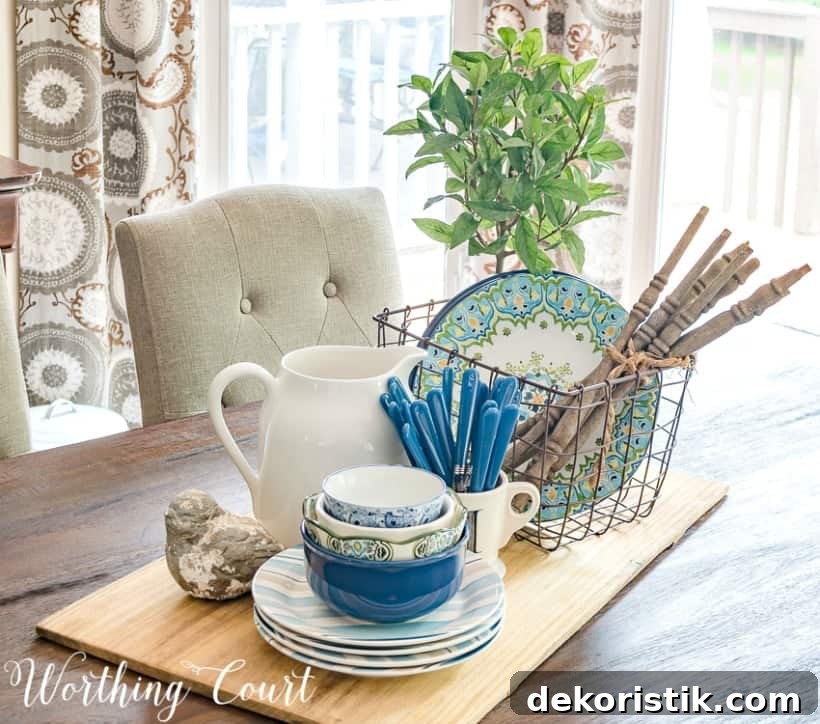
There’s a simple method behind a successful vignette or centerpiece: anchor the arrangement with a large, flat base; layer items at varying heights; and introduce small, unexpected details. For more guidance on curating vignettes and arrangements, see my full tips HERE.
If you don’t own the exact pieces pictured, you can still recreate the feeling. Look through your cabinets and closets for these basic components:
- a large item for the base, such as a wooden breadboard or tray
- something tall for vertical interest, like a pitcher, a topiary or a container with long greenery stems
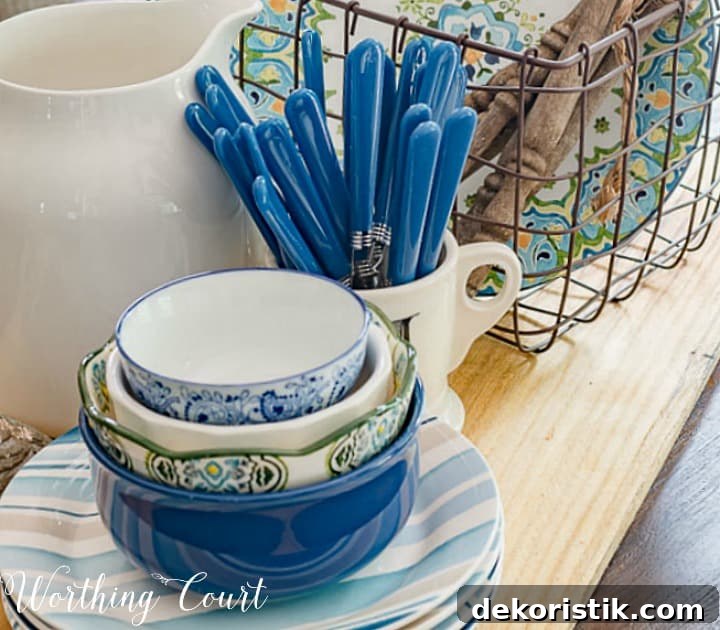
- a cohesive assortment of plates and bowls in blues, whites and soft greens
- a wire or woven basket to contain small items and add texture
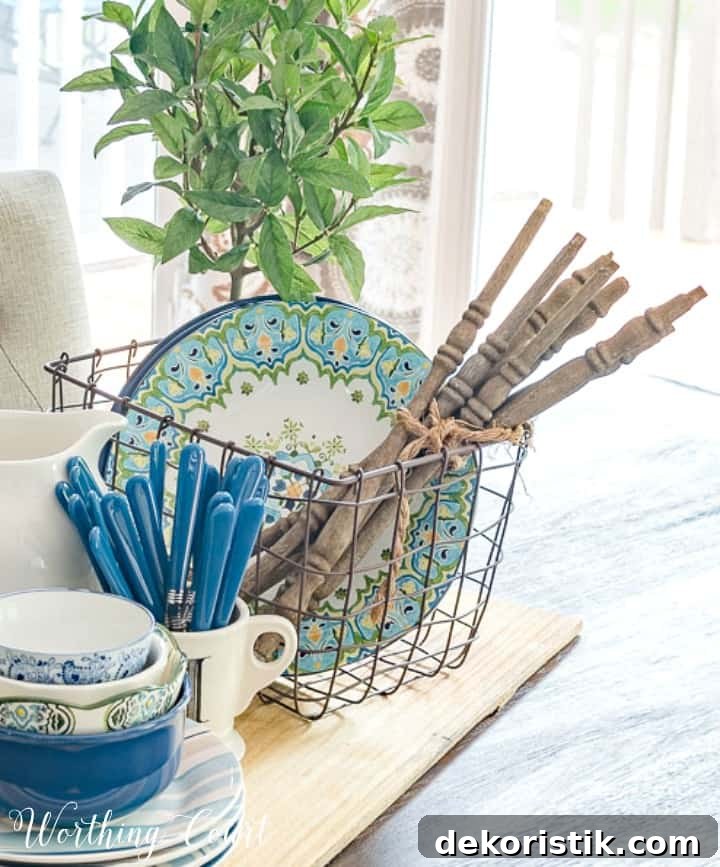
- long, linear elements to place inside the basket—twigs, skewers wrapped with twine, or long stems
- a medium-sized pitcher for flowers or greenery
- a mug or small cup to echo the color scheme
- a few pieces of silverware or blue-toned flatware for detail
- a small vintage decorative piece—an aged ceramic bird or other flea-market find—to give the arrangement personality
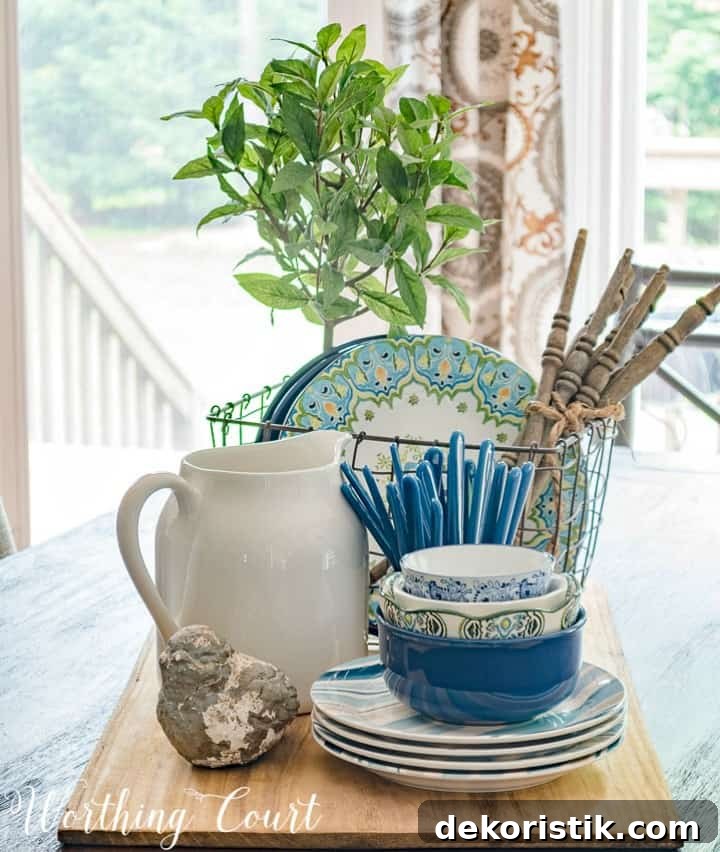
Position the base board diagonally on your table rather than parallel to the edges. Tilting the base slightly adds movement and makes the composition feel more intentional and visually engaging. From there, place your tallest item off-center to create an asymmetrical balance that draws the eye.
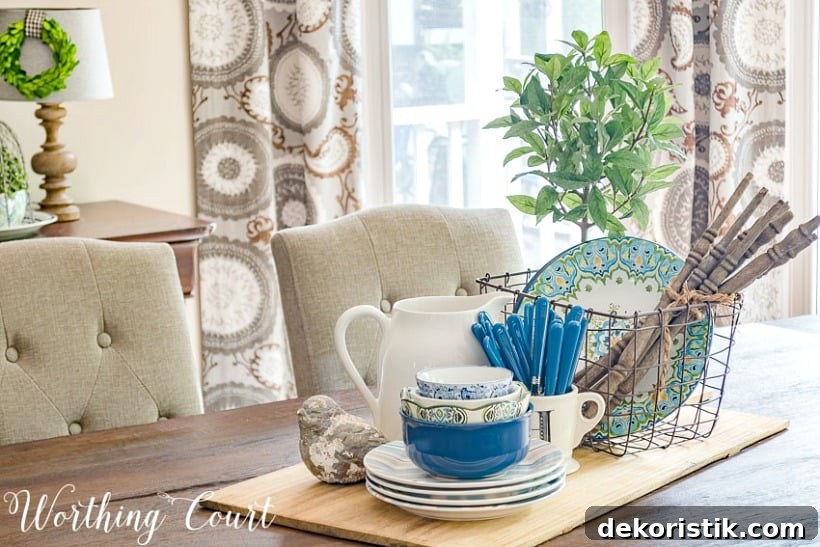
Varying heights are essential. Stack plates and bowls to achieve pleasing proportions and to lift smaller objects so they read in the arrangement. Group objects in odd numbers—three or five elements usually feel the most natural—and leave a bit of negative space so the display doesn’t feel crowded.
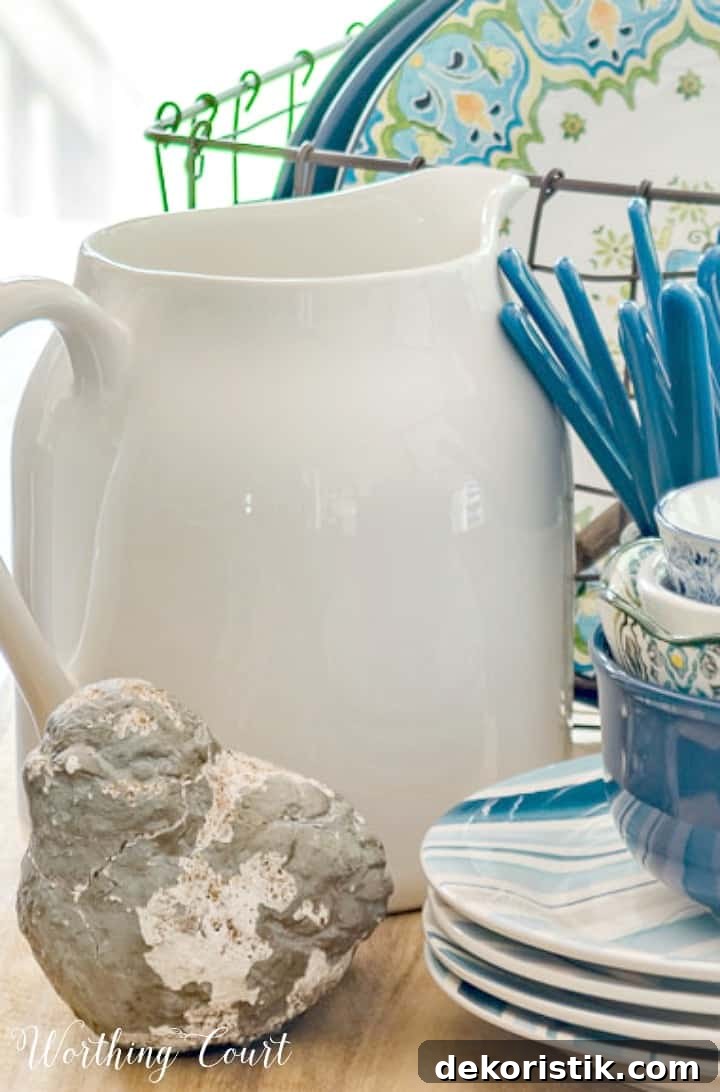
Textures play a big role. Mix smooth ceramics with rougher wood and metal, and add greenery for softness. The wire basket holds longer stems and spindles while a neutral wooden board keeps the overall look grounded and warm.
Here are a few quick styling tips to refine your centerpiece:
- Start with the largest pieces, then layer medium, then small. This creates structure and makes it easy to adjust the composition.
- Use stacks to create height and interest. Alternate colors and textures within those stacks for more depth.
- Include a living element—fresh cut stems, a potted plant or faux greenery—to add color and natural movement.
- Keep the color palette tight: choose two main colors (blue and green) and one neutral (wood, white or metal).
- Add a small vintage item to make the arrangement feel unique and collected, not store-bought.
If you’re unsure where to start, spread your items out and experiment. Move pieces around until the balance feels right. You’ll typically find success when the arrangement reads as layered and natural rather than perfectly symmetrical.
Decorating with a mix of thrifted and new pieces adds personality and charm. Embrace imperfections—chipped glaze or patina on metal—because those little marks contribute to the lived-in, curated feel. Blue and green are classic summer colors that pair beautifully, and when you combine them with both old and new elements the result is fresh, thoughtful, and welcoming.
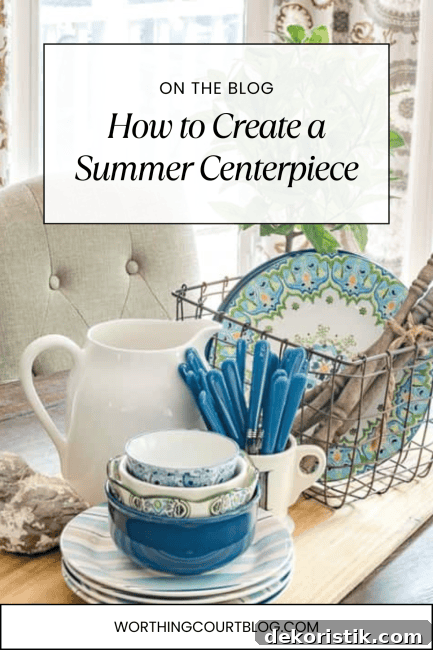
With a few thoughtful choices and some playful arranging, you can make a summer centerpiece that feels effortless and personal—perfect for everyday meals or an impromptu gathering. Try a few variations: swap the greenery for seasonal blooms, use different plate patterns, or try a painted breadboard for a pop of color. Once you understand the simple rules—base, height variation, texture and a small focal accent—you can create many different looks from the pieces you already own.