Favorite Elements for a Fresh Spring Mantel and Hearth

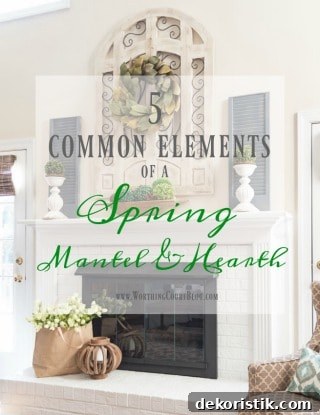
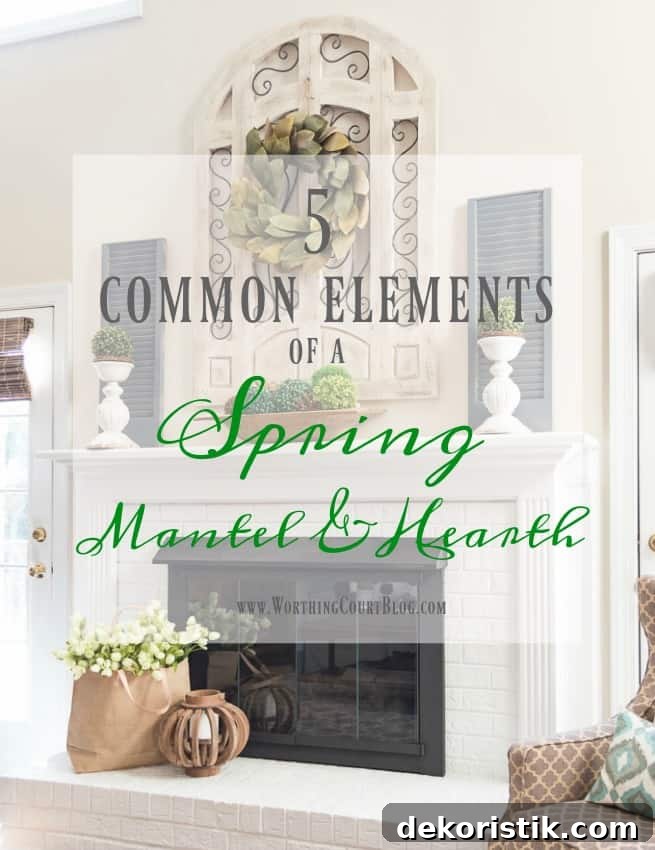
Over the years I’ve discovered a favorite “recipe” I return to whenever I decorate my mantel and hearth for spring. It’s a flexible approach built from a few dependable elements — a backdrop, greenery, texture, substantial containers, and just a touch of color. By combining these ingredients in different ways each season, you can create fresh, cohesive looks without starting from scratch.
#1: A Backdrop — More Than Just the Wall
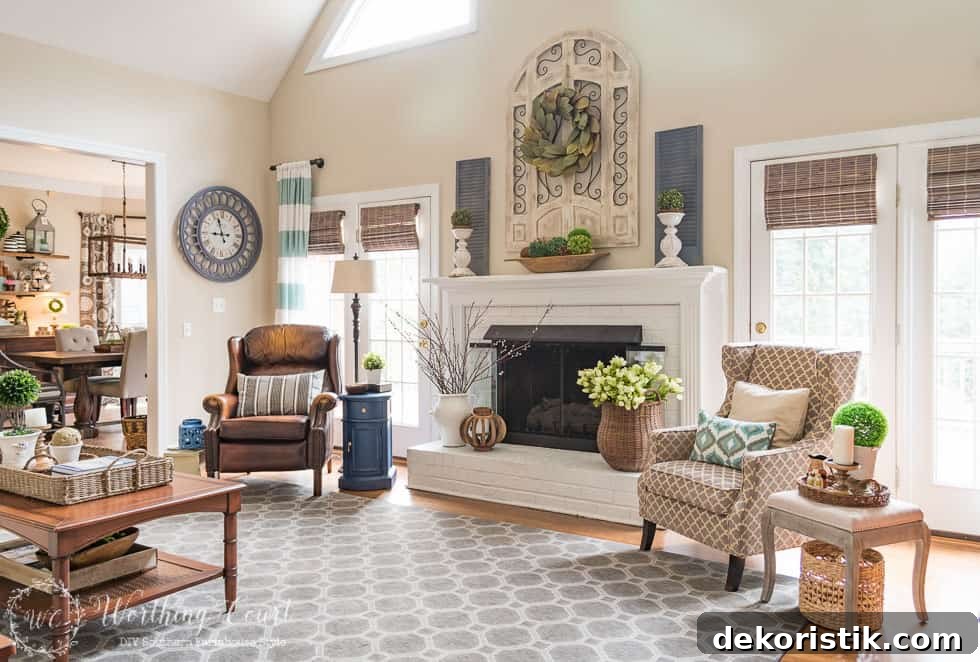
My mantel decorating always starts with a backdrop. A well-considered backdrop gives the whole vignette a sense of purpose and balance, and makes other accessories feel intentional. For a year‑round, spring‑friendly backdrop focus on three simple things:
- a neutral base palette — creams, warm whites, soft greys — that allows seasonal accents to stand out;
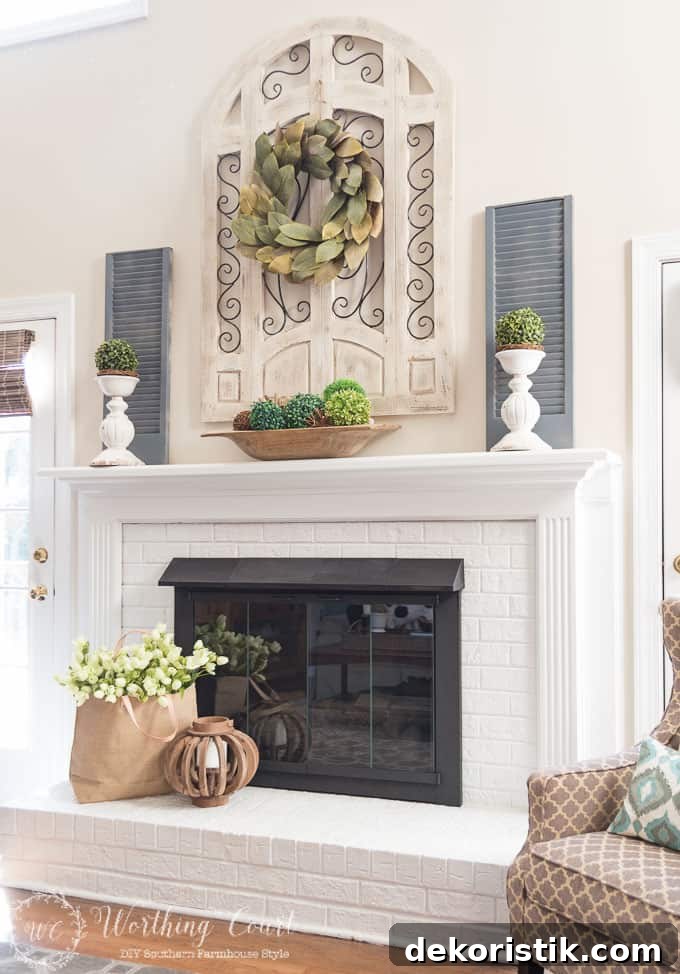
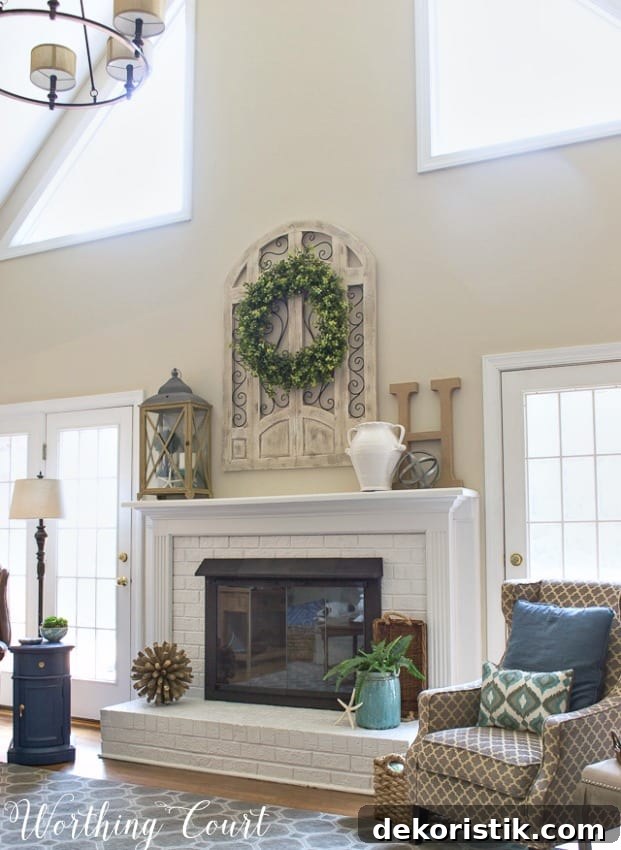
- a tall central element — a large wreath, framed art, or a tall lantern creates vertical presence and anchors the display;
- paired elements on either side — shutters, matching frames, or symmetrical decor pieces extend the visual width of the mantel and create balance.
When you layer a neutral backdrop with a central focal point and matching side pieces, the mantel reads as a composed vignette rather than a random collection of items. This framework also makes it easy to swap in spring accessories while keeping the overall design pulled together.
#2: Greenery and Flowers — Think Beyond a Single Pot
Greenery and floral touches instantly signal spring, but they don’t have to be limited to a single potted plant. Try using greenery in unexpected places to add interest and depth:
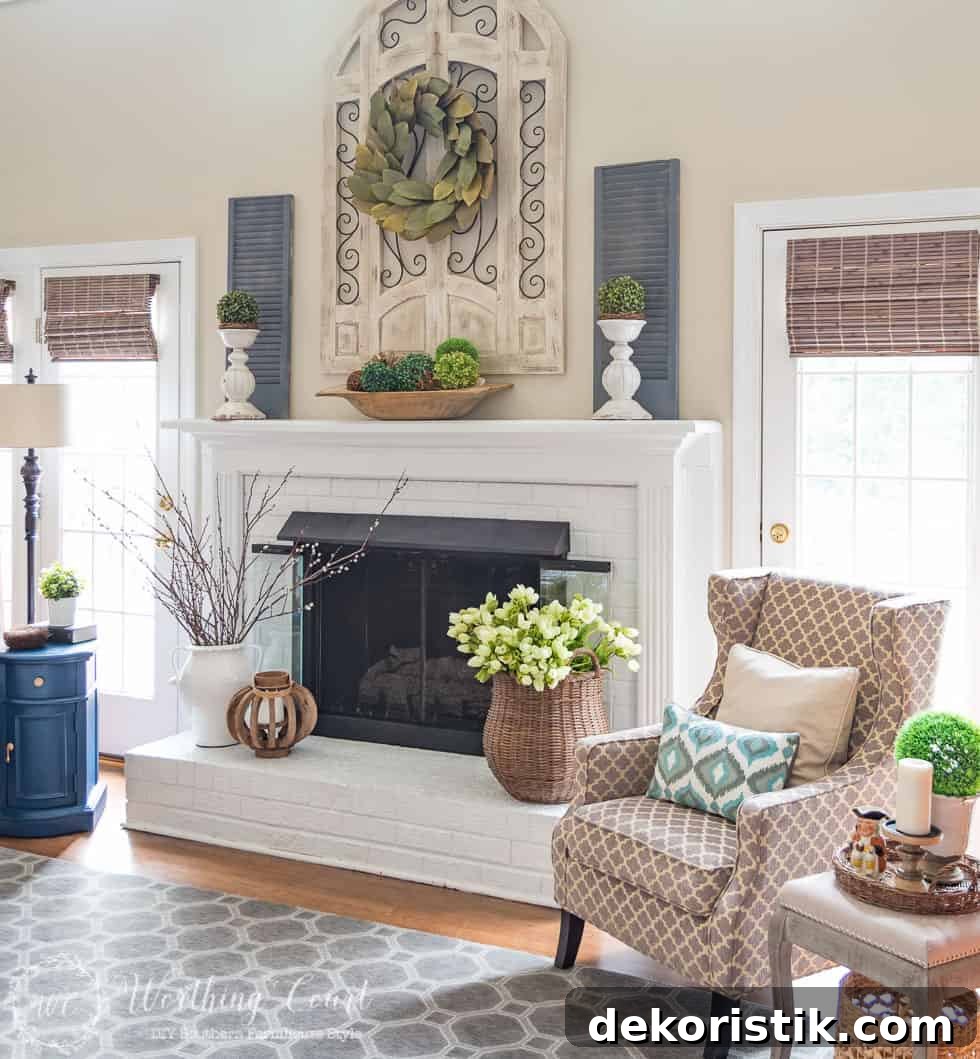
- tuck bundles of tulips or mixed stems into a burlap tote or basket for a casual, collected look;
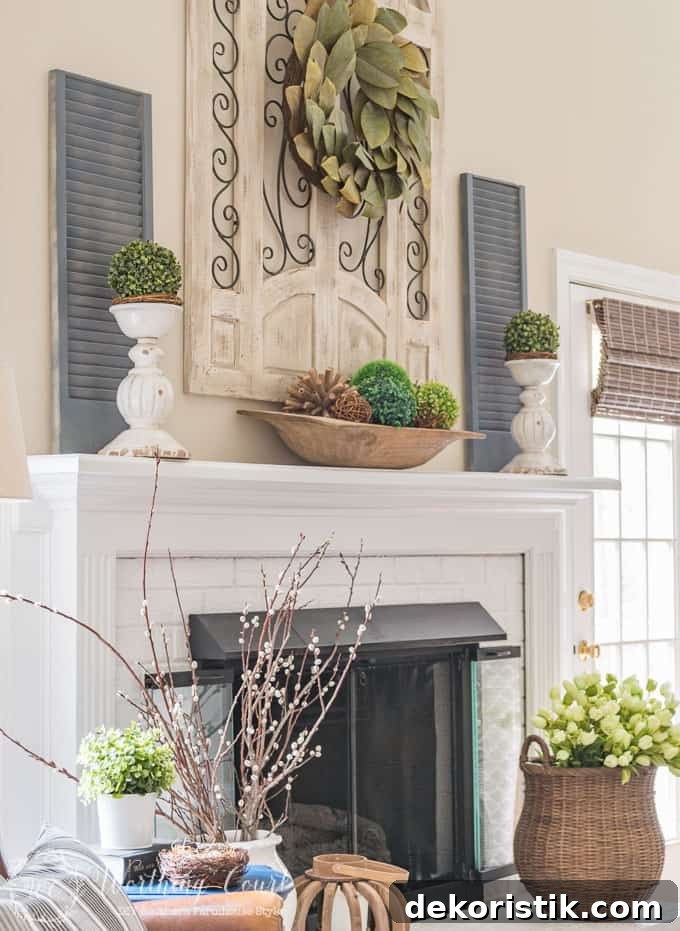
- fill a large dough bowl with greenery-covered orbs, clippings, or faux stems for a low, textural centerpiece on the hearth;
- replace candles on candlesticks with faux boxwood spheres for a fresh, architectural touch that also adds height variance.
Mix faux and real stems depending on your lifestyle: high-quality artificial greenery can look convincing and is low-maintenance, while fresh blooms add scent and natural variation. Layer stems in different heights and directions to avoid a flat, contrived appearance.
#3: Texture — Mix Materials for Depth
Texture is essential for an inviting hearth display. Incorporate woven baskets, weathered wood, rattan, ceramic crocks, and metal finishes to give your mantel visual richness. Even the louvered shutters used as part of my backdrop contribute texture and subtle shadow play.
Use texture to guide the eye across the vignette: a rough basket on one side, glossy ceramic on the other, and soft botanicals between them creates a dynamic, layered composition that feels tactile and approachable.
#4: Porcelain and Crockery Containers — Choose Substantial Pieces
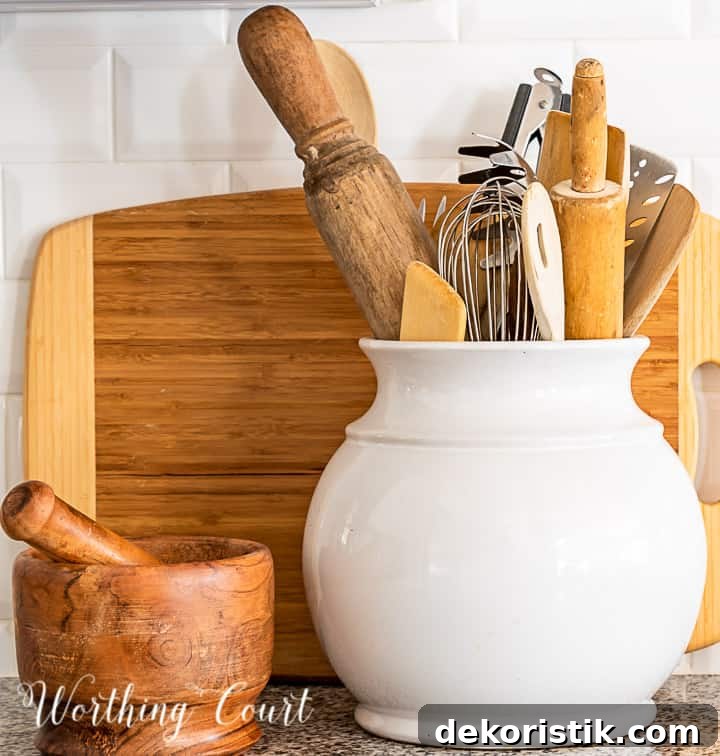
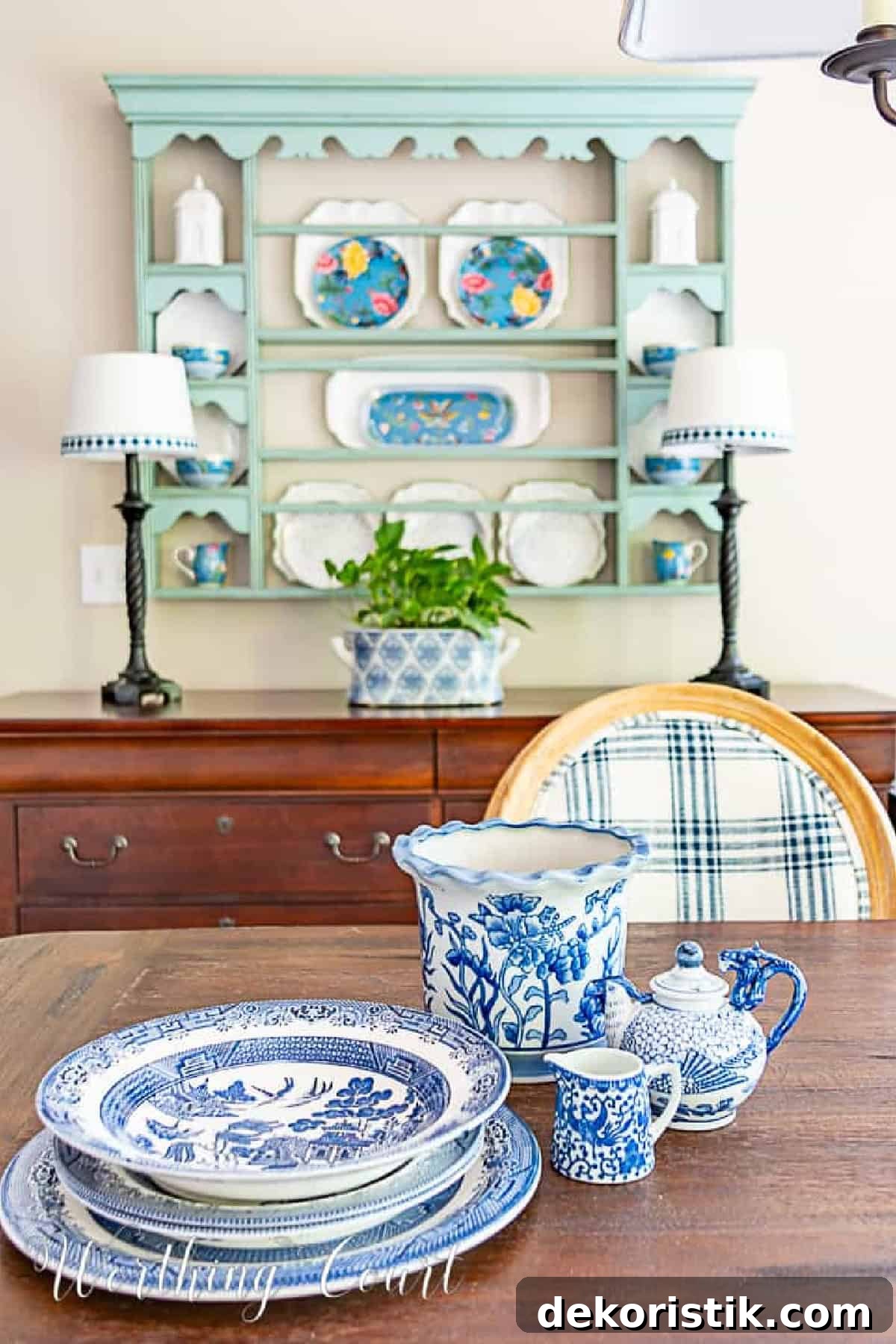
Chunky, substantial pottery is one of my go-to elements year-round. Thick crockery, large vases, and robust porcelain pieces add visual weight and a sense of permanence to a small seasonal display. They work especially well on mantels because they provide contrast with delicate stems and lighter accessories.
When selecting containers, opt for pieces that complement your backdrop and other textures. Neutral glazes, slightly imperfect finishes, and oversized forms often feel more authentic and lived-in than fragile, delicate porcelain when decorating a hearth.
#5: A Little Bit of Color — Subtle and Strategic
For spring I tend to rely on green as a natural base color, then introduce one secondary color sparingly. A soft blue or pale aqua pairs beautifully with fresh greens for a calm, coastal-inspired palette. Use color in small doses — a candlestick, a ribbon, a small decorative object — to create continuity without overpowering the neutral backdrop.
In one display I echoed a soft blue from the hearth up onto the mantel by placing a blue candlestick inside a tall lantern. Such small carries of color help unify the vignette and draw the eye upward, creating cohesion between the hearth and the mantel.
Quick tips for a successful spring mantel:
- choose a neutral backdrop and swap accessories seasonally for an easy refresh;
- mix faux and live greenery for convenience and realism;
- vary heights and textures to keep the arrangement interesting;
- use one or two small pops of color to tie the look together;
- group objects in odd numbers and vary scales for a natural composition.
Do you have a favorite decorating “recipe” you return to each spring? What ingredient do you reach for most often when styling your mantel and hearth?
Sharing at THESE great parties.