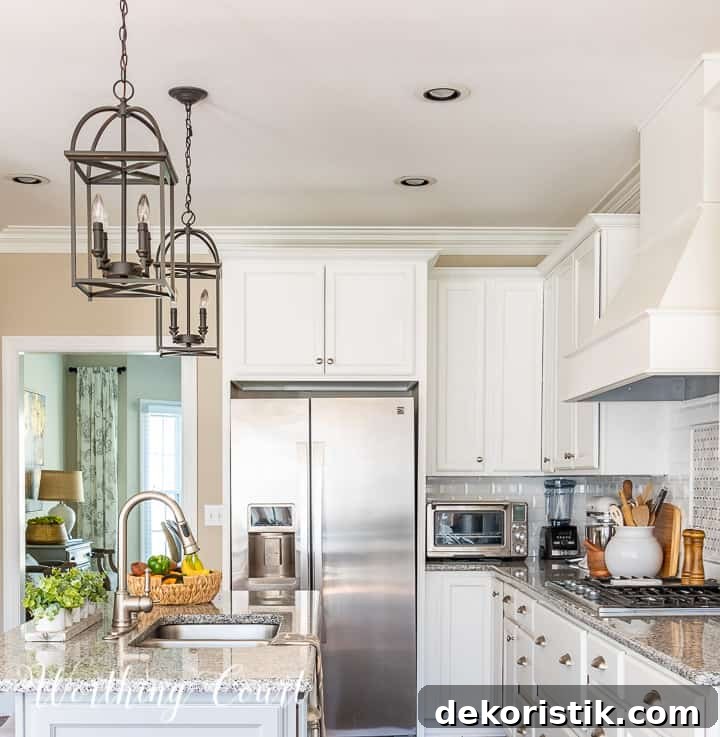
Figuring out how to decorate kitchen countertops so they look beautiful and stay functional can be a challenge. Here are practical tips to create a stylish, clutter-free countertop you’ll actually use.
We finished our full kitchen remodel a few years ago and, while the layout has worked well, the styling needed a refresh. If your counters feel useful but uninspired, these simple strategies will help you make them both attractive and practical without creating clutter.
This post and photos may contain Amazon or other affiliate links. As an Amazon Associate I earn from qualifying purchases. If you purchase something through any link, I may receive a small commission, at no extra charge to you. Where possible, the exact product has been linked. If that product isn’t available to link, I’ve linked something similar. All opinions are my own. See my full disclosure.
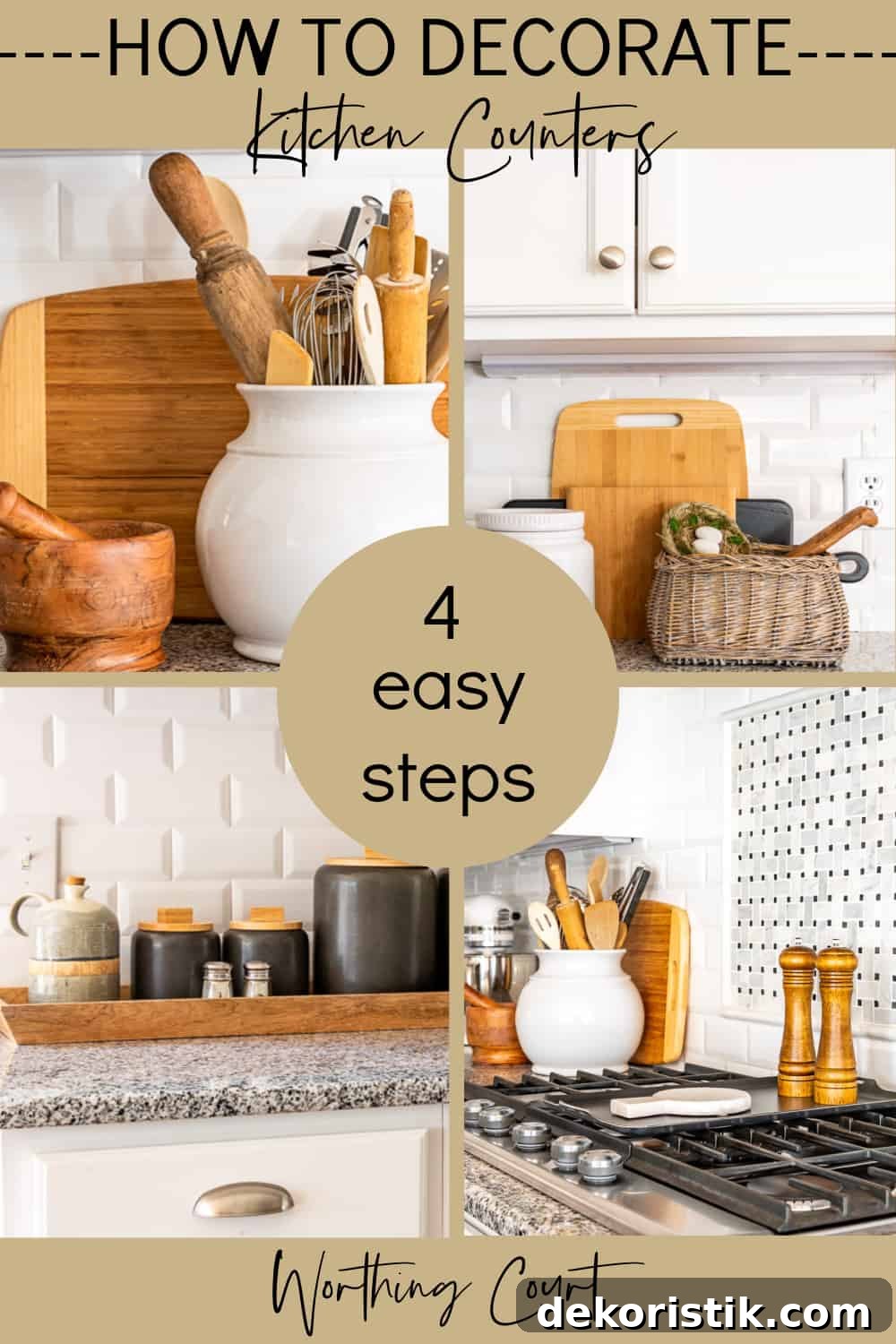
Decorating kitchen countertops successfully is all about balance: leave space for daily tasks while introducing texture, function and personality. Below are four clear steps to style your countertops with intention so they feel coordinated and useful.
HOW TO STYLE KITCHEN COUNTERTOPS
STEP 1: Identify your main work zones.
First, decide where most of your food prep and busy activity happens. Those areas should be kept mostly clear so you can work efficiently. In my kitchen, two zones see the most action, so I keep decorations minimal there.
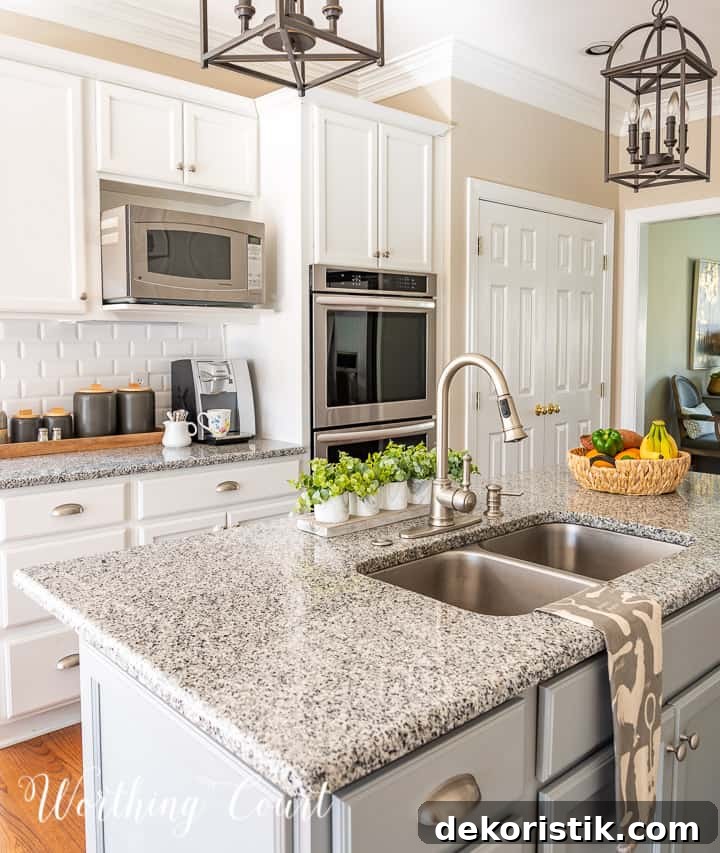
For example, I moved the upright paper towel holder off the end of my island because it kept getting knocked over in that high-traffic spot. Paper towels now live inside the pantry door a step away, while hand towels hang on discreet hooks attached to the island edge. The result: fewer interruptions while cooking and a cleaner-looking island surface.
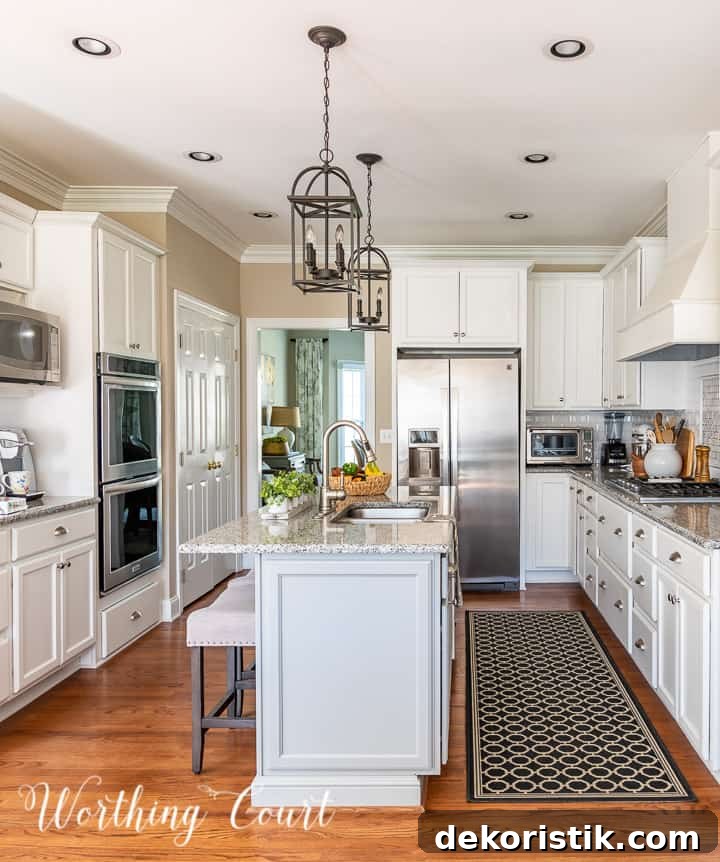
Instead of a paper towel holder, a large woven basket now sits at the island end to corral produce that doesn’t need refrigeration. It’s easy to slide out of the way when I need extra space, and it adds a warm, natural texture to contrast the hard countertop.
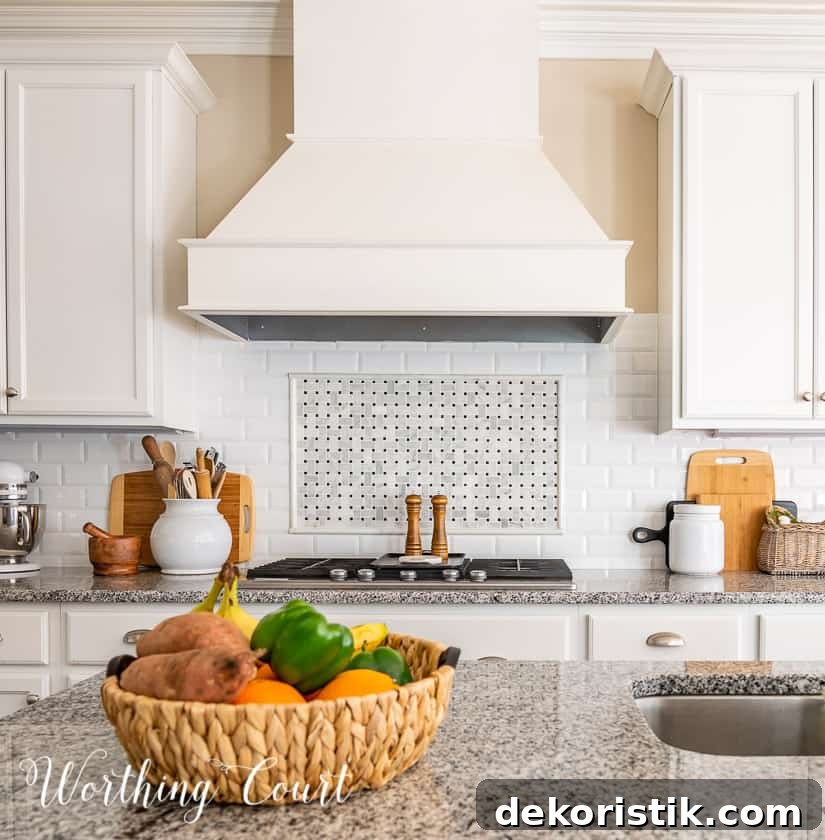
STEP 2: Decide which work zones should also look pretty.
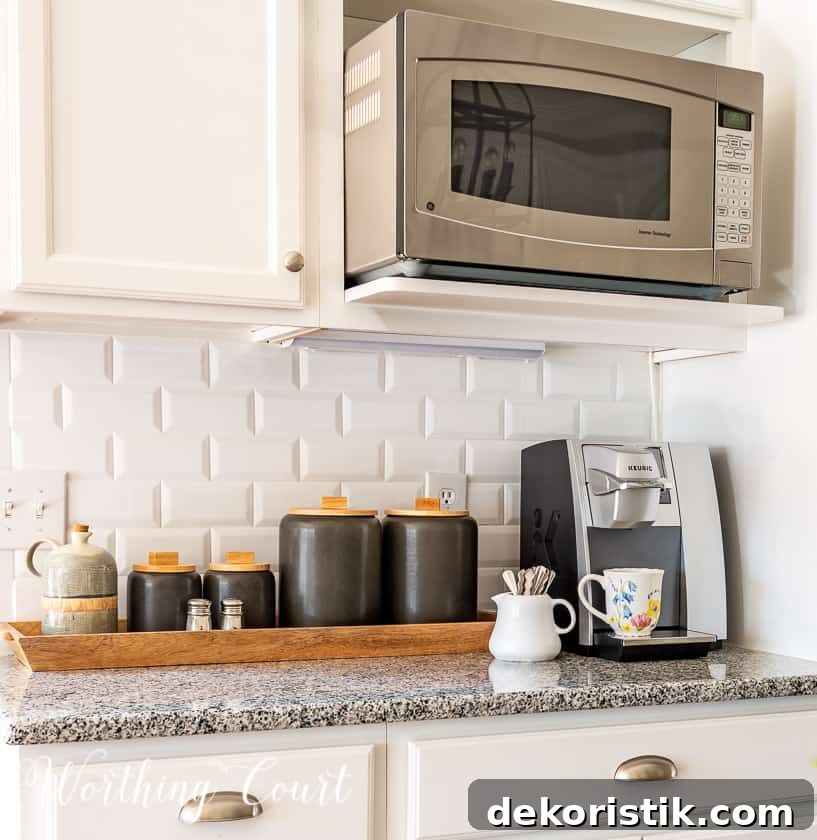
Not every functional area needs to be bare. Where you want both beauty and utility, use trays, baskets or canisters to group items so they read as décor rather than random objects. My coffee station is a good example: it’s a daily-use zone but also a focal point.
I placed a long wooden tray beside the coffee maker to keep coffee pods, tea bags, popcorn and sweeteners organized in matching canisters with wood tops. The tray keeps the group tidy, adds warmth and makes cleanup fast—plus it makes the coffee station feel intentional rather than cluttered.
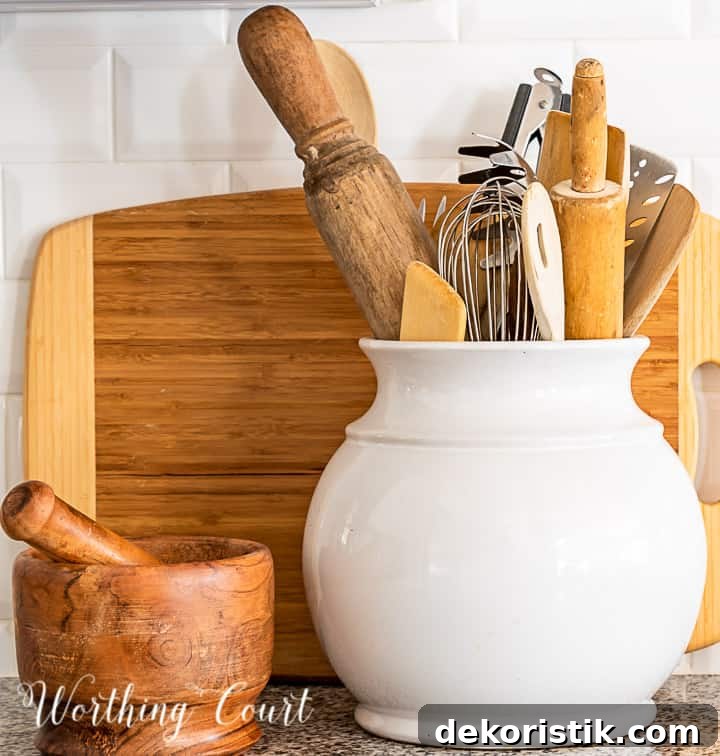
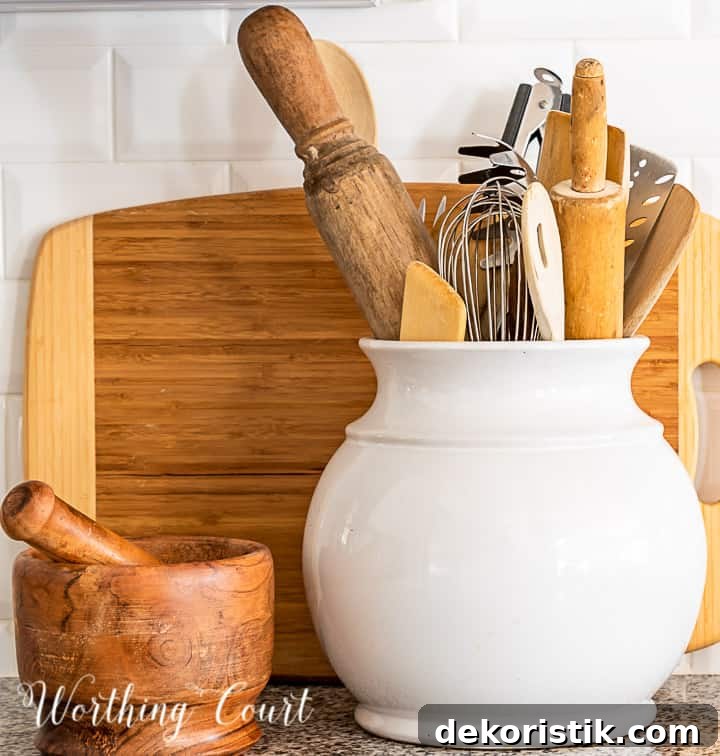
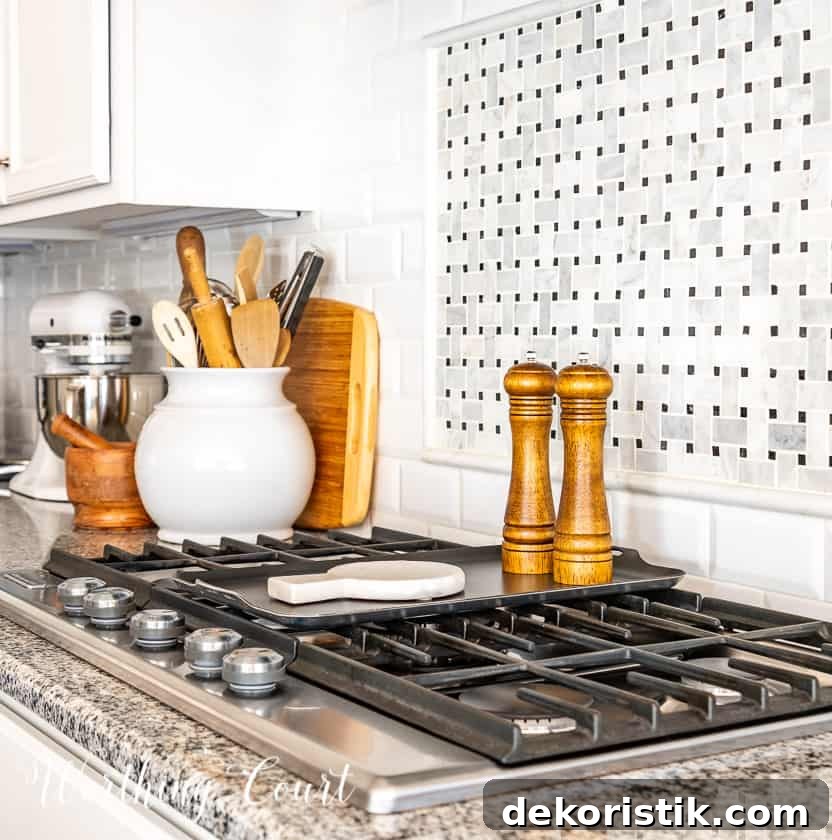
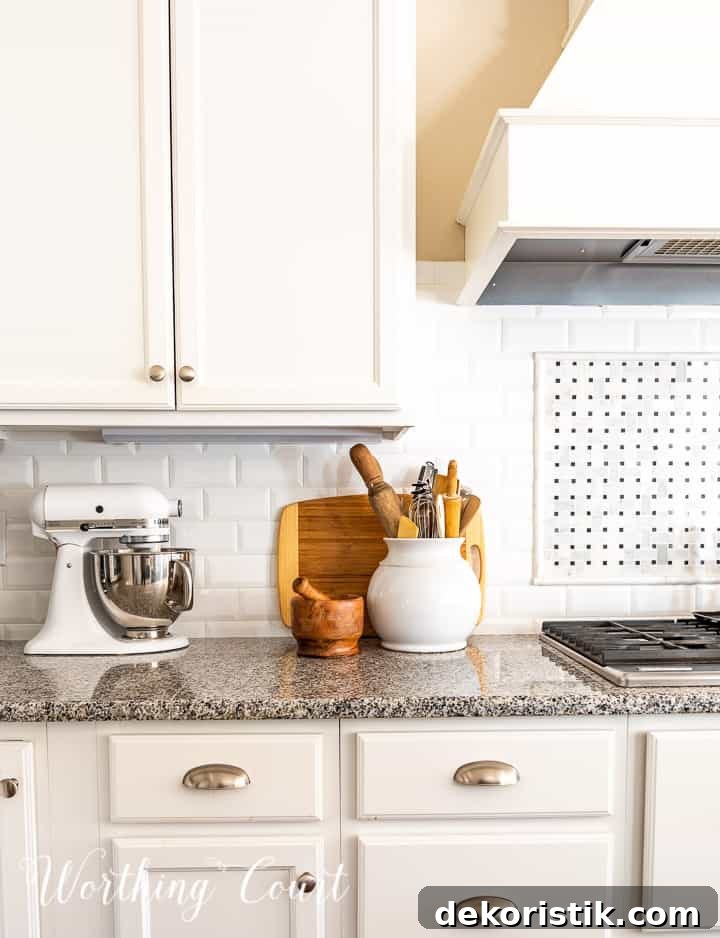
To the left of my cooktop I keep a wide-mouthed vase for long utensils and a cutting board propped behind it to add depth. A small wooden mortar and pestle adds charm and remains useful during cooking. These touches warm up a practical spot without taking away its function.
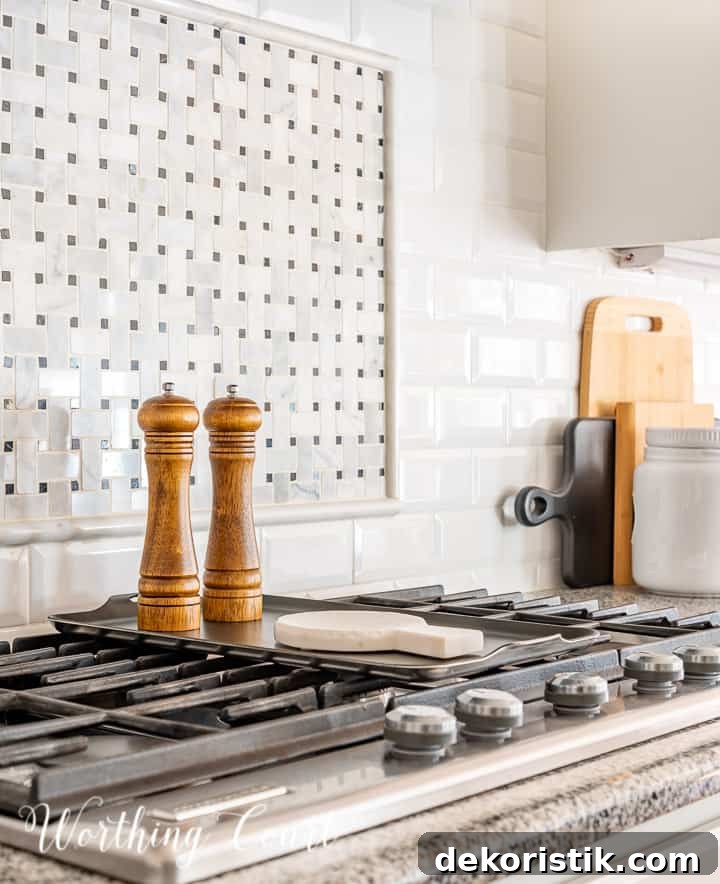
For a stovetop solution, I created a faux-griddle area by placing a small burner griddle over my center burner (which I rarely use). That gave me a convenient spot for a marble spoon rest and a pair of wooden salt and pepper mills—functional and pretty, and always within reach.
STEP 3: Style purely decorative areas thoughtfully.
When you have countertop space that isn’t a primary workspace, style it in layered groups rather than scattering items across the surface. Grouping creates visual impact and keeps the overall look cohesive.
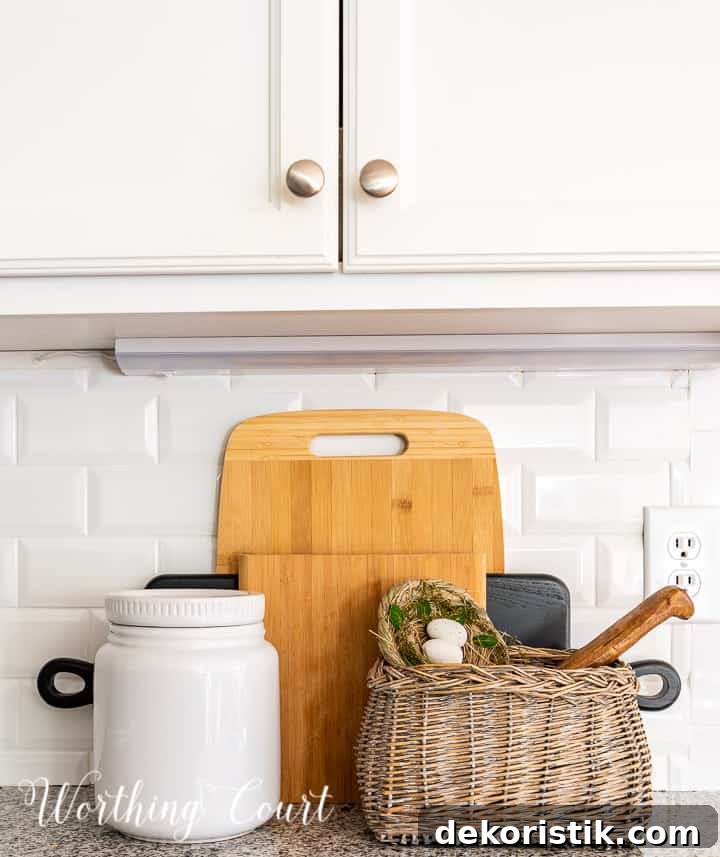
On a secondary stretch of counter, I leaned three cutting boards of different sizes behind a dog treat jar and a small basket. The basket holds a bit of seasonal decor—right now a bird’s nest and eggs—which keeps the vignette fresh and personal. This kind of intentional arrangement makes the counters feel curated rather than cluttered.
STEP 4: Accept and style functional items.
Some counters will always hold appliances and tools. You don’t have to hide everything—work with those pieces so they complement your overall countertop decor.
- If an appliance is attractive, let it be seen. A pretty mixer can be a decorative statement as well as a tool.
- Integrate utilitarian items into a styled grouping so they feel intentional—for example, surround a coffee maker with canisters and a tray.
- Try to contain frequently used appliances to a single area, preferably out of the main workspace, such as a corner beside the fridge.
- Match appliance finishes to your kitchen’s larger elements if you want them to blend in; otherwise, use colorful appliances as accents.
In short: identify your busiest zones and keep them clear, group and contain items in areas you want to look pretty, and style functional pieces so they contribute to the overall design. With these four steps, you can decorate kitchen countertops that are both practical and attractive—without creating extra work for yourself.