
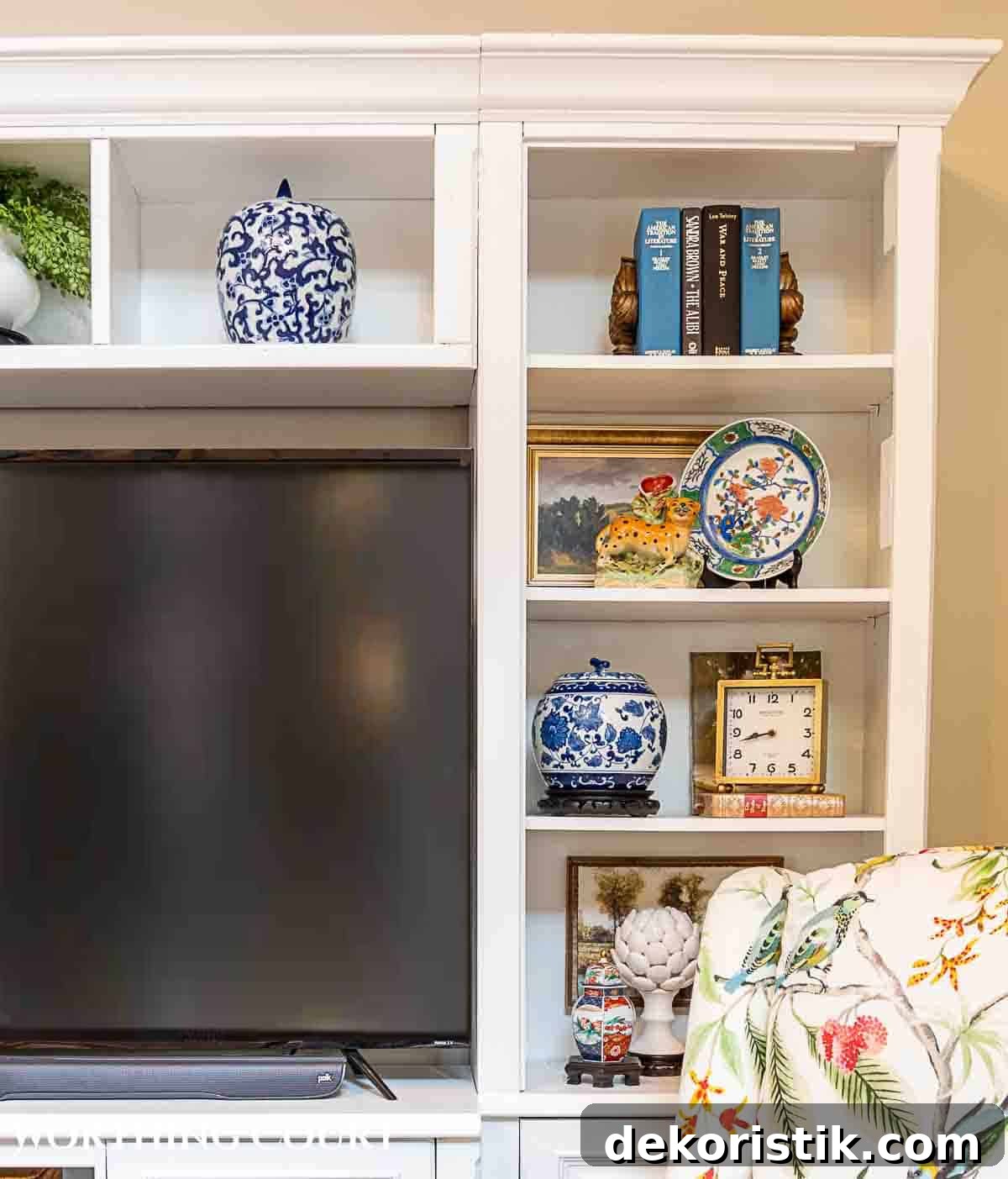
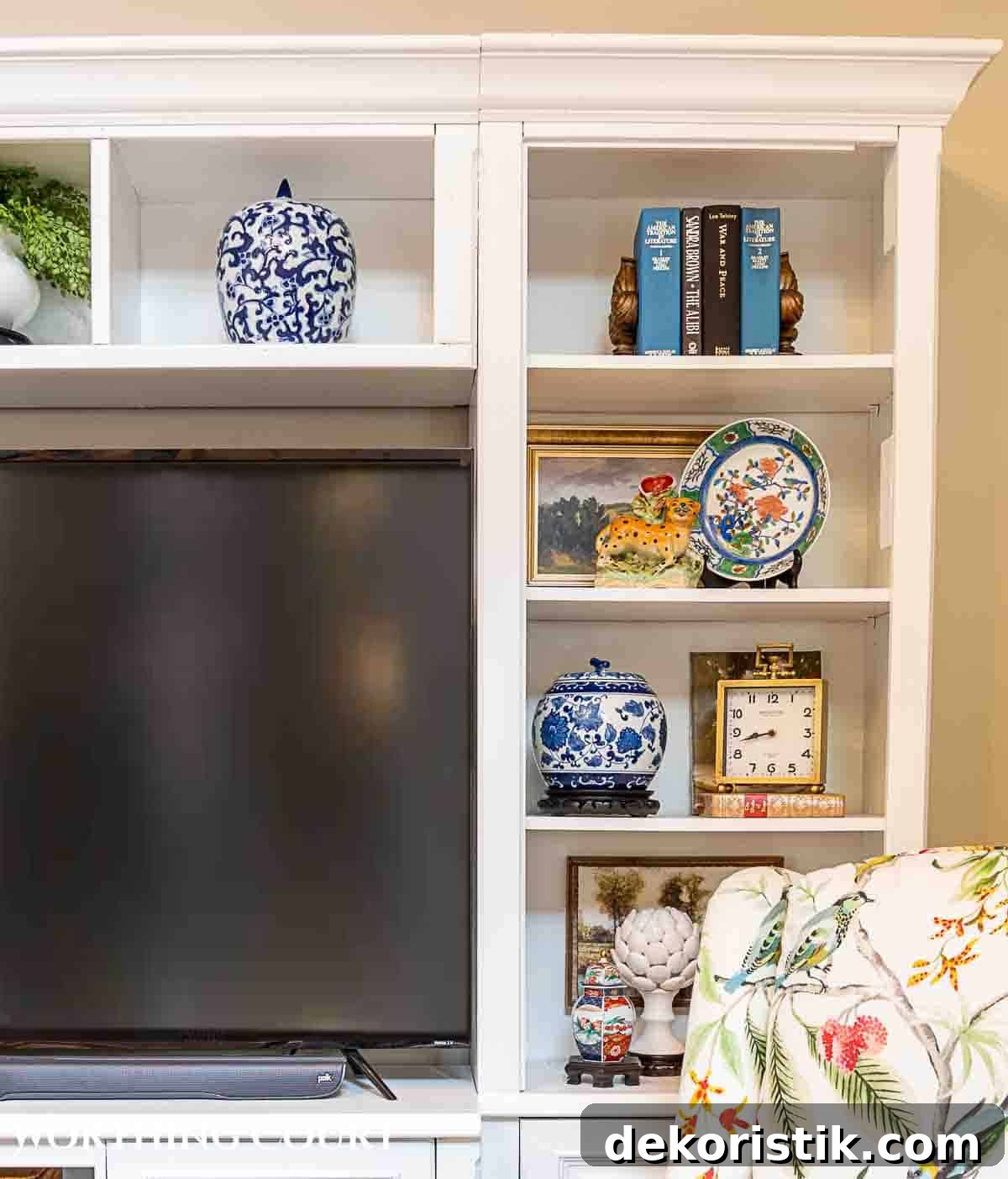
With the right accessories, your entertainment center can become a striking focal point that complements the style of your living room or family room. Thoughtful styling turns a functional media hub into a curated display that enhances the room’s overall design.
This post and photos may contain Amazon or other affiliate links. As an Amazon Associate I earn from qualifying purchases. If you purchase something through any link, I may receive a small commission, at no extra charge to you. All opinions are my own. See my full disclosure HERE.
An entertainment center doesn’t have to be an outdated relic that simply holds your TV. It can offer valuable storage and display space while reflecting your updated style. If yours is older or looks dated, a few changes—like paint, better organization and curated accessories—can modernize it instantly.
Below are practical, interior-designer-inspired tips to update and style your entertainment center so it fits today’s homes.
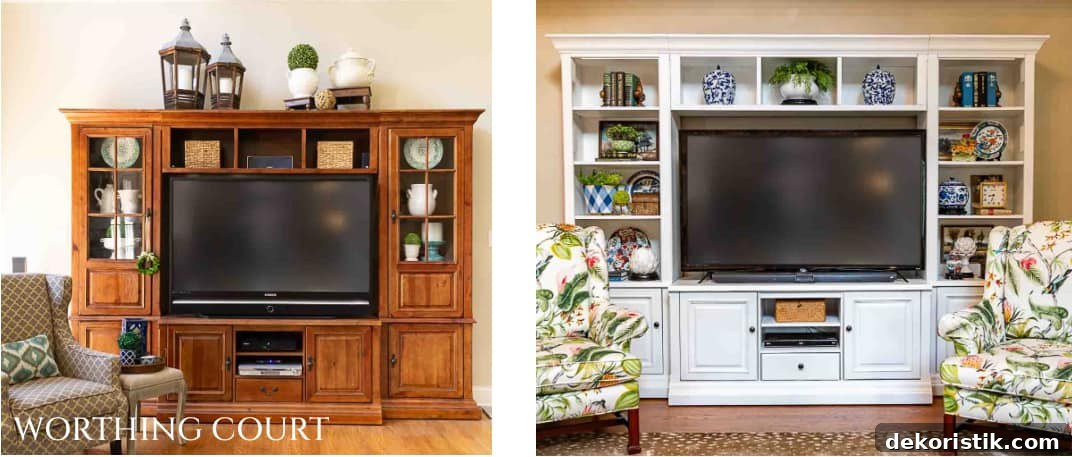
Over the years I’ve transformed my own unit from dark wood and farmhouse accents to a painted white piece that suits an updated traditional look—proving how impactful paint and styling can be.
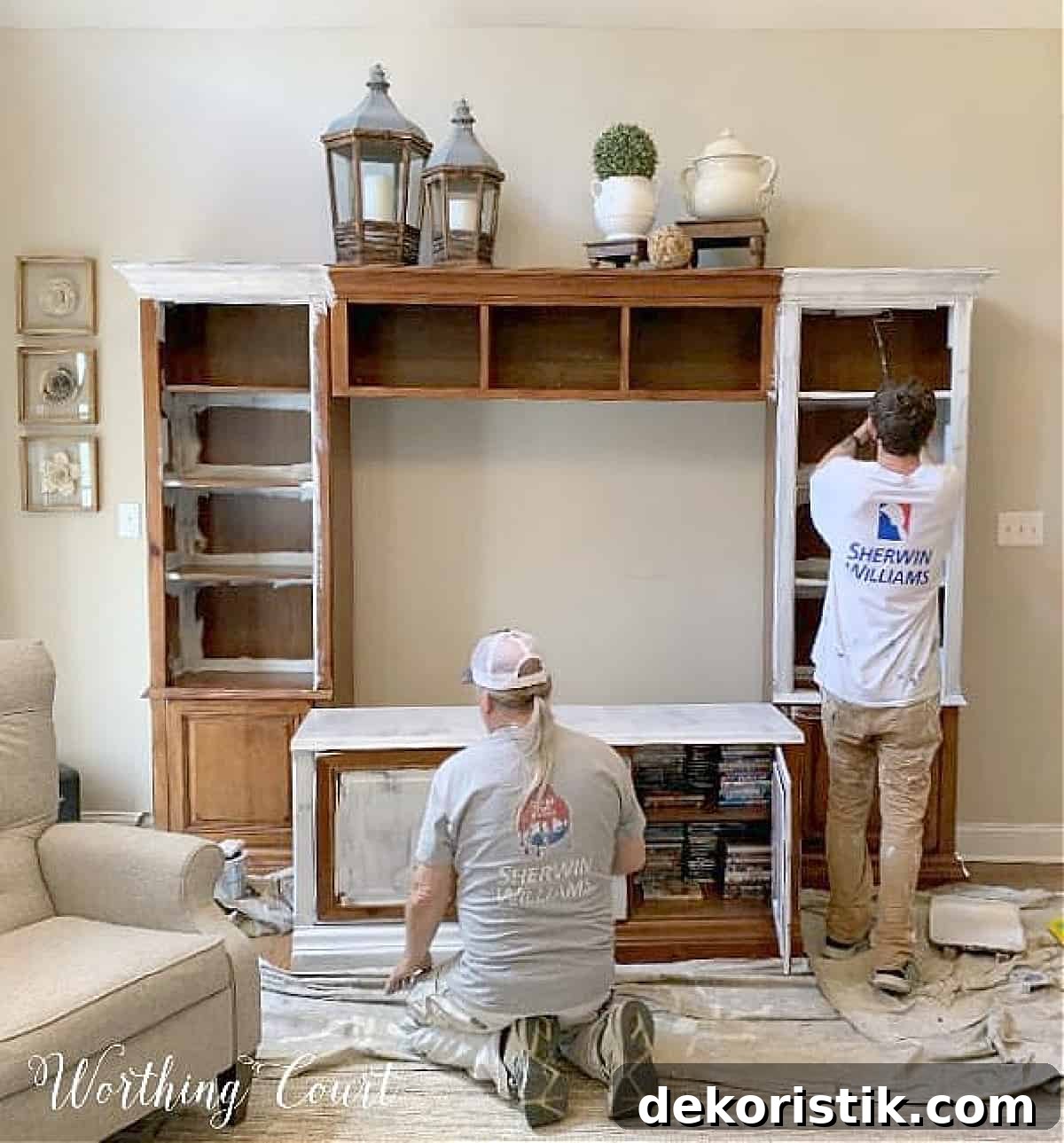
If your wall unit is older, painting it is one of the most transformative updates. Be sure to use paint and primers suited for furniture for a durable finish.
TIP: Allow fresh paint to cure for at least 24–48 hours before replacing decor or electronics.
Declutter and Organize
Start every styling project with a blank slate. Empty the shelves and drawers, sort items into keep, donate, or discard piles, and give the unit a thorough dusting. This makes it easier to visualize the final layout and identify which storage solutions you need.
Use baskets, bins, or small boxes inside cabinets to corral cords, remotes, and loose items. Labeling containers or using matching baskets will keep hidden storage tidy and consistent.
Discard or recycle outdated electronics and cables you no longer use. Fewer items means a cleaner, more intentional look—and less visual clutter competing with your decor.
Dealing With Cords and Cables
Cords and cables can quickly become the eyesore that undermines a beautifully styled entertainment center. Tame them with cable-management solutions that route wiring behind the unit, down cable channels, or discreetly behind decorative objects.
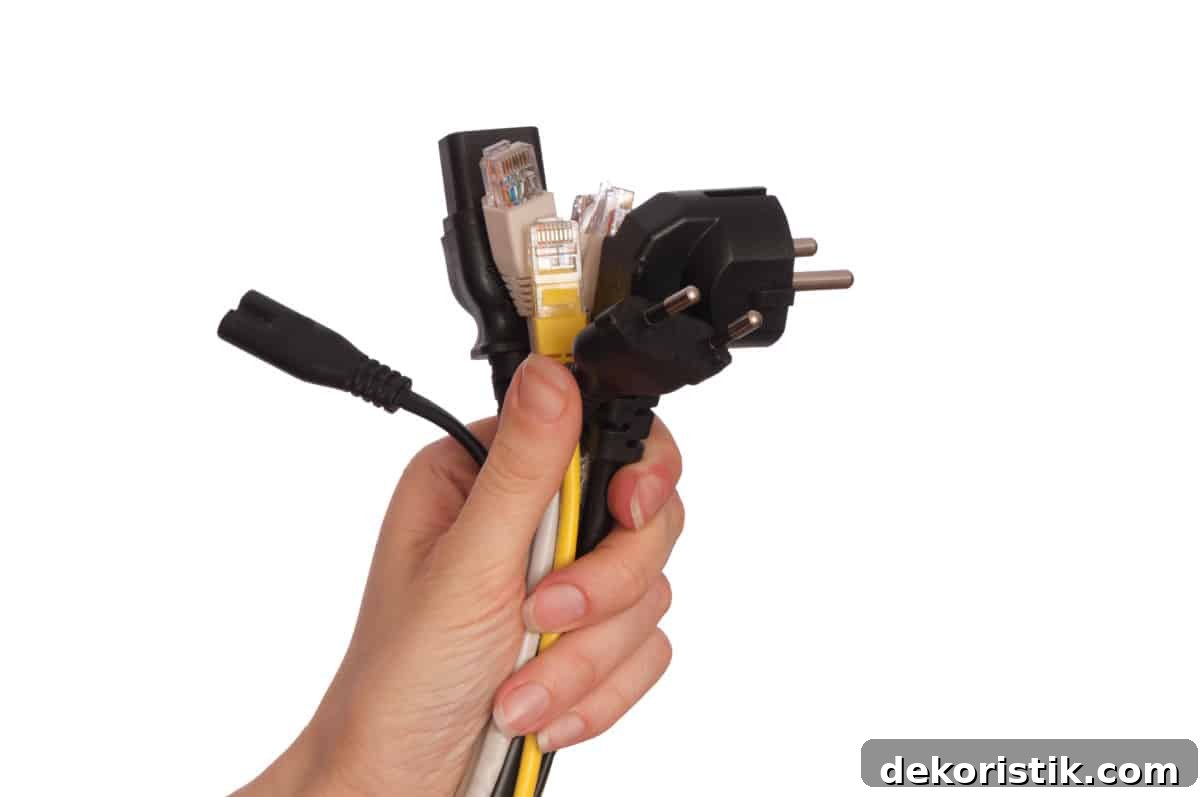
Cable clips, sleeves, and raceways keep everything neat and accessible. If you need power nearby, consider a low-profile surge protector inside a cabinet or a concealed power strip mounted behind the unit.
Plan for a Cohesive Design
A cohesive design starts with a simple plan. Choose a color palette and a design style that complements the rest of the room, then select accessories that reinforce that direction. Consistency in tone and material helps the entertainment center feel integrated rather than an afterthought.
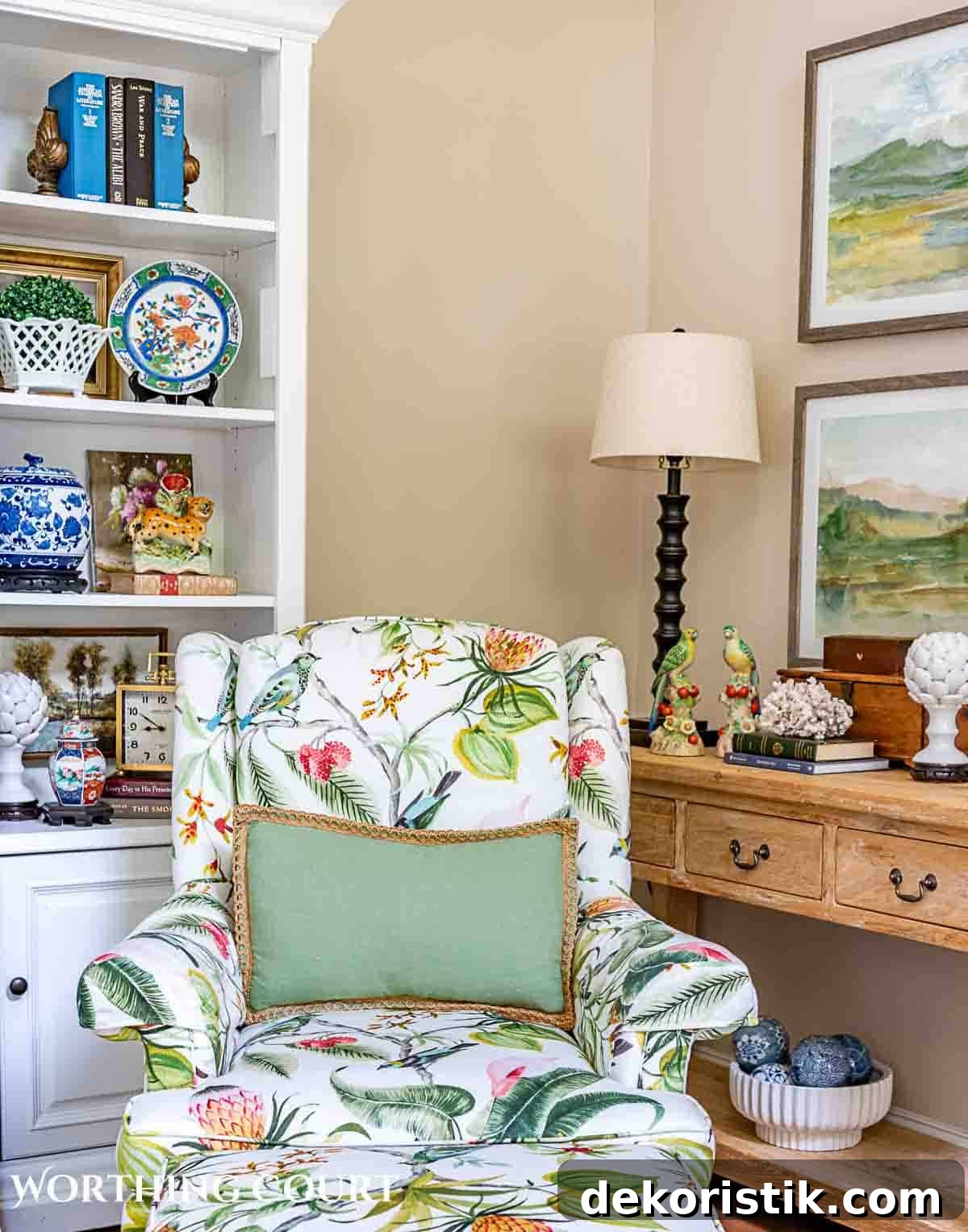
Avoid a random mix of unrelated items. Accessories don’t need to match exactly, but they should complement each other and the room’s palette—think coordinated neutrals with one or two accent colors.
When finishes and materials (wood tones, metals, woven fibers) repeat subtly across accessories, the whole display reads as intentional and polished.
Decorating the Shelves
Open shelves give you the chance to create styled vignettes. If you like symmetry, mirror items on each side for a balanced effect. If you prefer a more relaxed look, mix symmetrical arrangements with asymmetrical groupings for visual interest.
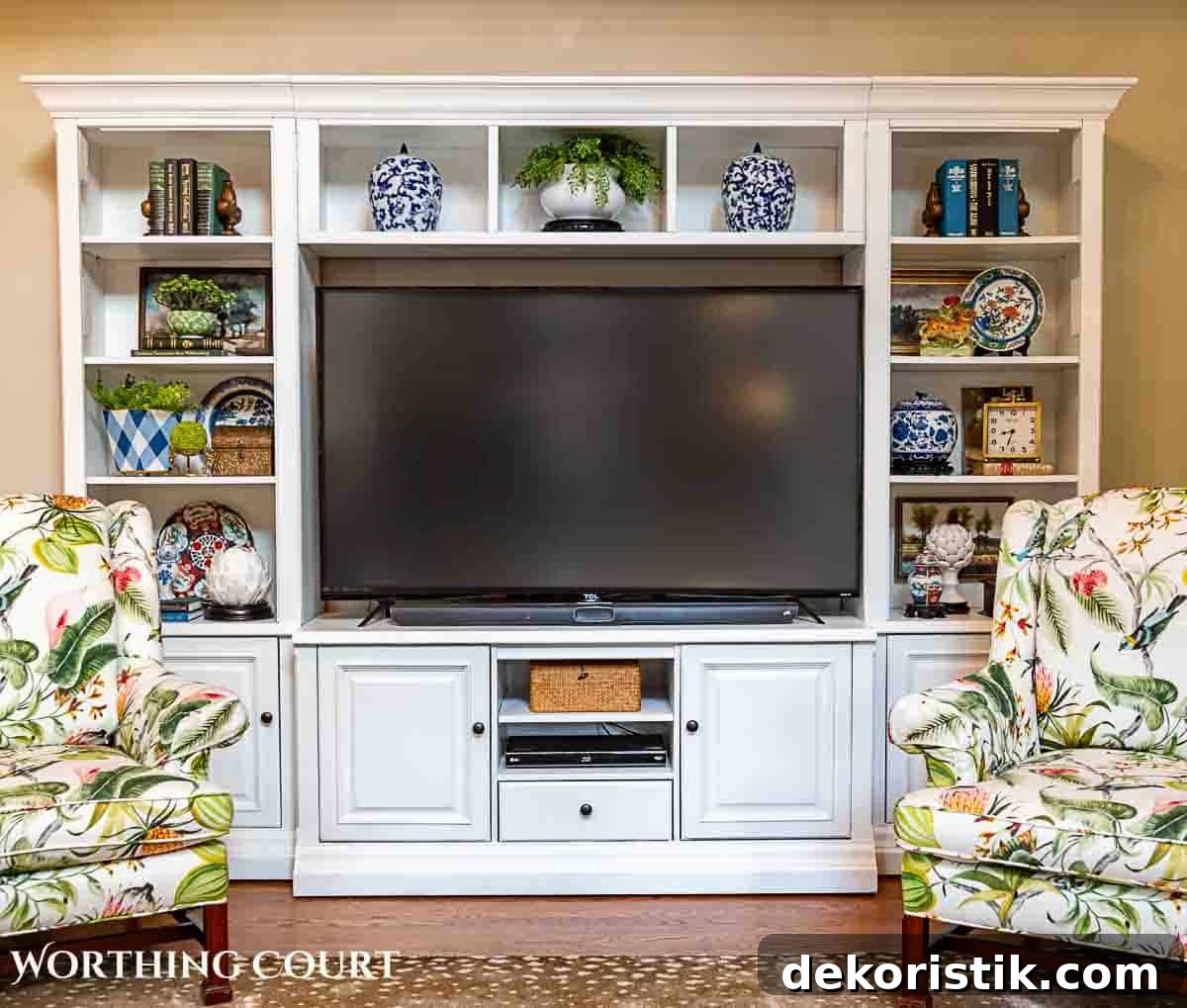
Popular items that work well on shelves include:
- Vases and faux or fresh plants: Add life and texture with greenery or floral accents.
- Picture frames: Display family photos or small prints in frames that suit your decor.
- Battery-operated candles: Provide soft, safe illumination for darker corners.
- Small figurines and keepsakes: Personal items add character and tell your story.
- Books: Use them vertically or horizontally to anchor smaller objects and add height variation.
- Baskets: Tuck away remotes, controllers, and odds-and-ends while keeping a uniform look.
- Decorative trays: Corral collections of smaller items for a cleaner display.
TIP: A pretty notecard or art print in an affordable frame can look like original artwork at a fraction of the cost.
Create Depth With Accessories
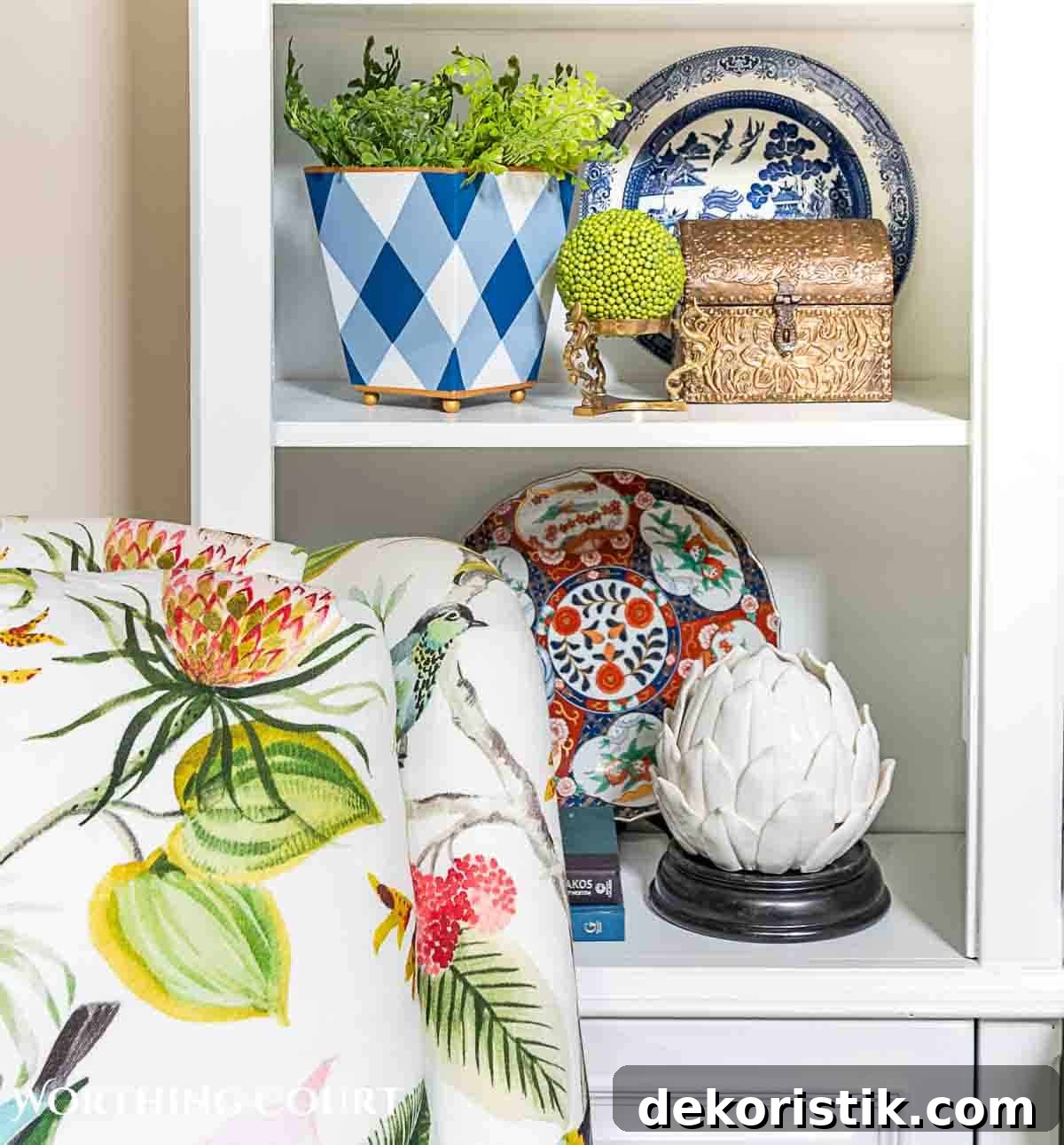
Vary heights, shapes, and depths to add visual interest. Group items in odd numbers (the “rule of three” is a helpful guideline), and layer objects—placing some items toward the back of a shelf and others toward the front—to create dimension.
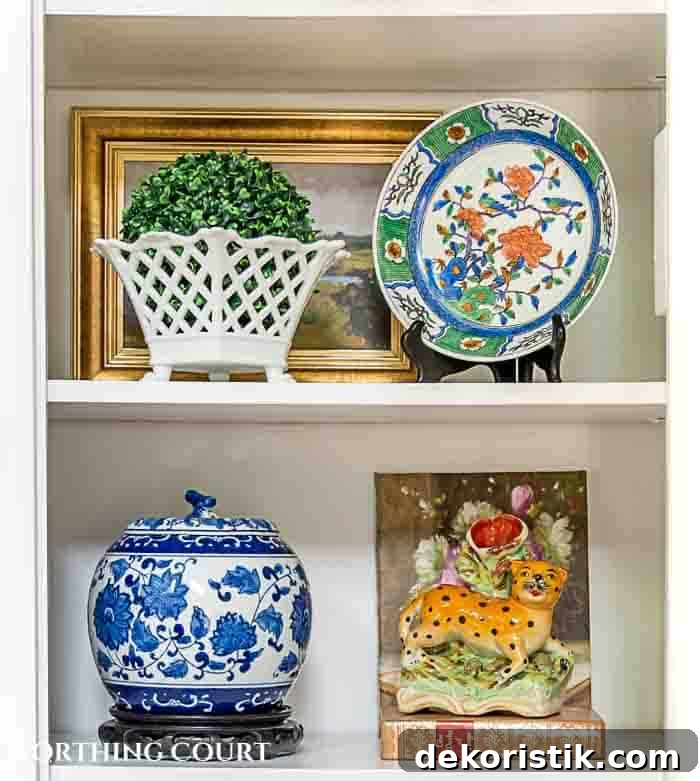
Combine books, plants, and decorative pieces so nothing looks monotonous. Small framed art or a sculptural object can act as a focal point within a shelf group.
Wallpapering or painting the back panel of a unit is another simple way to add a layered backdrop that enhances color and depth—noting that a patterned or contrasting back will make accessories pop.
Utilize the Top
The top surface of an entertainment center is prime real estate for larger decorative items. Use oversized accessories so they’re visible from across the room—small tchotchkes can read as clutter from a distance.
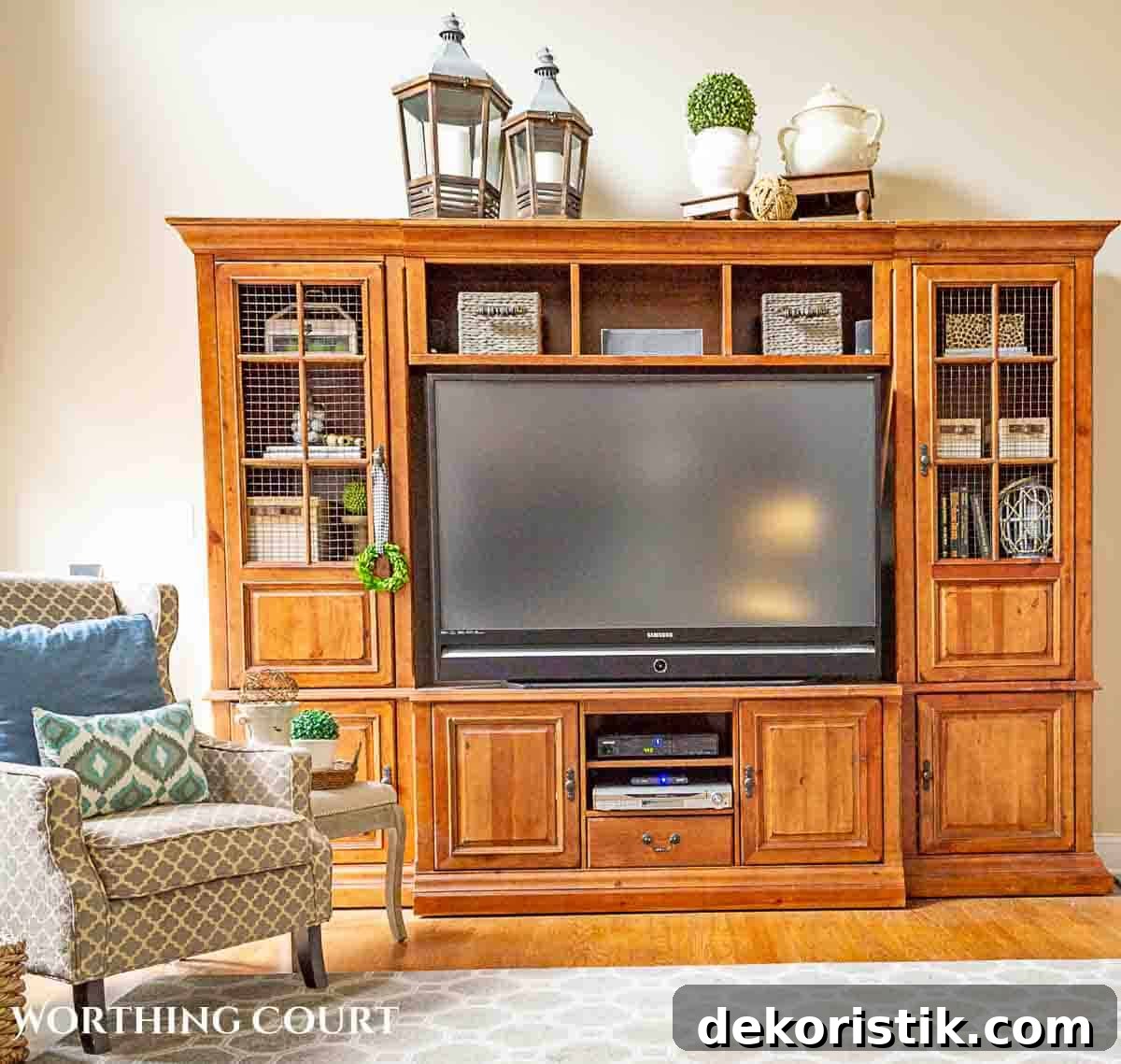
Ideas for the top include large urns, a statement basket, tall ginger jars, oversized artwork on an easel, a large clock, lanterns, or tall candleholders. Keep the scale in mind and avoid overloading the surface.
Maximize Storage
Entertainment centers can be both beautiful and highly functional. Use enclosed cabinets to hide items like DVDs, camera equipment, spare remotes, and pet toys. Inside cabinets, baskets or small bins will keep things organized and easy to find.
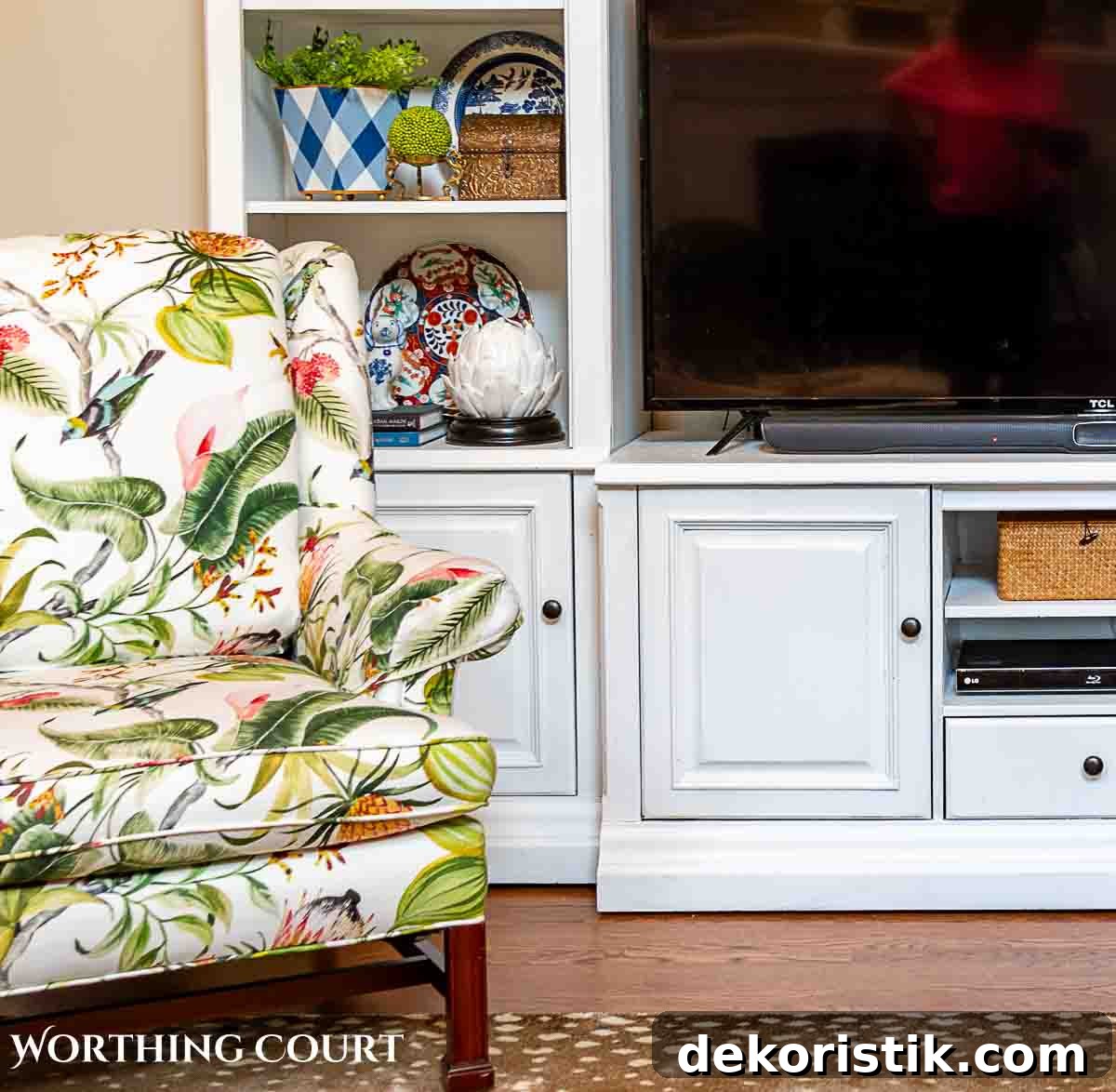
Consider dedicating one shelf or cabinet for media gear, another for games or books, and another for decorative storage to maintain both form and function.
A well-styled entertainment center reflects your personal taste while providing practical storage. Plan your color palette, organize and hide cables, vary shapes and heights for depth, and use clever storage solutions to keep the display tidy. With a little planning, your entertainment unit can become a chic, functional centerpiece for the room. Happy decorating!
FAQs
You only need enough clearance for the TV to fit and for adequate ventilation at the back. Check your TV’s manual for recommended spacing to avoid overheating.
Use the opening to display a large piece of art, a tall vase with greenery, a lantern, or a trio of candlesticks. A bold statement piece makes the space feel intentional even without electronics.
Battery-operated stick-on LED lights or puck lights work well and are easy to position. For a cleaner look, choose warm-toned LEDs and hide wiring inside cabinets or behind shelves.
-
Small Foyer Decorating Ideas for a Warm, Welcoming Entry
-
How to Fix a Room That Feels Off
-
How to Mix Decorating Styles to Keep Your Home From Looking Boring
-
How to Decorate by Shopping Your Own House
-
The Do’s and Don’ts of Home Decorating: Basic Tips for Getting It Right
-
The Secret to Layering Accessories Like a Pro