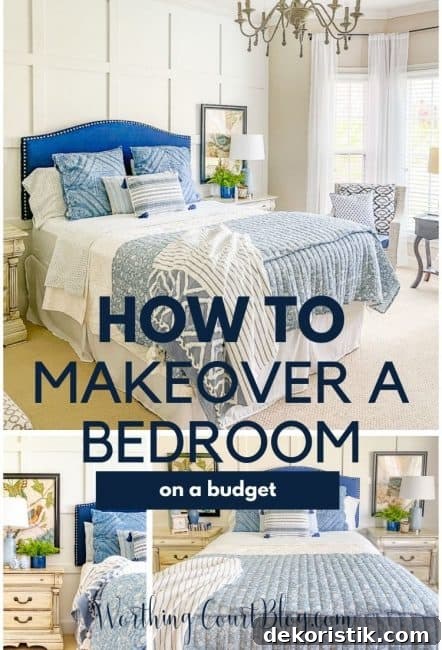
If you’re searching for practical budget bedroom makeover tips, you’ve come to the right place. Below I share a complete guest bedroom reveal and the strategies I used to refresh the room without spending a lot. These are straightforward, cost-conscious ideas you can adapt to your own space.
By the time you finish reading, you’ll have a clear plan and actionable ideas to start your own budget bedroom transformation.
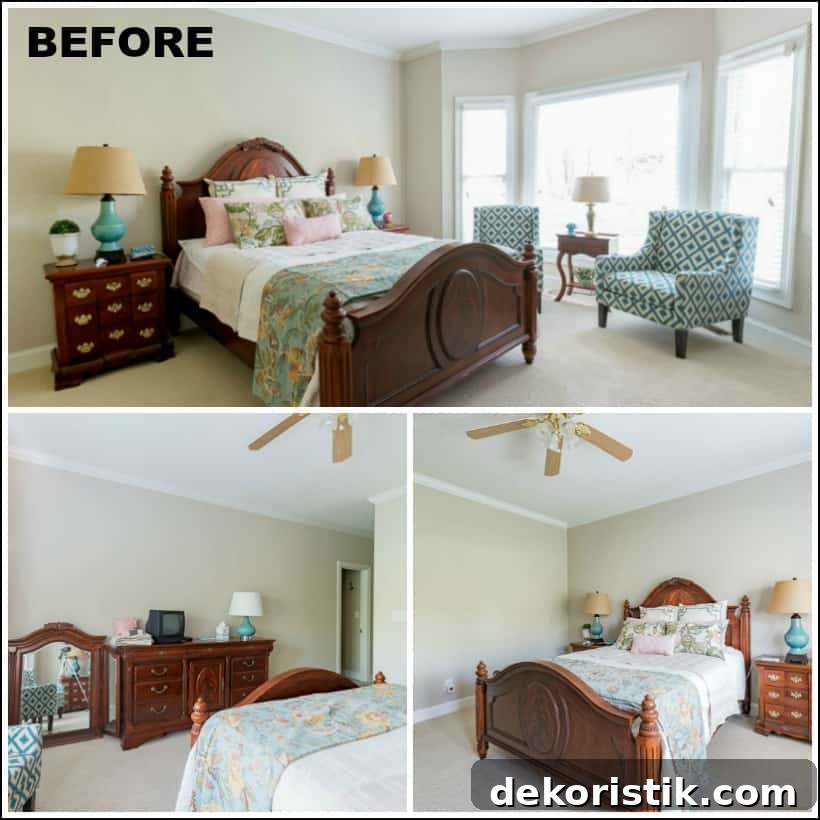
Here are a few photos of how the room looked when we first moved in. Nothing was wrong with it mechanically—just dated and uninspired. The faux cherry finish on the furniture felt cheap and dominant, so the space sat untouched for a long time while I planned the changes.
I wanted a calm, welcoming guest room without a big budget. The approach I took focused on low-cost upgrades that deliver big visual impact.
CREATE A MOOD BOARD
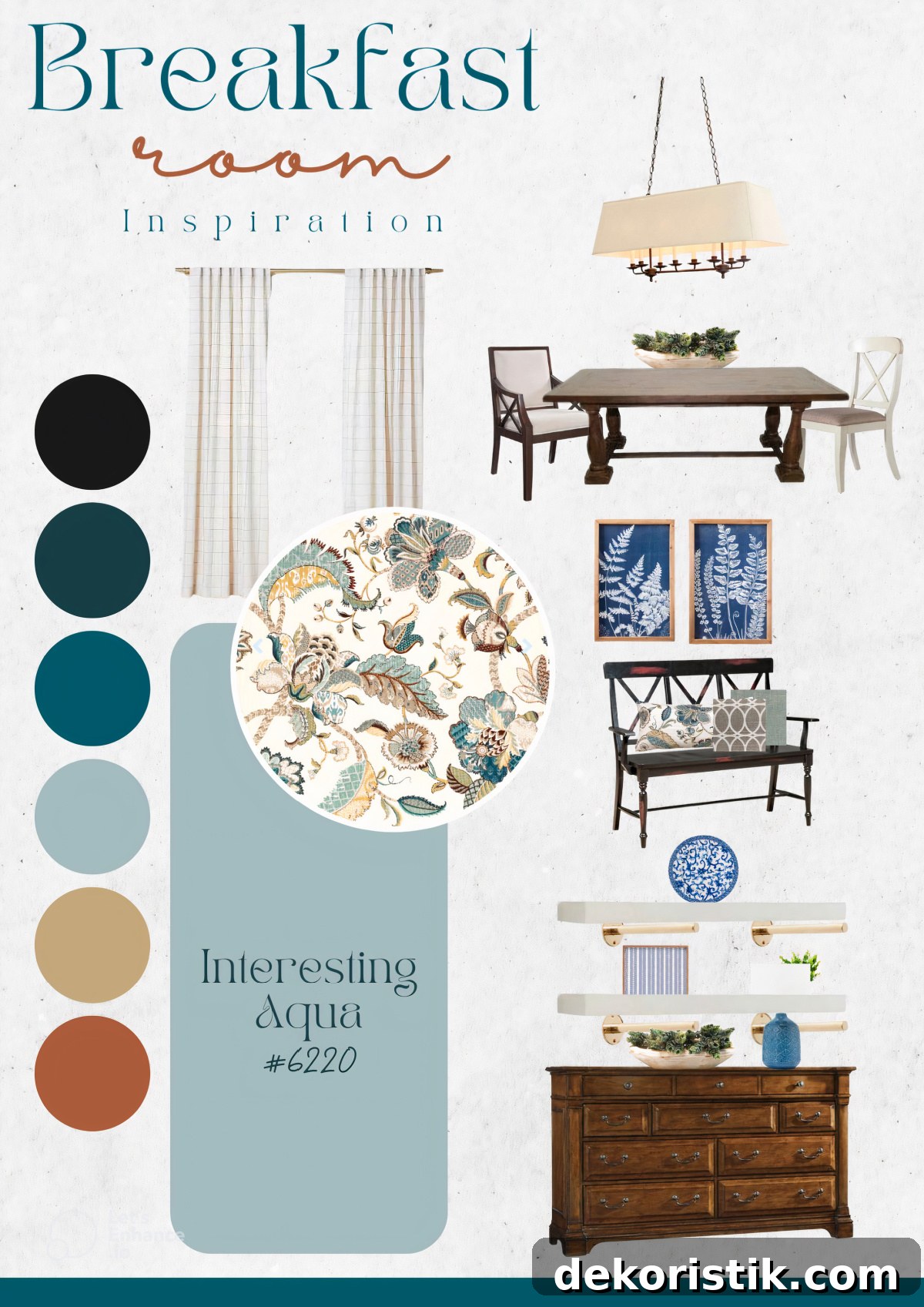
Before you buy paint or pull apart furniture, make a mood board. It’s free, fun, and a powerful way to gather ideas and clarify a cohesive plan. A visual board helps you test color palettes, textures, and furniture arrangements so your choices are more intentional.
Using a mood board keeps you focused and reduces impulse purchases, which helps preserve your budget. You can keep your board simple—just images and fabric or paint swatches—or build a more detailed plan if you prefer. I used a mood board for a separate breakfast room project; the same process applies to any bedroom makeover.
ADD CHARACTER ON A BUDGET
A room that feels flat only needs a few architectural details to feel finished. Moulding, board and batten, or picture-frame trim instantly add texture and polish without a high price tag. These elements make a room look tailored and more expensive than it actually was.
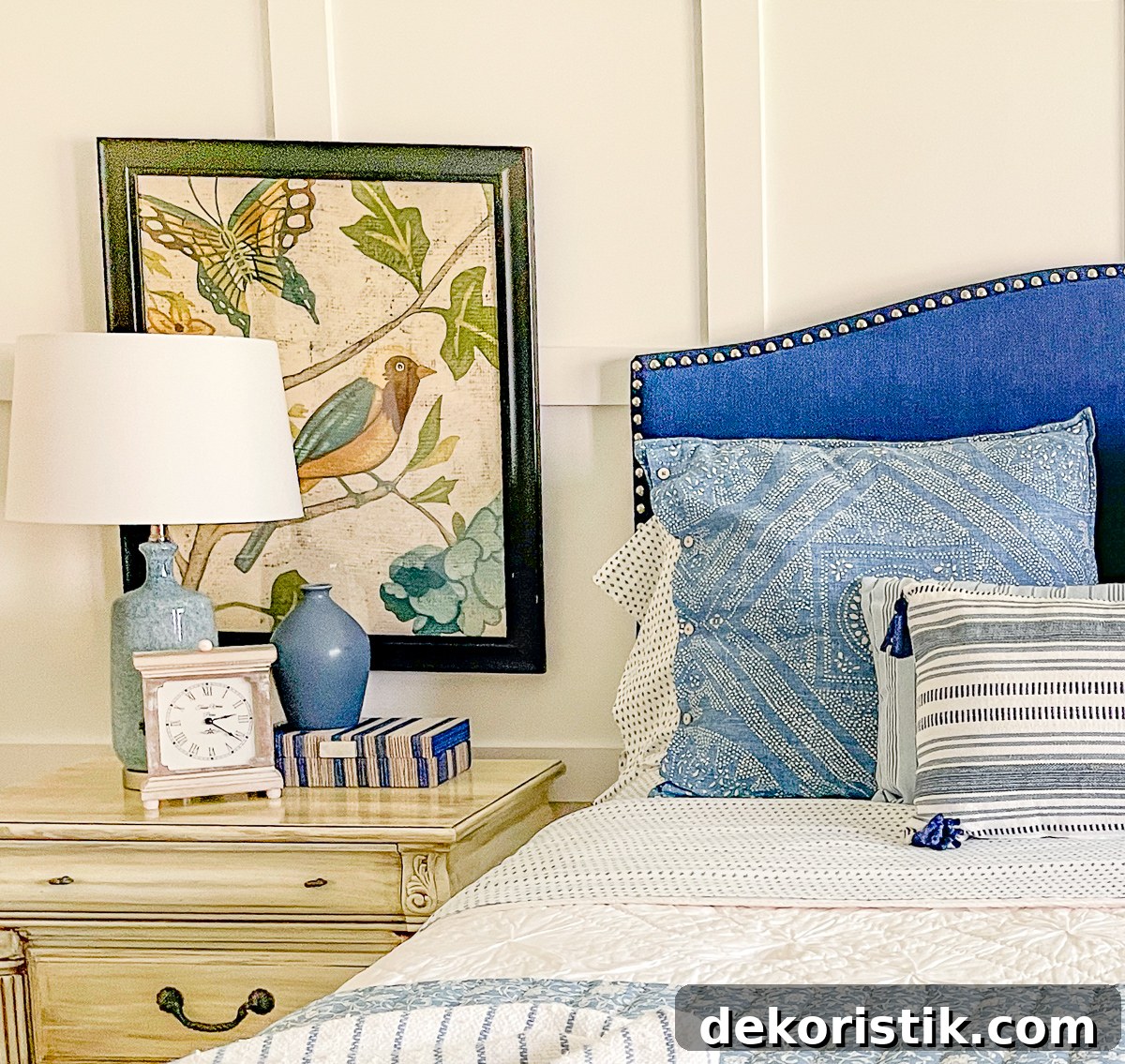
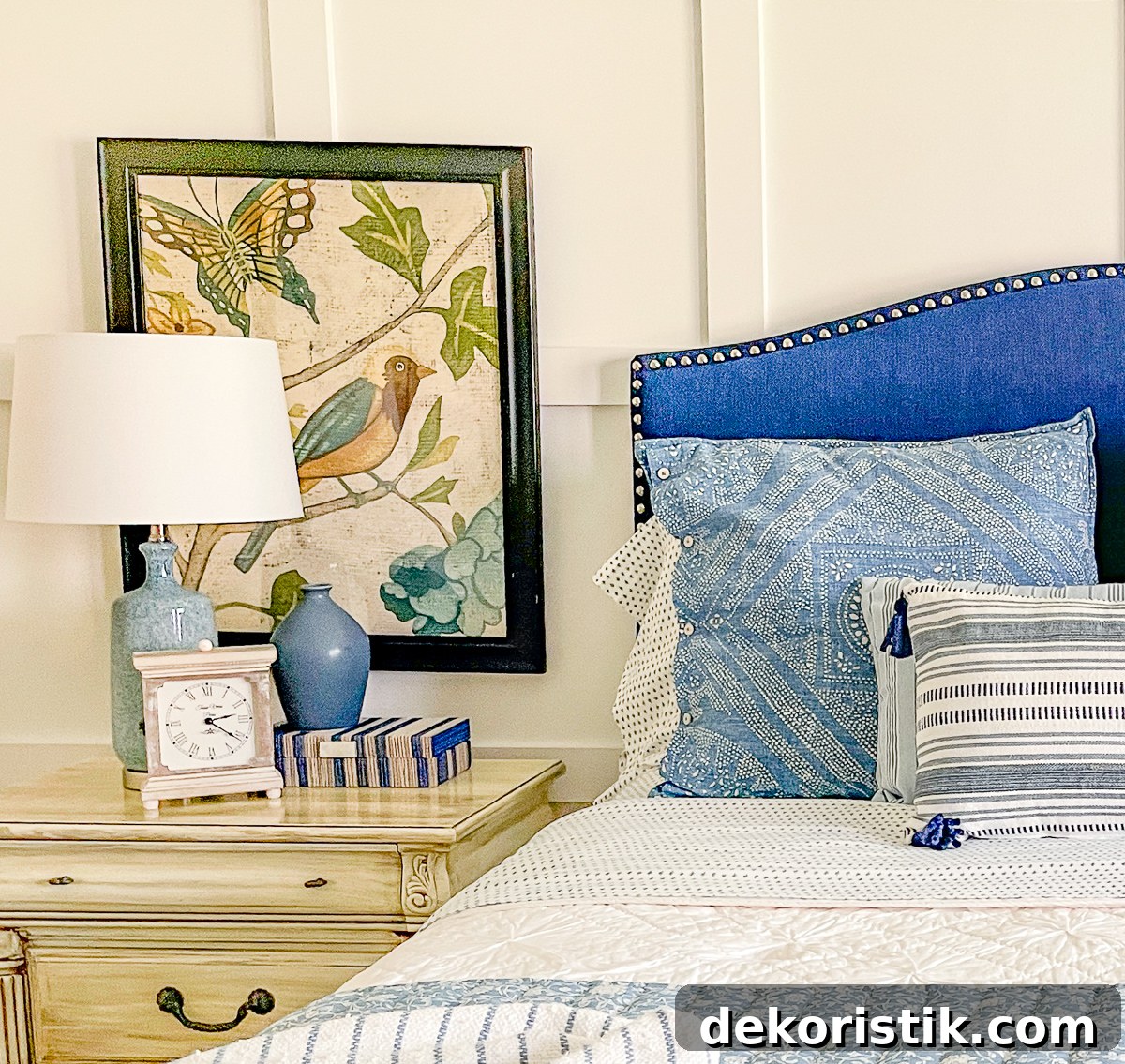
The wall behind the bed was a large, blank surface that dominated the room. Instead of filling it with multiple pieces of artwork, I installed board and batten to introduce depth and a focal point. I wanted a cozy, uncluttered look, and the wall treatment achieved that.
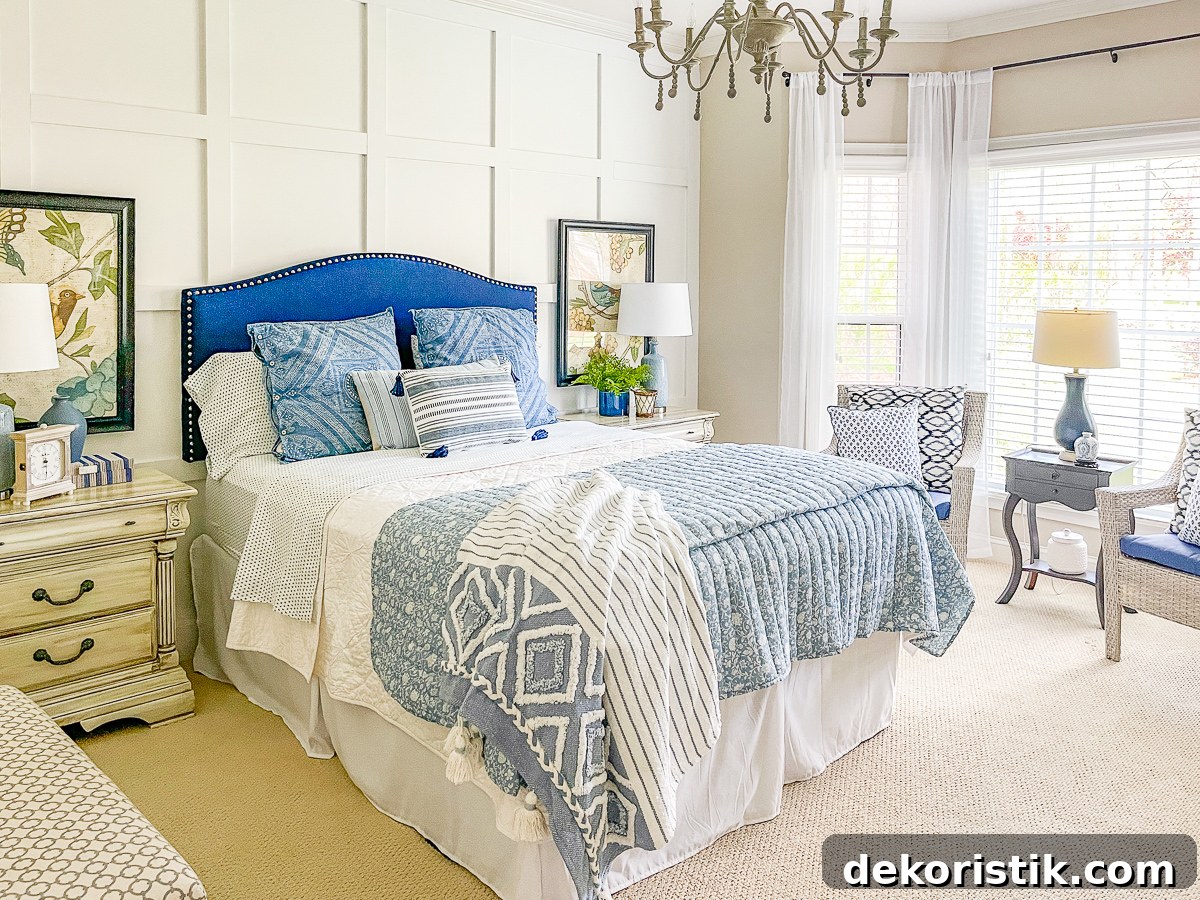
To avoid warping and knot holes, we used 1″ x 4″ PVC boards rather than pine. For reference, the wall measures 13’3″ wide by 8’3″ tall, and each opening between the vertical boards is 22½” wide by 21″ high. The result is a textured feature that draws the eye and anchors the bed.
SAVE MONEY BY PAINTING FURNITURE
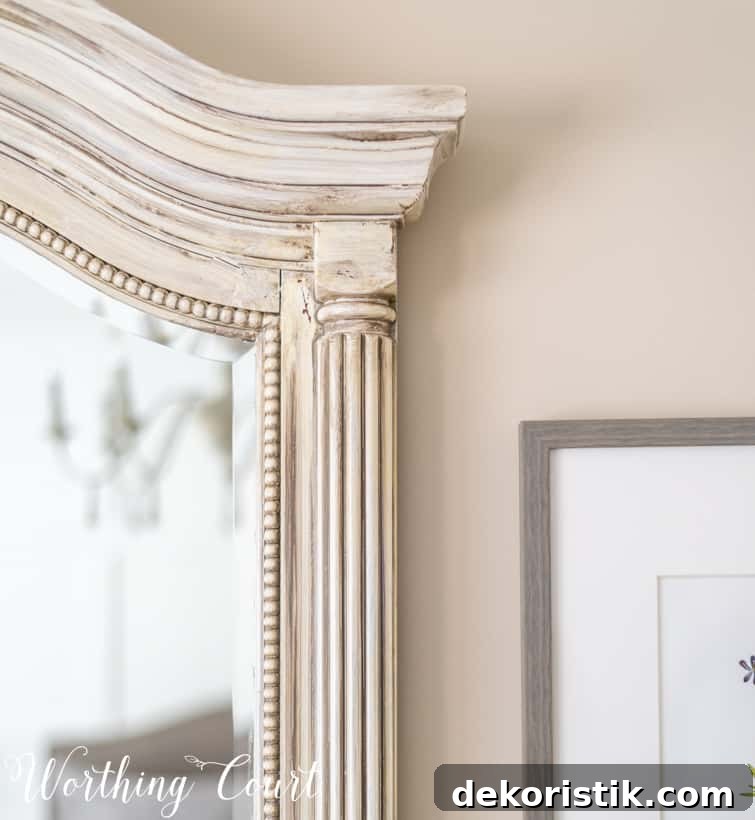
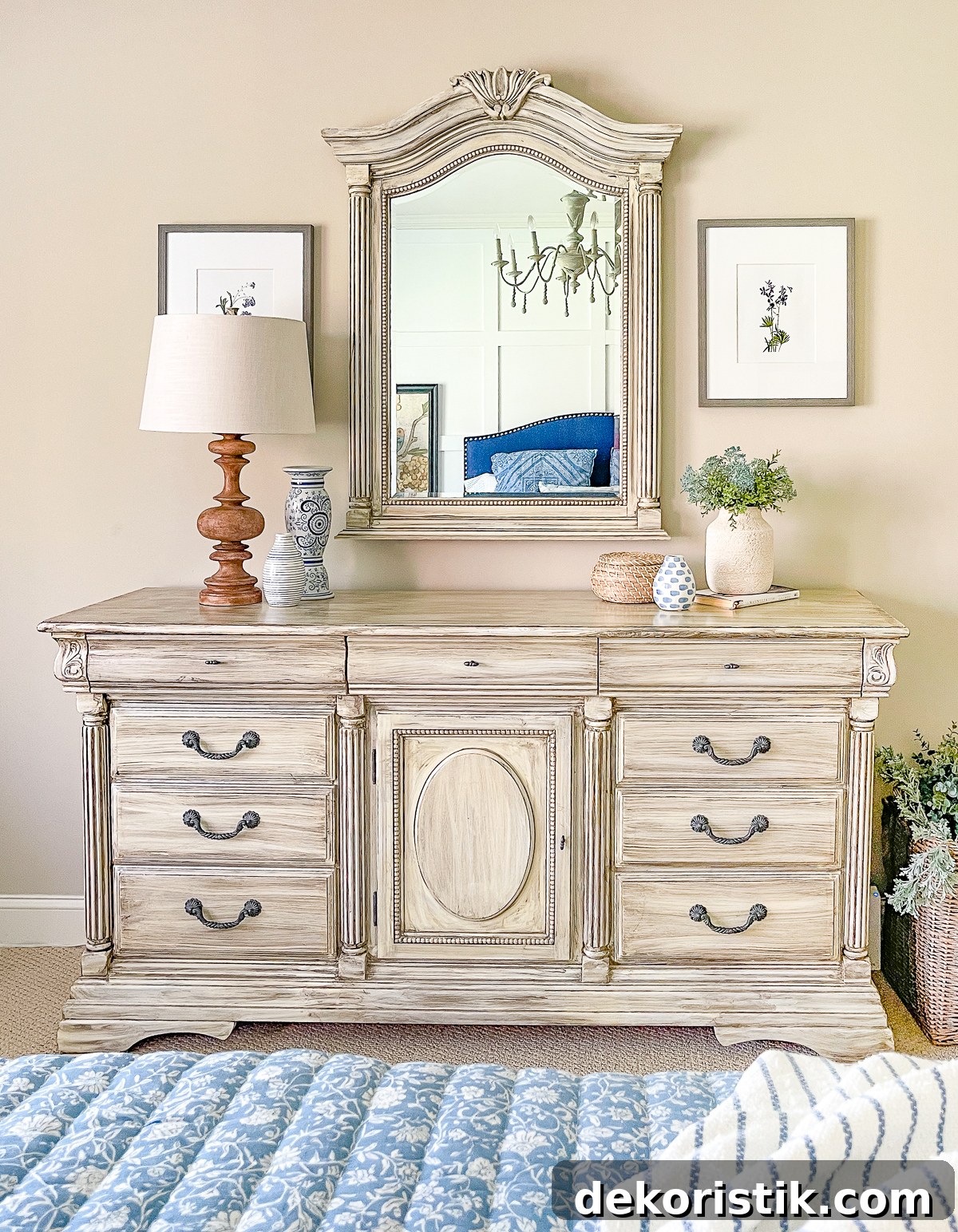
If your furniture is structurally sound, paint it instead of replacing it. This is one of the most effective ways to stretch a small budget. I transformed the old faux cherry dresser, mirror, and nightstands with paint and simple finishing techniques so they now fit the room’s softer, cottage-style aesthetic.
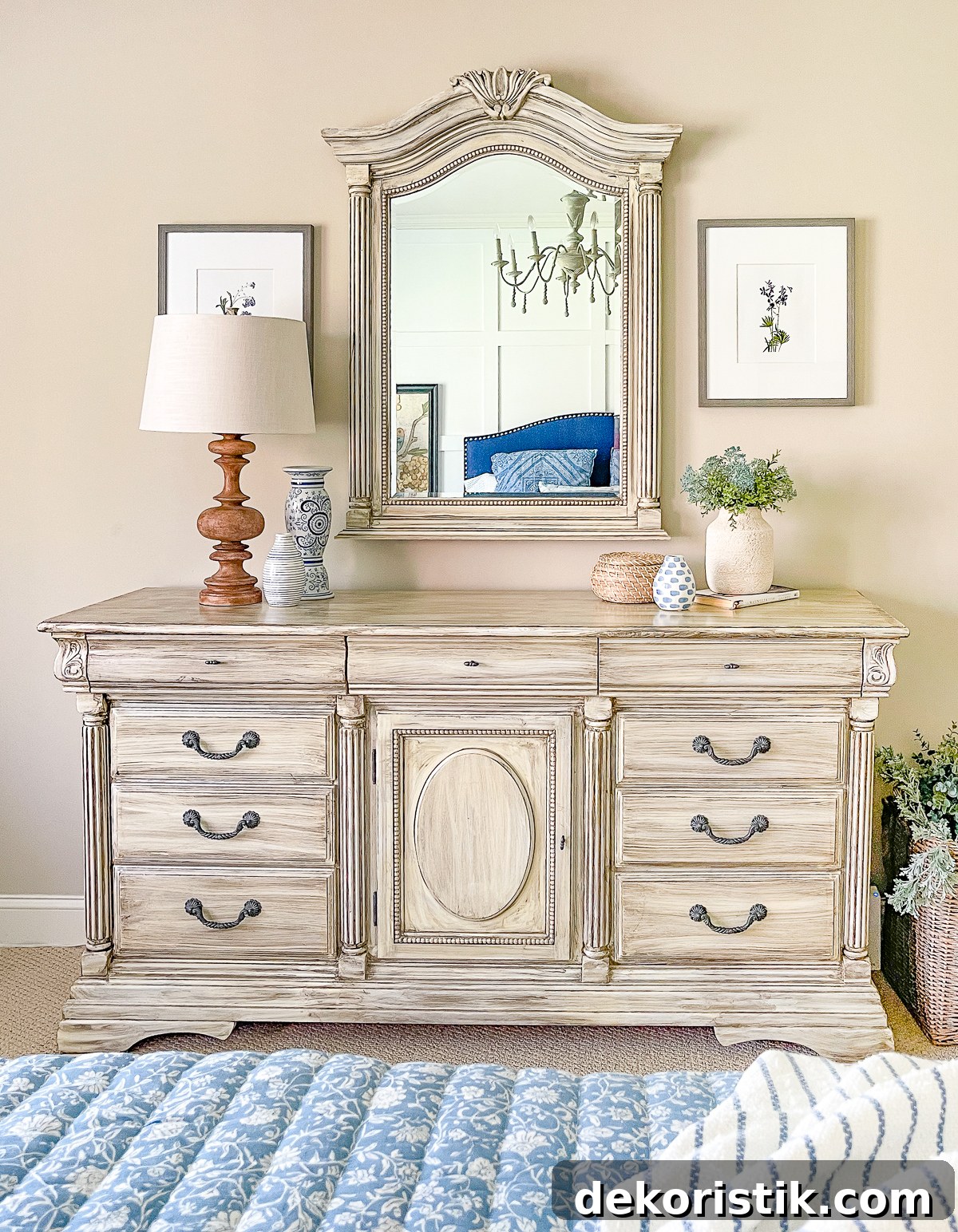
This was the biggest project of the makeover, but worthwhile—refinishing existing pieces saved a lot of money and reduced waste. Small details like updated hardware or a glaze can make painted furniture look deliberately styled rather than simply repainted.
THINK OUTSIDE OF THE BOX
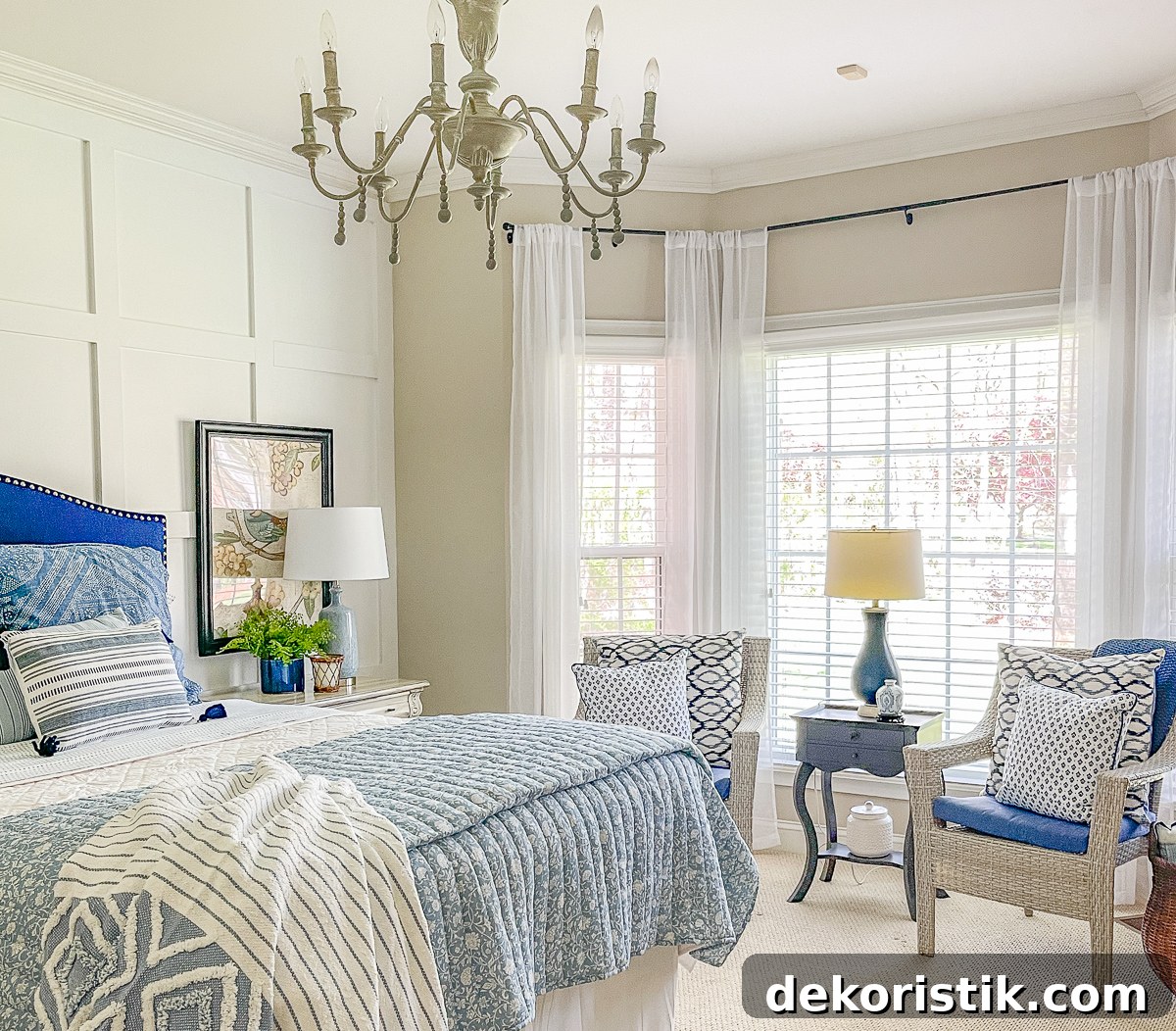
When you do need to add or replace items, get creative about sources. I wanted comfortable seating but didn’t want to pay for indoor armchairs, so I bought outdoor armchairs and cushions from a discount retailer. They provided the right scale and the cost savings were significant.
UPDATE EXISTING LIGHTING
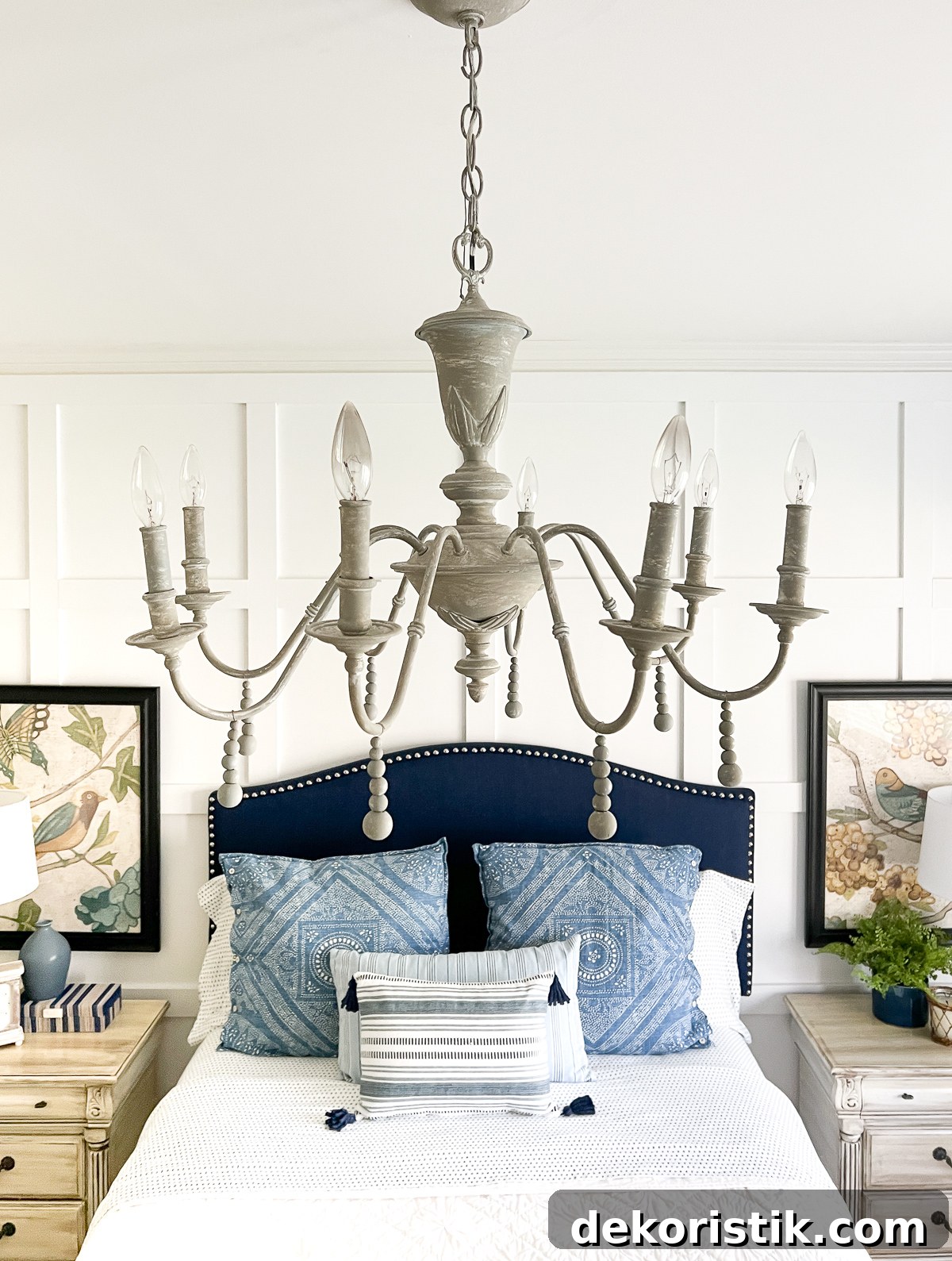
Light fixtures can be shockingly expensive. Rather than buying new, consider reworking what you already have. The old ceiling fan in this room featured frosted glass and shiny brass, which dated the space. I reused a chandelier from another room after refinishing it so it better matched the refreshed palette.
A little paint, different shades, or new trim on an existing fixture can change its style completely and cost a fraction of a new purchase. The chandelier redo was a simple DIY that tied the room together.
SHOP DISCOUNT AND THRIFT STORES
Discount and thrift shops are invaluable when you’re working to a budget. The original ornate bed felt too heavy for the room, so I replaced it with a simple upholstered headboard purchased at a discount store—much more affordable than a custom piece.
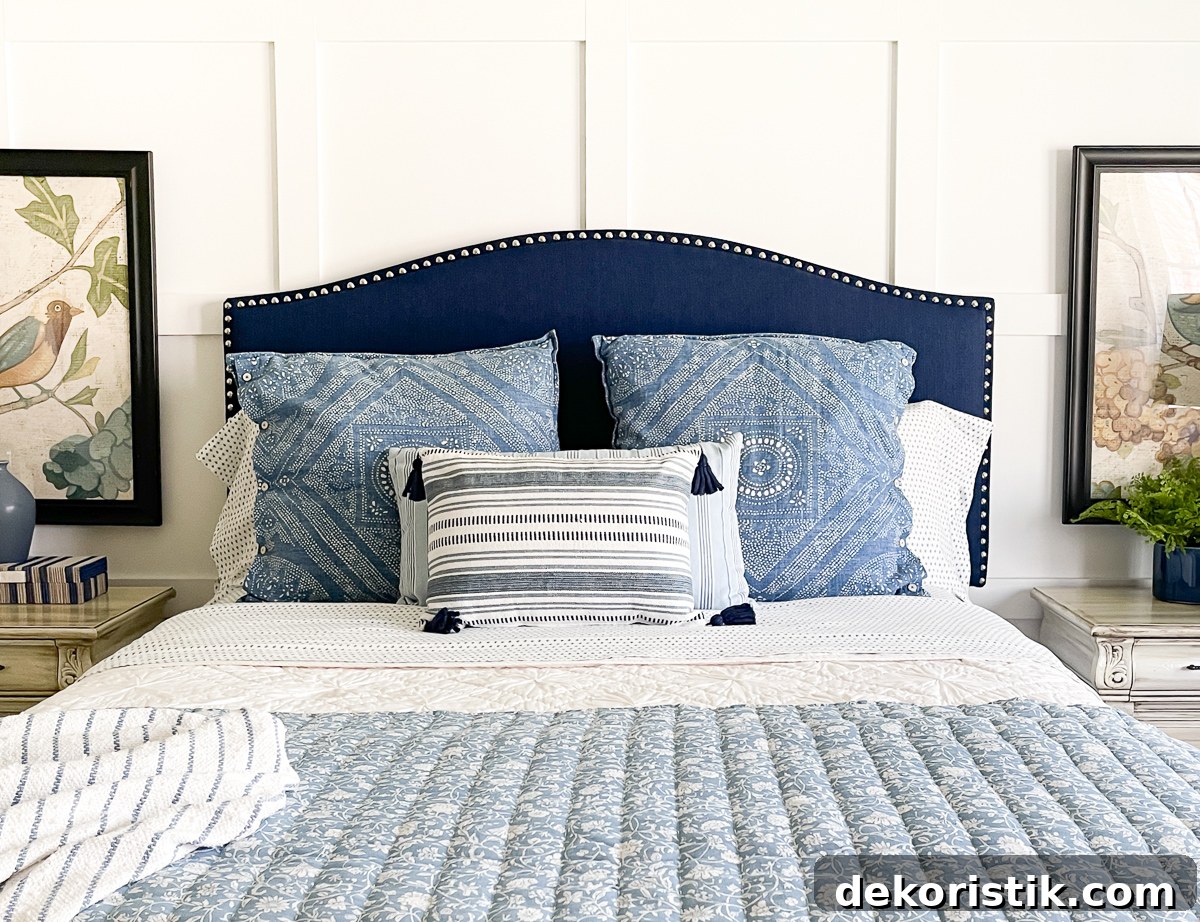
The headboard included legs, but our baseboards prevented it from sitting flush. Instead of attaching the legs, we mounted the headboard directly to the wall using D-rings at the back. It sits perfectly and the hidden base looks cleaner than visible legs.
Bedding, pillows, lamps, and accessories were all sourced from discount and thrift stores. If a lamp base or frame isn’t the right color, spray paint is an inexpensive fix that makes secondhand pieces feel new.

SAVE MONEY ON ARTWORK
You don’t need to spend a lot on framed art. Thrift stores often have frames you can repaint, then fill with affordable posters or printable artwork. I bought low-cost frames and prints, refreshed the frames with paint, and created large, coordinated pieces to flank the nightstands and dresser.
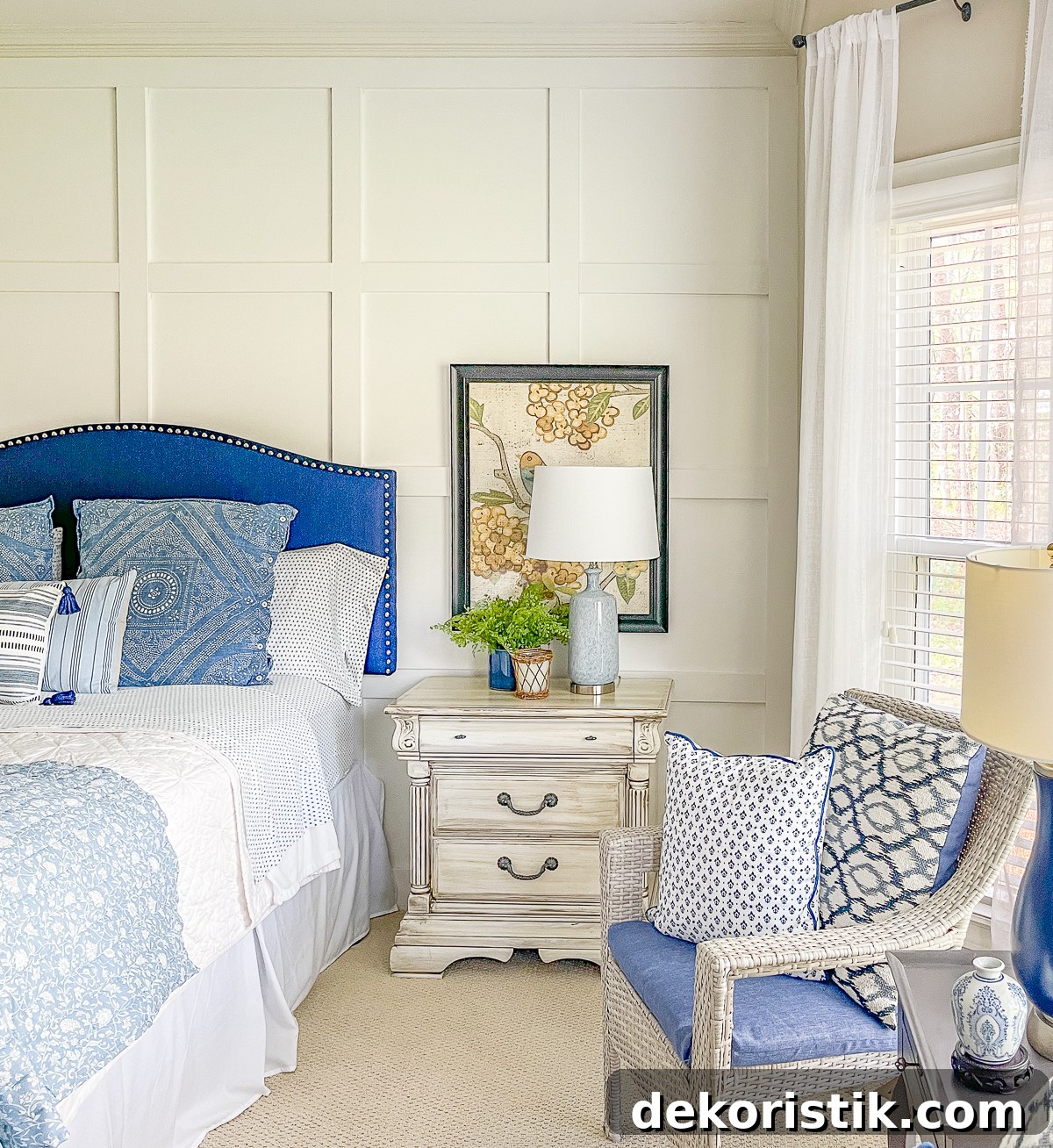
Downloading affordable printable art and pairing it with refreshed frames is an economical way to achieve a gallery look without the gallery price.
I hope these ideas show that a bedroom refresh doesn’t require a large budget—just creativity, planning, and a willingness to do a bit of DIY. Start with a mood board, prioritize high-impact updates like a feature wall or painted furniture, and hunt for bargains at thrift and discount stores. With patience and thoughtful choices, you can transform a tired room into a welcoming space that feels uniquely yours.
Thank you for reading—here’s to making your home more beautiful, one room at a time.