When I began redesigning my breakfast nook, I quickly realized I was stuck. I kept second‑guessing paint colors, fabrics, and accessories, buying pieces and hoping everything would magically come together. The result was wasted time, mounting anxiety, and a space that still didn’t feel finished.
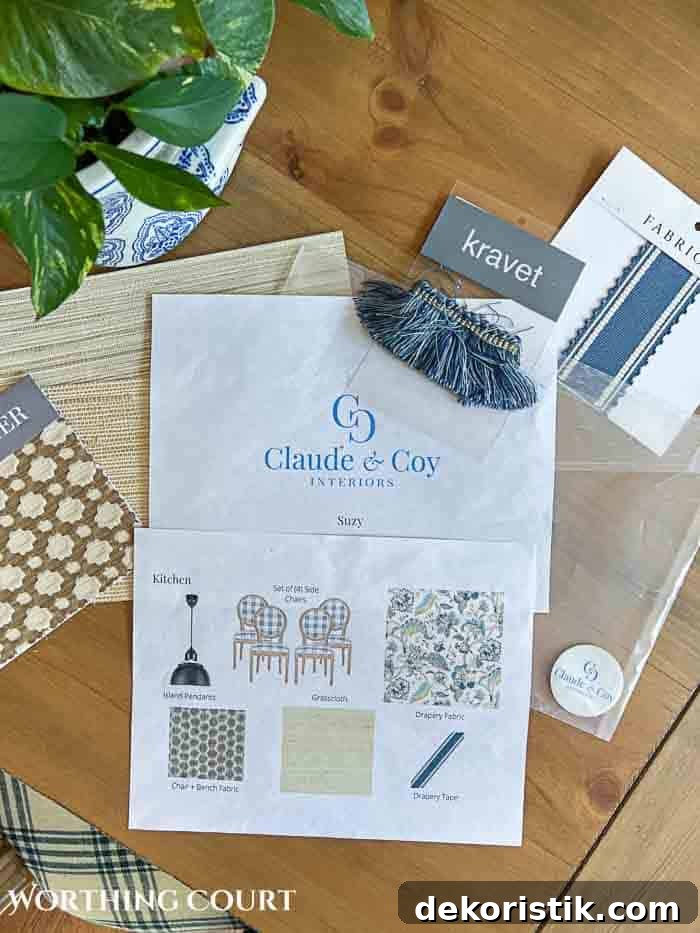
I had a clear vision and even created a design board, but after a few purchases it became obvious the room wasn’t coming together the way I wanted. I faced a choice: keep spending time and money on trial and error or bring in professional expertise to get the result I imagined.
I chose to hire Claude and Coy Interiors, a design firm in Greensboro, NC. They offer both in‑person and virtual consultations, so I could get tailored guidance regardless of location. They provide a range of services—from a single consultation to full‑service design or e‑design—making it easy to find an option that fits different projects and budgets.
With their input, my breakfast nook became a cozy, stylish, and highly functional space I love. Below I’ll walk through how the consultation worked and what made the final design effective, so you can use these ideas for your own breakfast nook redesign.
What to know before your initial consultation with a designer
A little preparation makes the designer consultation far more productive. I prepared ahead so I could get the most from my time with the design team. Here are practical things to gather and consider before your meeting.
- Decide what kind of service you need. Designers commonly offer consultations, e‑design, and full‑service options. Fees vary—some charge a flat rate for consultations, others an hourly rate, and some request a retainer for larger projects.
- Expect an initial meeting to assess the space and discuss your goals. Come ready to explain how you want the room to feel and function.
- Set a starting budget. You don’t need a final number, but a budget range helps the designer make realistic recommendations.
- Collect inspiration. Save images from magazines, social media, and websites to show your preferences. Visual references make it much easier to communicate your taste.
- Clarify function. How will you use the breakfast nook daily? Will it need to serve multiple purposes—meals, homework, or a work spot?
- Inventory existing pieces. Know which items you want to keep and which you’re willing to replace.
- Share your timeline. If you need the project completed by a certain date, tell the designer up front so they can plan accordingly.
- Be honest and communicative. Tell the designer what you like and what you don’t; it will save time and lead to better outcomes.
- Stay open to ideas. Designers bring fresh perspectives and trends you might not have considered; give suggestions a fair look before dismissing them.
What I did
Because I planned to do the physical updates myself, I booked an in‑person consultation for a flat fee. My goal was clear: expert direction, a cohesive plan, and reliable sourcing for the products I’d need.
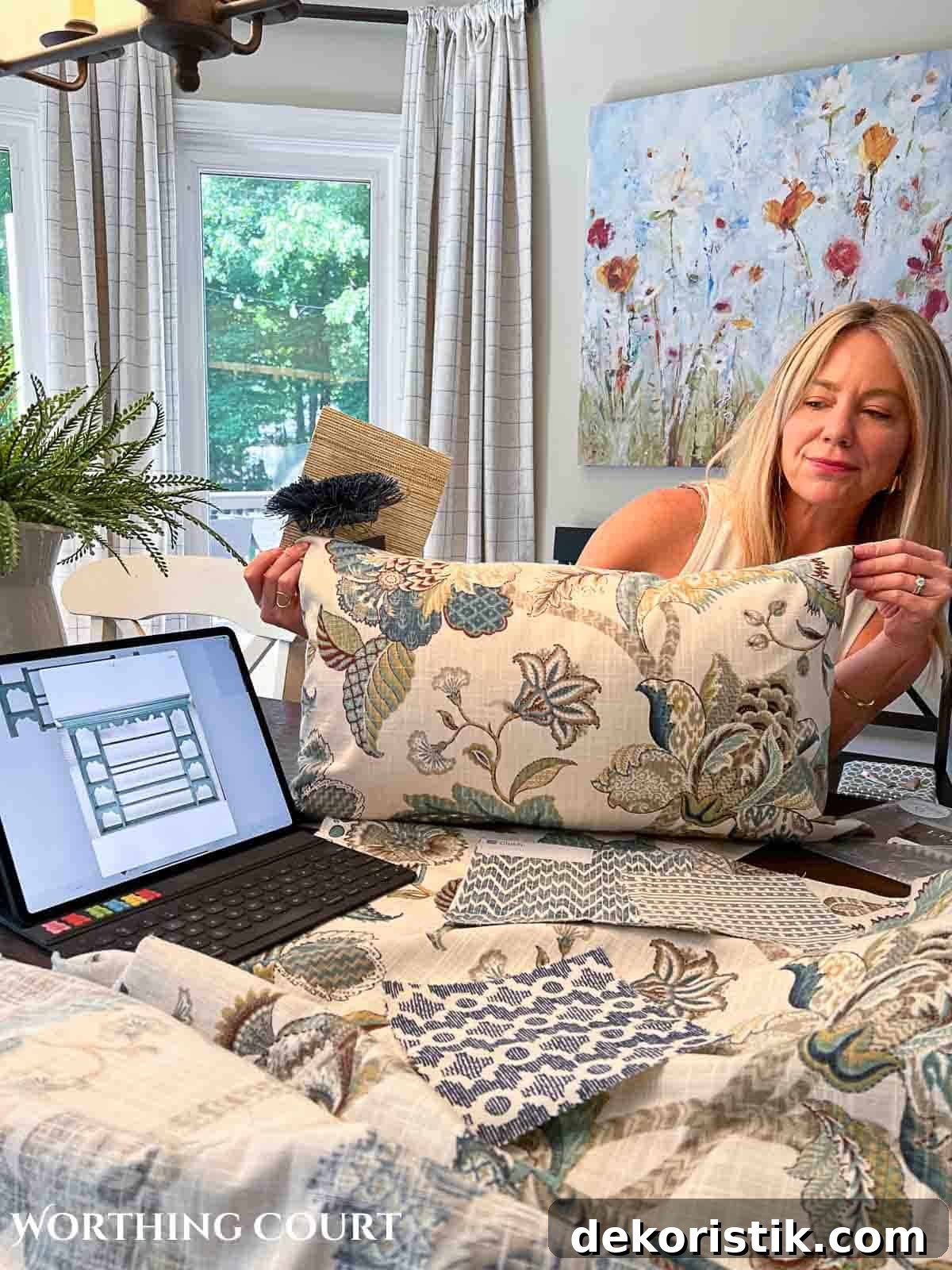
The process was straightforward and supportive:
- The designer visited my home to see the space and hear my goals in person.
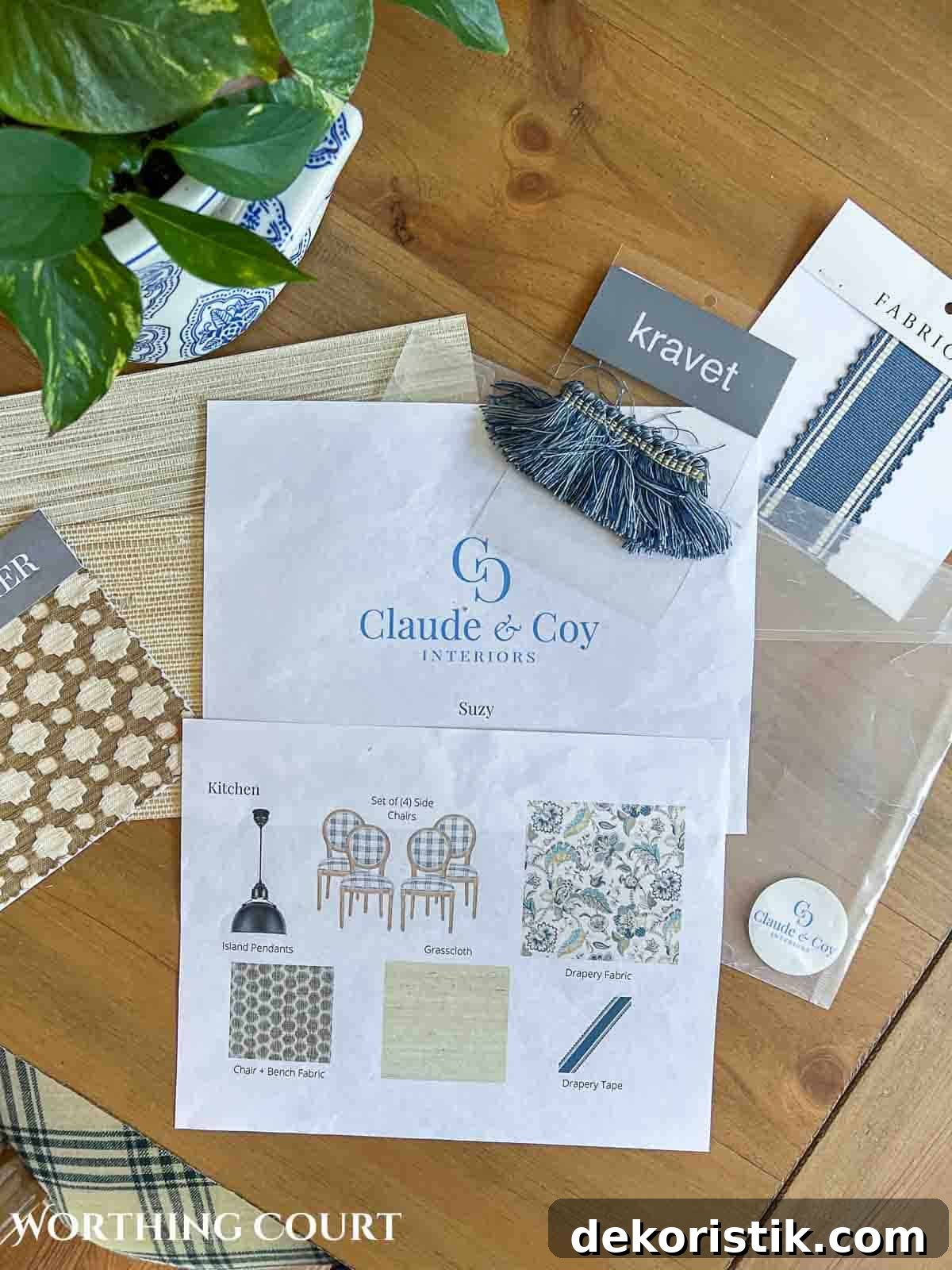
- Within a few weeks we met again to review a mood board, product recommendations, and samples.
- As I implemented the plan, I could check in with questions and request clarifications.
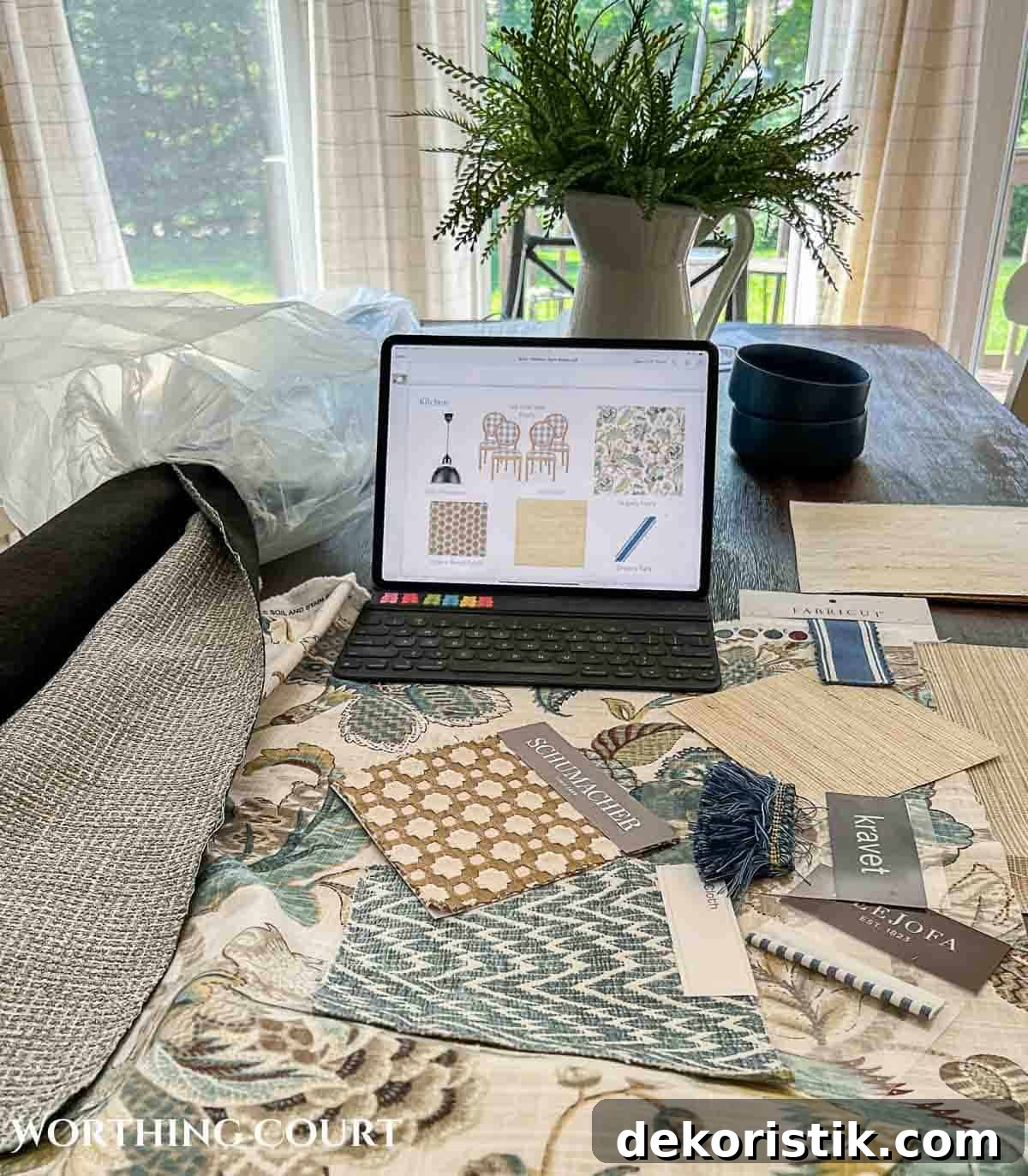
The advice was focused and practical, and the whole experience was enjoyable. I’m confident I would not have achieved this cohesive look on my own.
A fresh, classic breakfast nook design
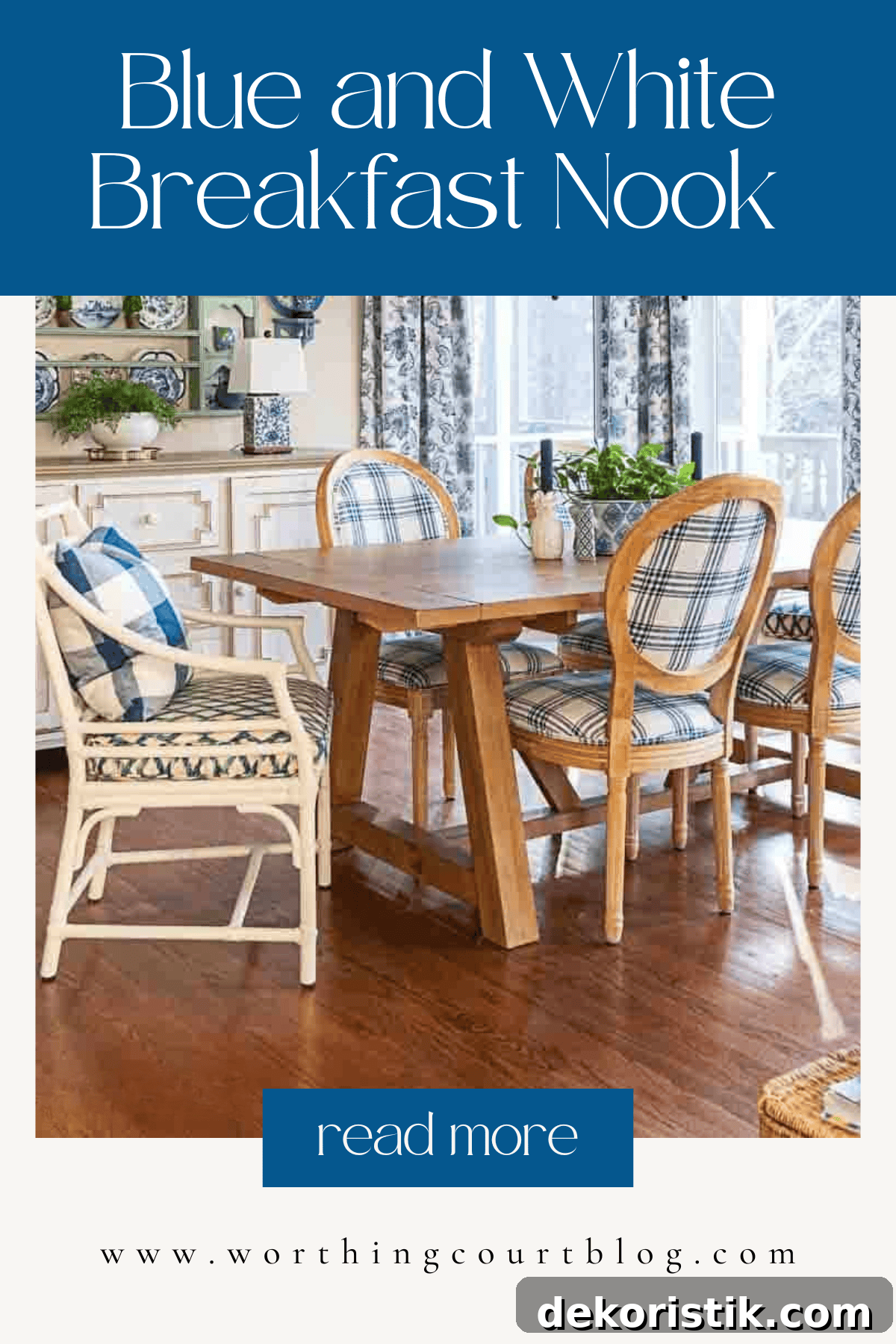
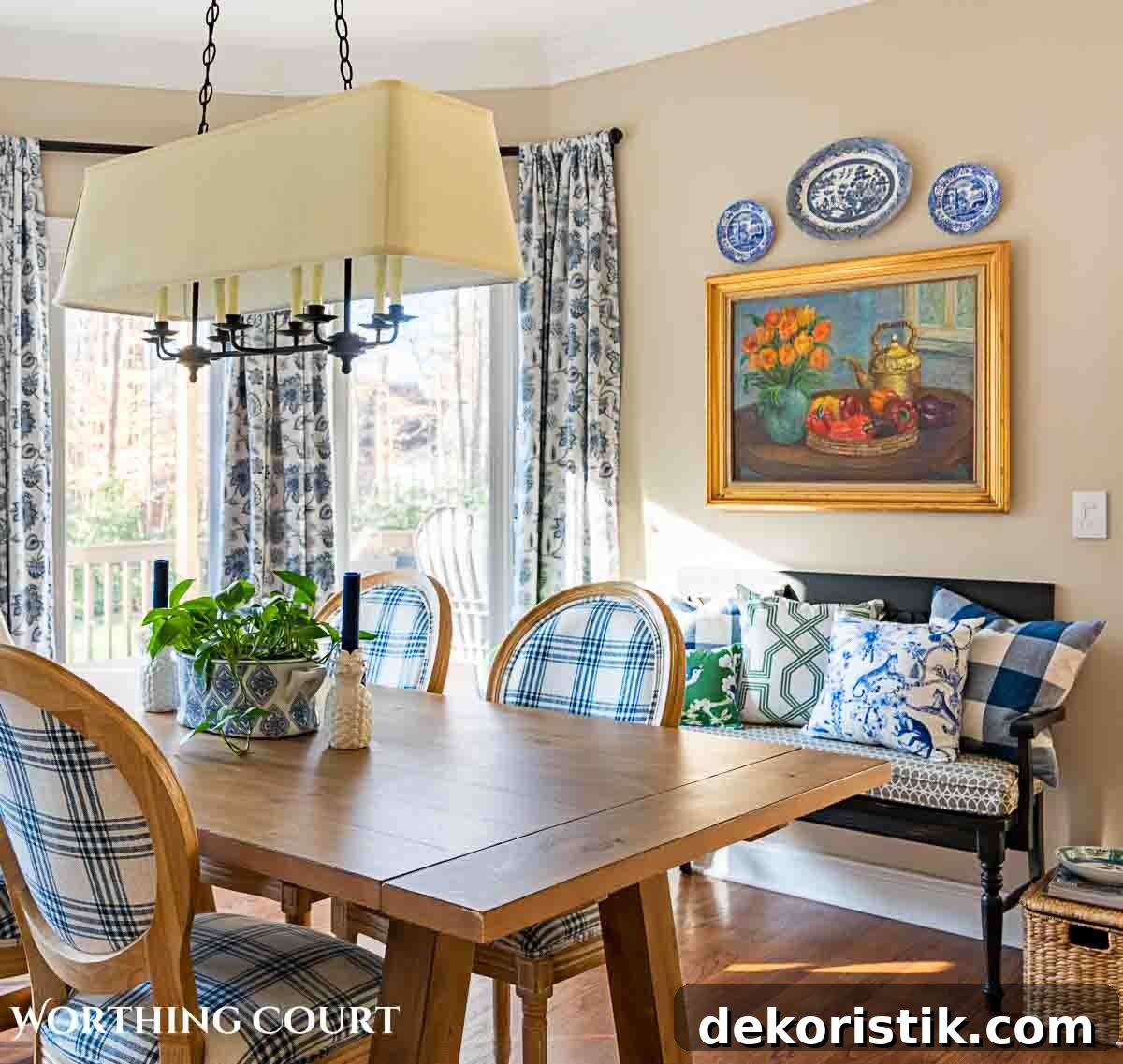
The finished breakfast nook balances elegance and comfort, making it a warm spot for daily meals and small gatherings. Natural light from the bay window highlights the layered textures and thoughtfully chosen accents.
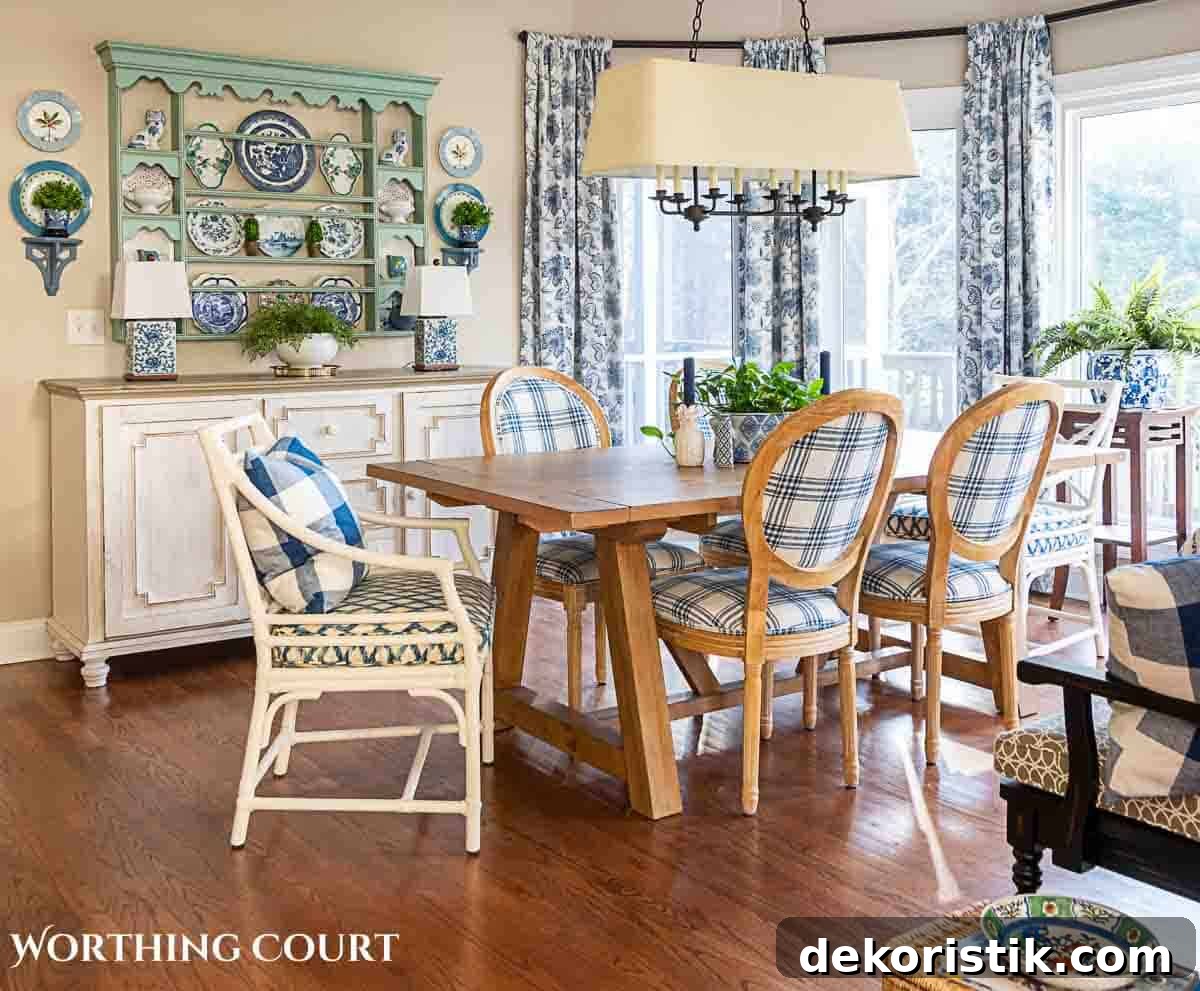
Key elements that make the design successful include color coordination, pattern layering, furniture scale, tailored drapery, curated storage, and a complementary light fixture.
A cohesive blue and white color scheme
A blue and white palette creates a timeless, fresh foundation. Patterned curtains, plaid and floral upholstery, and blue and white ceramics all maintain a consistent palette while offering variety. Warm wood tones and touches of greenery prevent the scheme from feeling cold and add an inviting depth.
Layered patterns for interest
Mixing buffalo check, plaids, florals, and chinoiserie‑inspired accents adds visual richness. The trick is to stay within a unified color family so patterns complement each other rather than compete.
Smart furniture choices for comfort and functionality
A solid wooden dining table paired with a combination of rattan chairs, upholstered seating, and a built‑in bench keeps the room relaxed and useful. Bench seating maximizes floor space and creates cozy nooks near the bay window, while cushioned chairs ensure comfort for longer meals or conversations.
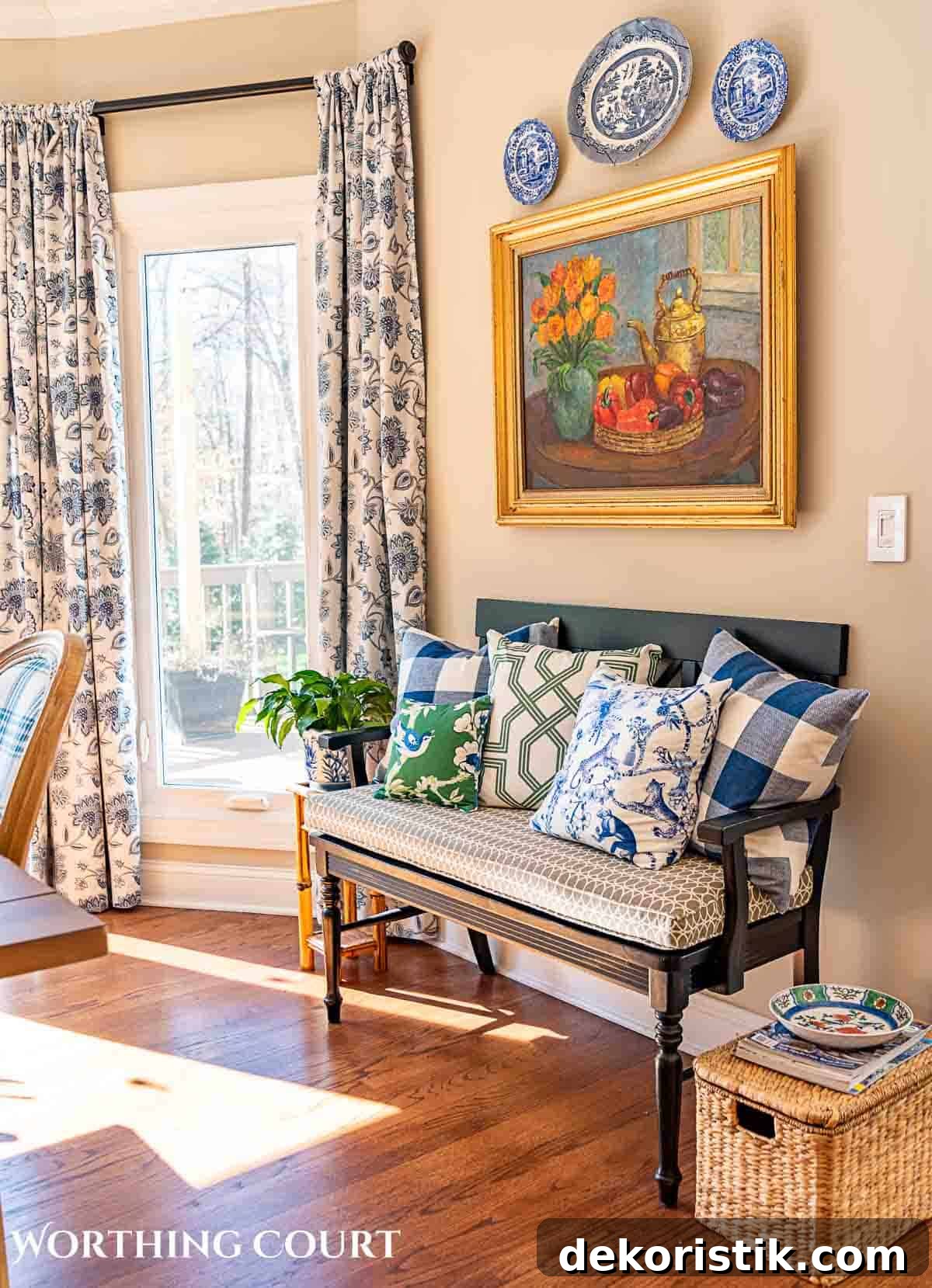
Statement drapery that frames the room
Floor‑to‑ceiling drapery emphasizes ceiling height and enhances the bay window’s architecture. Proper rod placement allows the curtains to frame the windows while maintaining generous natural light.
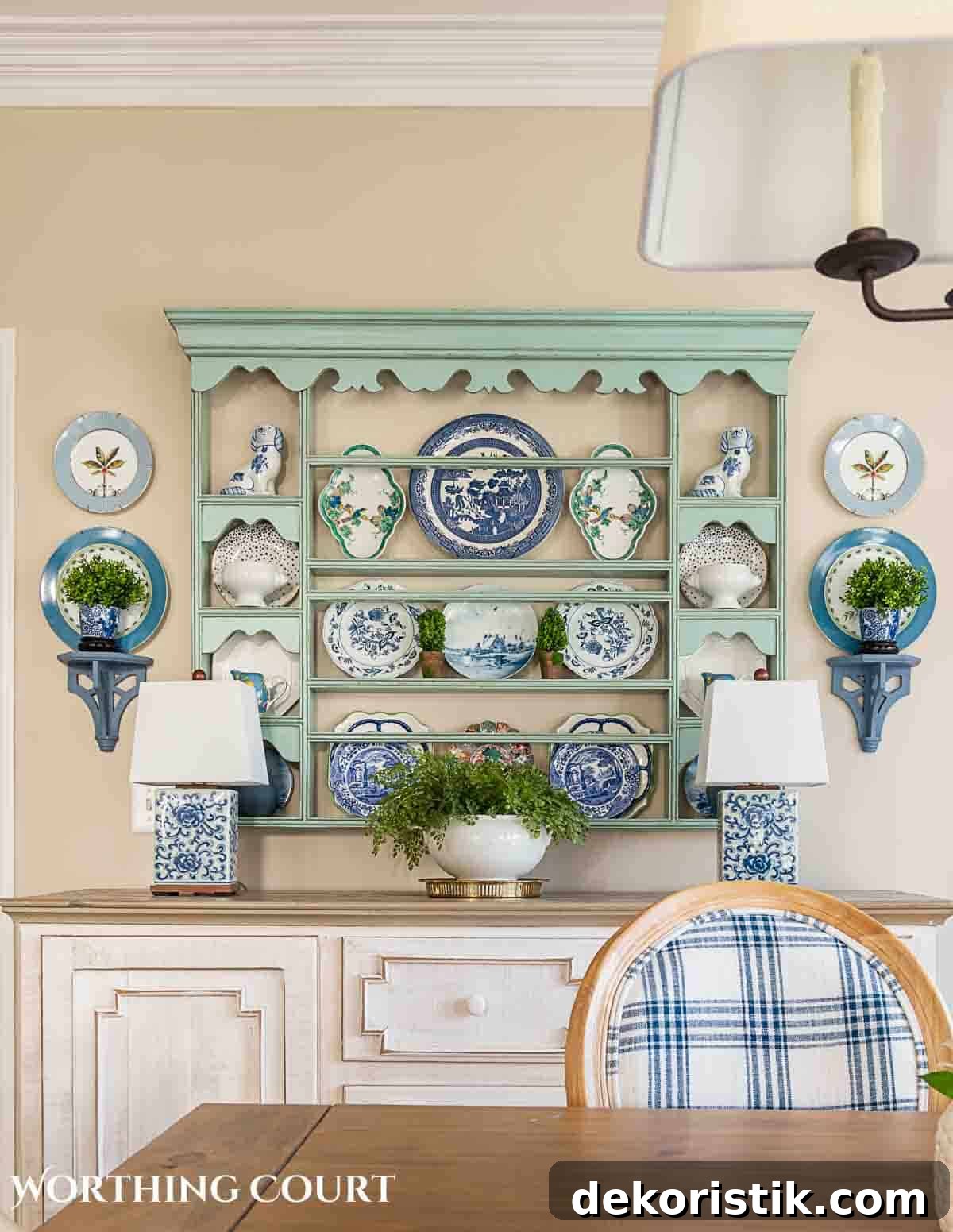
A styled sideboard for character
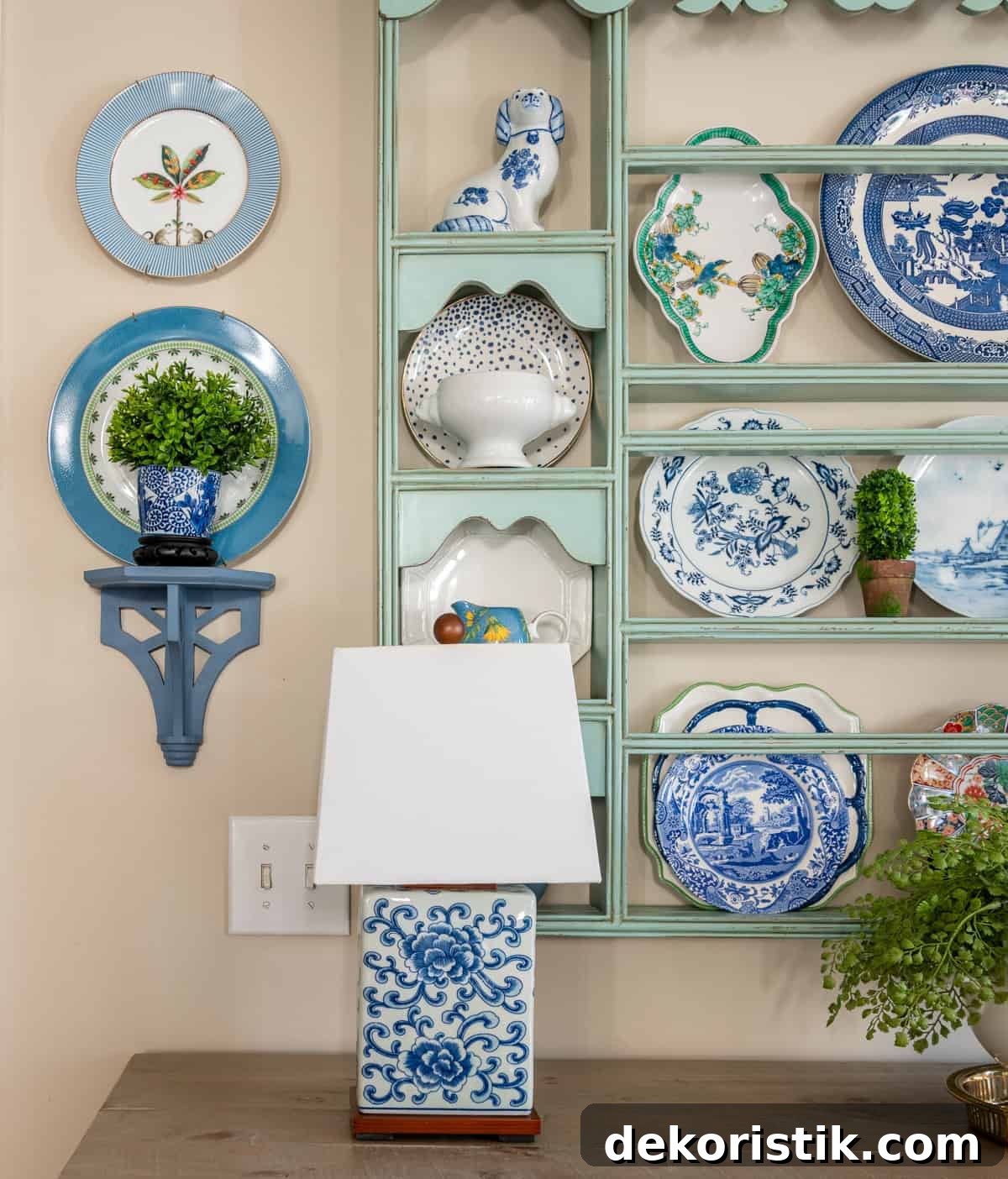
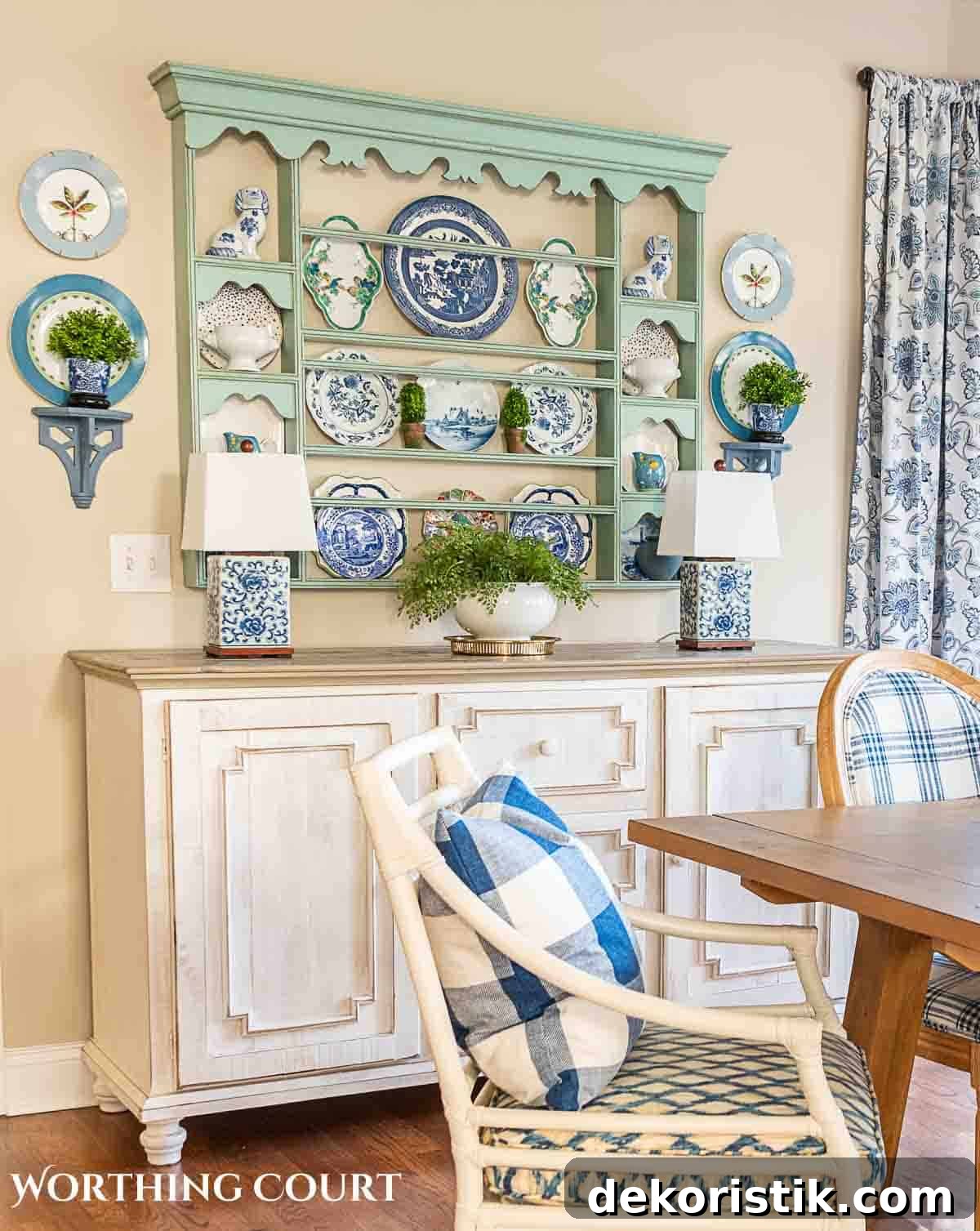
A vintage‑inspired sideboard adds storage and a focal point. A colorful plate rack above the sideboard introduces an unexpected accent and gives the vignette a collected, lived‑in feel. Groupings of blue and white plates, small plants, and curated accessories keep the display intentional but effortless.
A light fixture that completes the look
An oversized pendant centered over the table anchors the space and brings everything together. The scale and shape of the fixture complement the length of the table and reinforce the room’s polished feel.
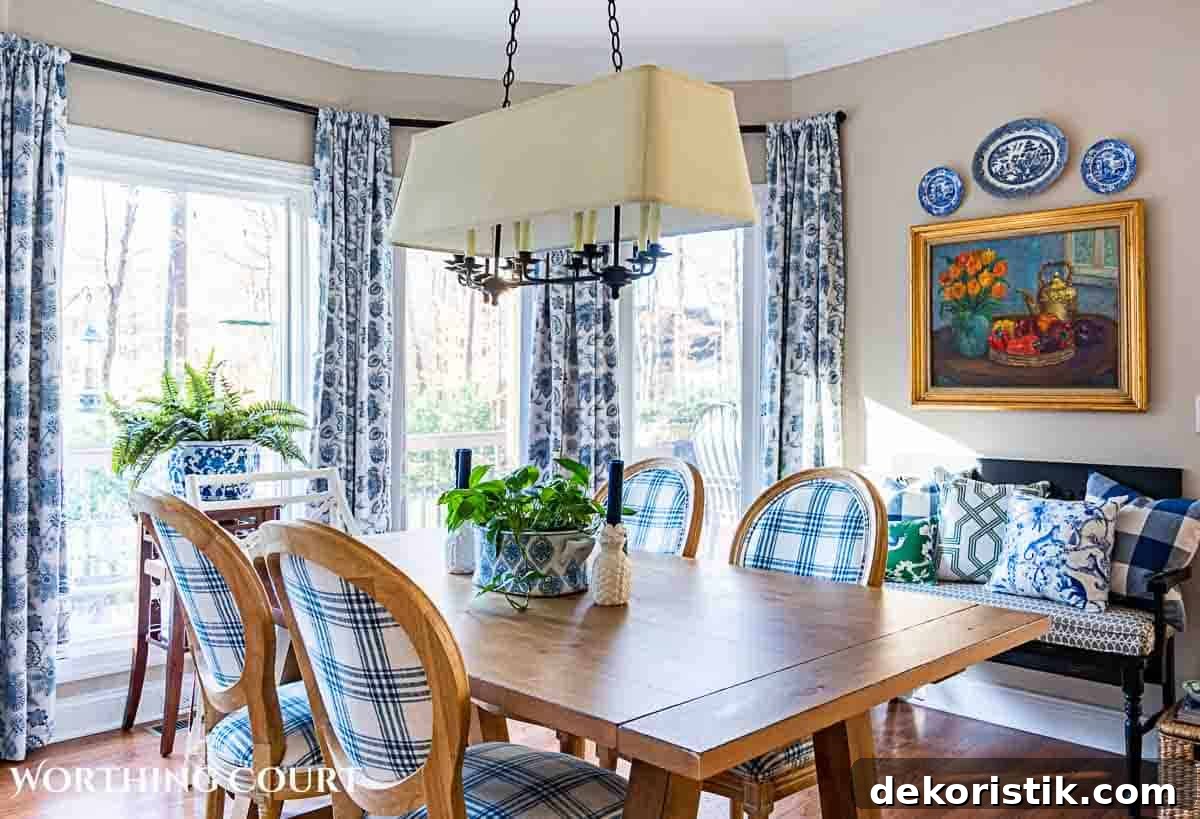
This breakfast nook makeover shows how a thoughtful mix of color, pattern, texture, and scale can transform a small dining corner into a refined and welcoming place. Whether you want simple updates or a full redesign, focus on a cohesive palette, layered patterns, functional seating, and architectural accents to create a space you’ll enjoy every day.