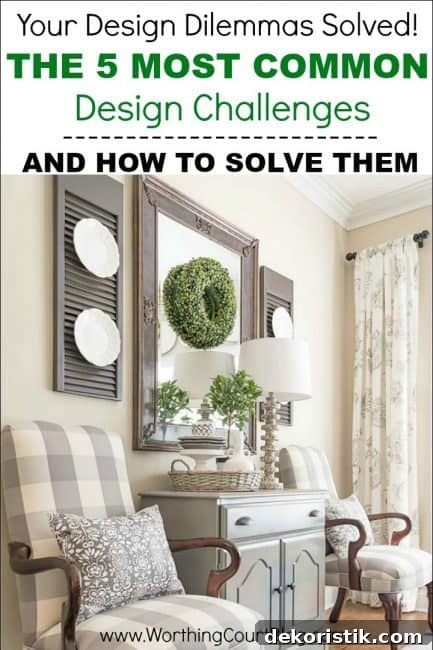
Every home has design challenges—some obvious, others subtle. The secret to a comfortable, stylish space is not having a perfect room from the start, but recognizing the trouble spots and learning how to work with them. Below are five of the most common decorating dilemmas and practical, easy-to-apply solutions that will help you turn problems into highlights.
I’ve worked on every kind of home—from custom builds to full renovations—and I still encounter rooms that need a little creative thinking. Over the years I’ve written extensively about these issues to help readers find straightforward solutions that fit real life. The pointers below cover how to choose a focal point, make small rooms feel larger, outfit a tiny porch, and overcome the hesitation that keeps many of us from decorating with confidence.
HOW TO DEAL WITH MULTIPLE FOCAL POINTS
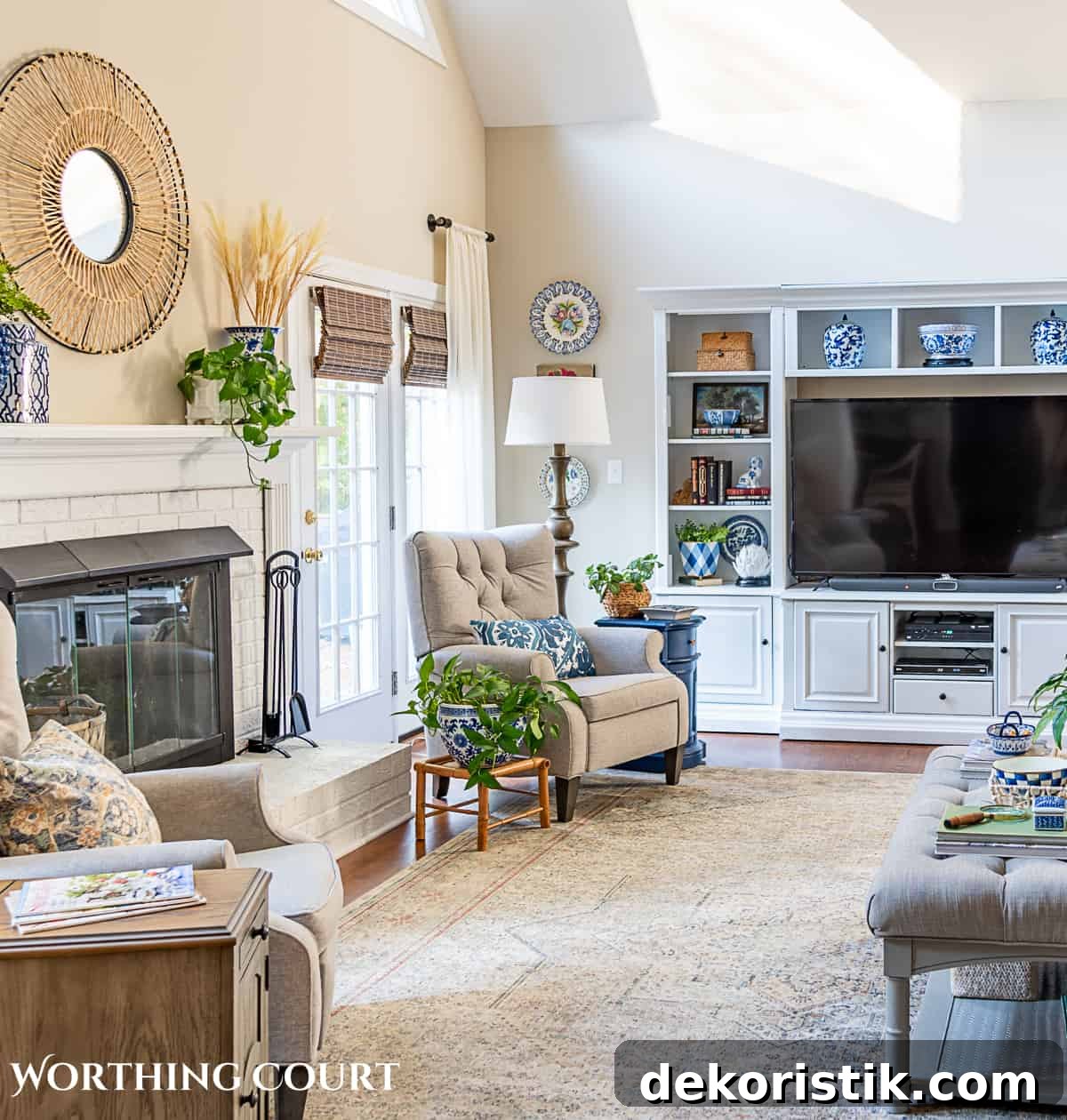
A focal point is whatever your eye notices first when you enter a room—a fireplace, a large window, built-ins, or even a big blank wall. Most rooms only need one clear focal point; when several elements compete for attention, the space can feel disjointed. The solution is to prioritize and simplify.
Start by choosing the element with the most architectural impact or the feature you want to highlight. Anchor seating and accessories toward that spot, and visually downplay other features by keeping them neutral in color and scale. If two features are equally important—say a fireplace and a dramatic window—balance them with symmetry: arrange furniture so both are visible from the main seating area, or use large, complementary pieces that link the two, such as matching art or rugs.
CLICK HERE TO VISIT THE POST
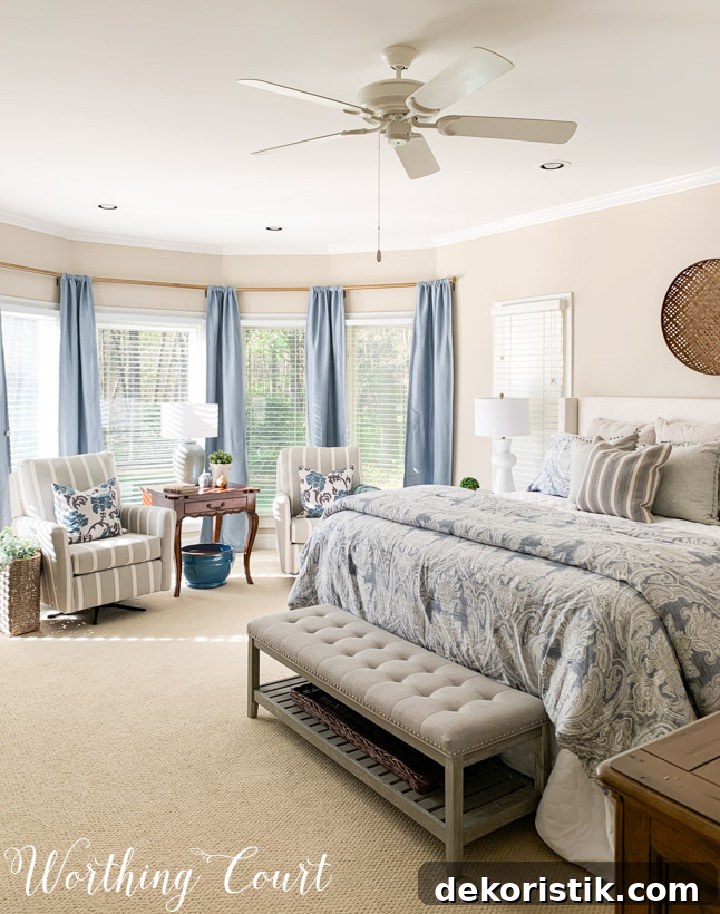
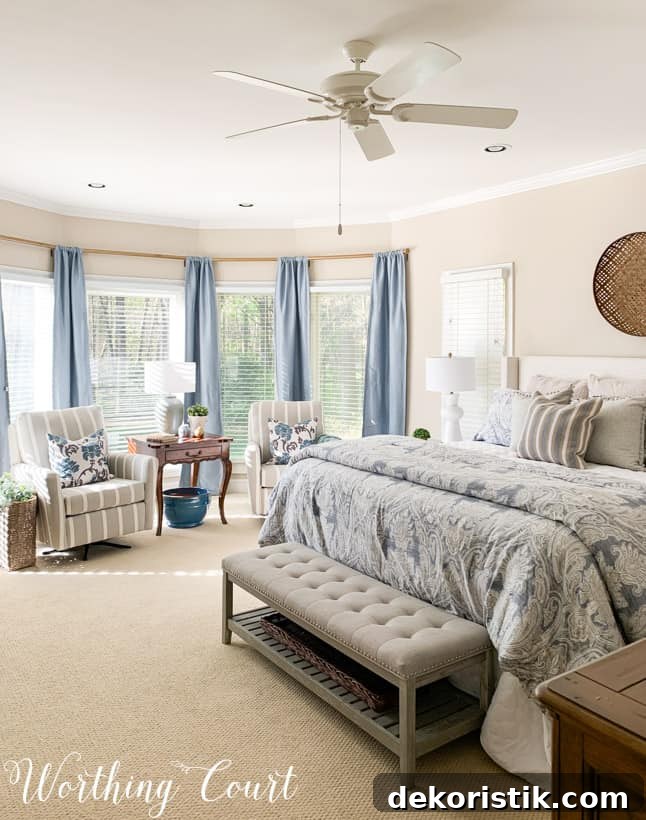
HOW TO DECORATE, ORGANIZE AND ADD STYLE TO A SMALL BEDROOM
Small bedrooms can feel cozy and inviting, but they also present layout and storage challenges. Instead of trying to solve everything at once, break the room down into manageable tasks: furniture placement, storage, lighting, and finishing touches.
Choose a scaled bed and streamlined nightstands to preserve walking space. Maximize vertical storage with built-in shelving or tall dressers. Use layered lighting—a combination of overhead, task, and soft bedside lamps—to make the room feel larger and more functional. Keep the color palette light and cohesive to avoid visual clutter, and add personality with one or two textured accents like a throw, a pillow, or an area rug.
CLICK HERE TO VISIT THE POST
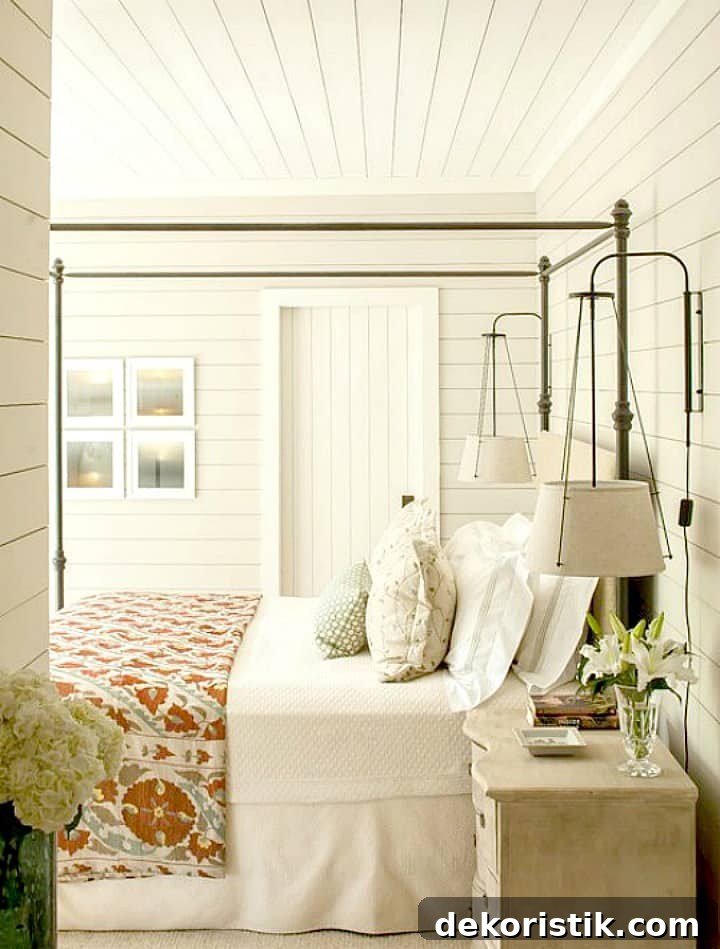
IMAGE VIA JAMES THOMAS INTERIORS VIA HOUZZ
ENLARGE A SPACE WITH MULTIPLE MIRRORS
Mirrors are one of the simplest, most effective tricks to make a room feel lighter and bigger. They reflect light and views, expanding perceived square footage without structural changes.
Consider grouping mirrors in a gallery arrangement to create visual interest, or place a large mirror opposite a window to double natural light. Using mirrored furniture or mirrored frames can also add depth. When you use multiple mirrors, vary sizes and shapes for texture, but keep the frames within a similar color family to maintain cohesion.
CLICK HERE TO VISIT THE POST
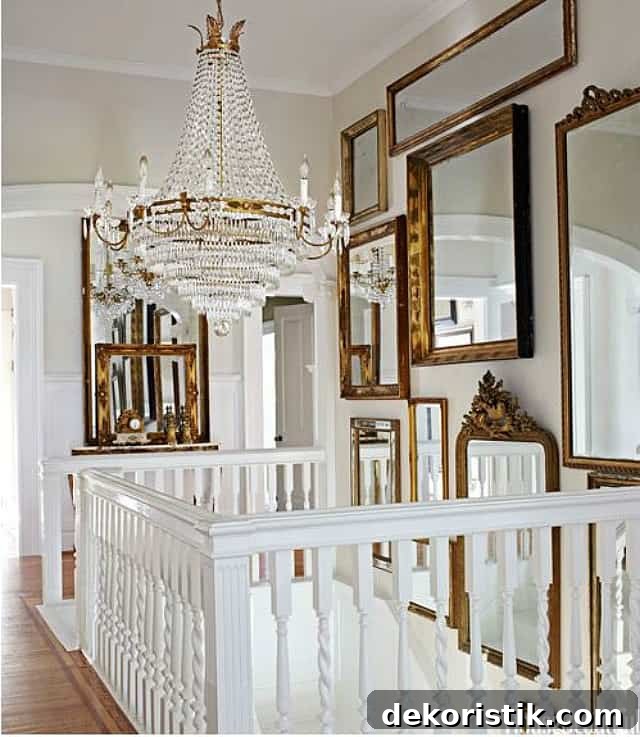
HOUSE BEAUTIFUL
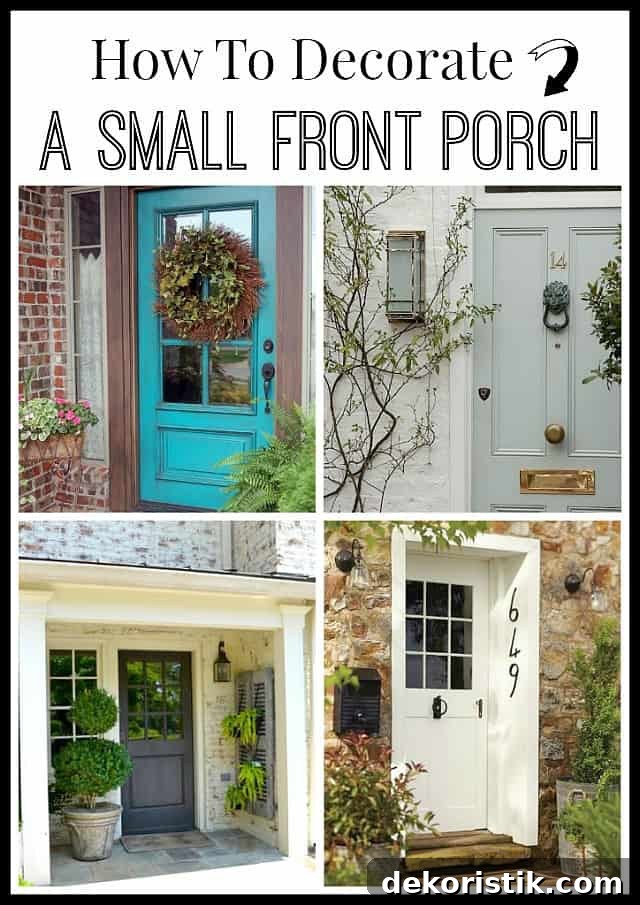
HOW TO DECORATE A SMALL FRONT PORCH
A compact porch or stoop can still make a big first impression. Focus on function, scale, and curb appeal: choose seating that fits the space, use vertical containers for plants, and add a single focal accessory such as a statement lantern or seasonal wreath.
Keep walkways clear, and use weather-resistant fabrics and materials so your decor lasts. A small rug and a pair of chairs or a bench transform a narrow entry into an inviting pause point without overwhelming the facade. Thoughtful lighting and a polished doormat will make guests feel welcome and improve the look of your home from the street.
CLICK HERE TO VISIT THE POST
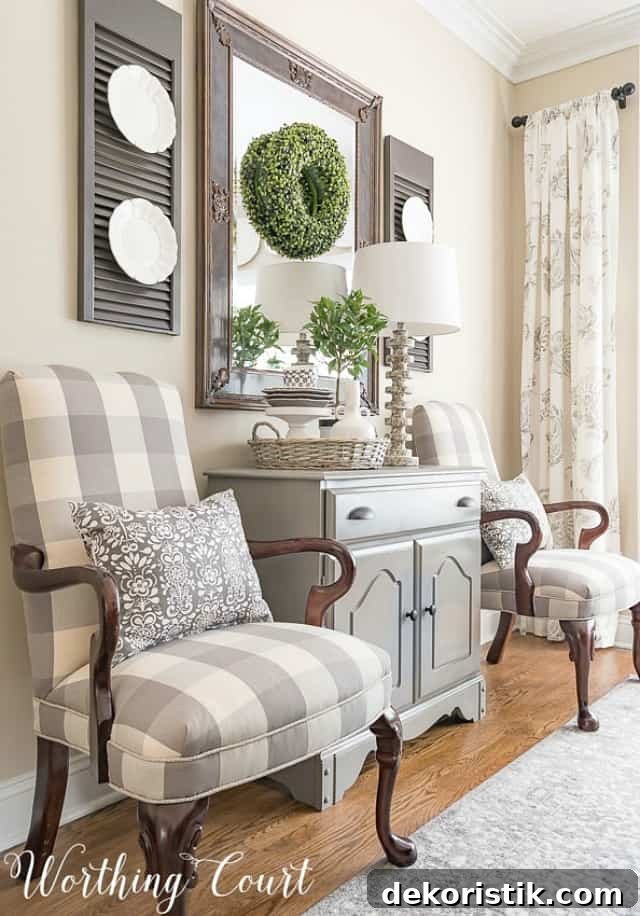
HOW TO OVERCOME THE DREADED “FEAR OF DECORATING” SYNDROME
One of the most widespread design problems isn’t a physical feature at all—it’s fear. Many people hesitate to make choices because they worry about making a mistake. The good news is that decorating is an iterative process, and there are practical steps to build confidence.
Start with small experiments: swap out cushions, hang new art, or reposition furniture for a fresh perspective. Use a neutral base so you can introduce color and pattern in manageable doses. Gather inspiration, but adapt ideas to your lifestyle and budget. If a change doesn’t work, it’s usually easy and inexpensive to adjust. Treat decorating as a series of trials that guide you toward a space that feels uniquely yours.
CLICK HERE TO VISIT THE POST
Decorating is part creativity, part problem-solving. By identifying specific challenges and applying targeted solutions—prioritizing focal points, maximizing storage, using mirrors strategically, making the most of a small porch, and conquering fear—you can transform awkward spaces into comfortable, beautiful rooms. If you’d like more detailed guides on any of these topics, follow the links in the headings for full posts with examples and step-by-step advice.